 |
 |
 |
 |
 |
 |
 |
SPA Estudios cognitivos de la traducción y la interpretación |
contents
Introduction | Machine translation enters academia | The (first) cognitive revolution | The pioneers in the study of translation and interpreting | The Leipzig School | The Paris School or Théorie du Sense | The psycholinguistic stage in translation research | The cognitive reorientation of research in simultaneous interpreting | The (second) cognitive revolution | The cognitive reorientation of research in translation | Research potential

Cognitive and psycholinguistic approaches pioneered the modern disciplinary and scientific study of translation and interpreting in the West. The remote precedents of cognitive translation and interpreting studies might be some experiments by James McKeen Cattell—timing picture naming in foreign languages and translating common and uncommon words—at the University of Leipzig in the academic year 1884-1885 (see Cattell 1885, 1886) and later—and perhaps more obviously—by Gabriele von Wartensleben (1910). However, the first empirical research worthy to be set as starting disciplinary landmark probably was Jesús Sanz Poch’s (1930) interview study of conference interpreters. At a time when conference interpreting was becoming recognized as a profession, Sanz focused on foreseeable aspects like their training and their working methods and conditions, but also on cognitive skills such as intuition and memory. The increasingly tense pre-war atmosphere culminating in the Spanish civil war (1936–1939) and WWII (1939–1945) led most research initiatives unrelated to warfare to a halt. In contrast, the post-war years brought about two major moves that would foster the birth of our academic discipline: a strategic interest from governments in machine translation and the so-called cognitive revolution.
![[título del epígrafe]](2.2-X.png "[título del epígrafe]") Machine translation enters academia
Machine translation enters academia
 |
[…] one naturally wonders if the problem of translation could conceivably be treated as a problem in cryptography. When I look at an article in Russian, I say «This is really written in English, but it has been coded in some strange symbols. I will now proceed to decode. Have you ever thought about this? As a linguist and expert on computers, do you think it is worth thinking about? |
| Letter from Warren Weaver to Prof. Norbert Wiener in 1947, quoted in Weaver's (1949) Memorandum |
Mechanical dictionaries based on universal numerical codes were suggested by Descartes and Leibniz in the 17th century, and tried by people like Cave Beck. The modern history of Machine Translation (MT), however, is usually associated with the development of computers, starting at the mid-20th century.
| The thinking machine. MIT 1961. Source |
In WWII, information theory was applied to deciphering messages from the enemy and cryptography experienced a great leap forward thanks to the efforts of researchers such as Alan Turing. After their victory, the USA and the Soviet Union became competitors again, and the Cold War was also staged in science. In the USA, the defense, intelligence, and scientific communities were very interested in reading everything published in Russian; conversely, most Soviet efforts concentrated on English-to-Russian translation. Given the huge amount of documents to be translated, these goals were nearly impossible to reach by manpower, and both countries were prepared to fund research to make MT possible. In 1949, Warren Weaver published a Memorandum where he sketched what would become the basic assumptions behind the first steps of MT: that languages had universal features and a common, underlying logic, and that cryptography and statistical techniques could be applied to translating. Soon research teams began their work at UCLA, the University of Washington and the MIT, where in 1951 Yehoshua Bar-Hillel became the first full-time MT researcher and the head of a team that included a very young Noam Chomsky. In 1954, the first Russian-English MT system—a joint effort of IBM and Georgetown University—was demonstrated to the public.
It would soon become obvious that translating was not such a straigthforward task as had been surmised, and MT research divided into two main orientations: (a) statistical approaches used by engineers that tried to apprehend lexical and syntactic regularities through trial-and-error; and (b) theoretical approaches focusing on "basic" (theoretical) research but linguists. This second strand would foster the distinction between theoretical and applied linguistics. Then, the "ALPAC report" (Pierce 1966) commissionded by the US government argued that MT had not lived up to all its hype—it was less accurate, slower [probably due to post-editing needs], and twice as expensive as human translation—and concluded that there was no immediate or predictable prospect of useful MT, and that more basic research was necessary. The ALPAC report also stated “In order to have an appreciation either of the underlying nature and difficulties of translation or of the present resources and problems of translation, it is necessary to know something about human translation and human translators.” The ALPAC Committee recommended that funding should concentrate on computational linguistics and on learning about areas such as the overall translation process and improving human translation practice, finding ways to speed it up, and improving quality evaluation. In academia, this recommendation amounted to a mandate for linguists to take the lead to investigate human translation. Let us now backtrack a little bit to see the other source of inspiration for the birth of cognitive and psycholinguistic approaches to translation and interpreting: the cognitive revolution.
The (first) cognitive revolution
|
I date the moment of conception of cognitive science as 11 September, 1956, the second day of a symposium organized by the ‘Special Interest Group in Information Theory’ at the Massachusetts Institute of Technology. At the time, of course, no one realized that something special had happened so no one thought that it needed a name; that came much later. […] I left the symposium with a conviction, more intuitive than rational, that experimental psychology, theoretical linguistics, and the computer simulation of cognitive processes were all pieces from a larger whole and that the future would see a progressive elaboration and coordination of their shared concerns. […] By 1960 it was clear that something interdisciplinary was happening. At Harvard we called it cognitive studies, at Carnegie-Mellon they called it information-processing psychology, and at La Jolla they called it cognitive science. |
| George A. Miller (2003: 142–143) |
In the aftermath of WWII, new research domains (e.g., computer science) were looking for their place in academia while several established disciplines, such as anthropology and linguistics, were redefining themselves. This was also the case for psychology: for decades, the study of thought had been restricted to determining the links between observable stimuli and observable behavioral responses—a movement known as behaviorism that prevailed through the 1950s. Then psychology brought mentalism back into the focal point, under the label of cognition.
| The cognitive revolution. Source: |
In 1956, psychologist George A. Miller wrote that human memory limitations are not absolute and may be overcome when information is chunked into larger units, and suggested that this entailed some kind of internal (i.e., mental) representation. Jerome Bruner had already shown that perception and sensation were active processes that were influenced by some mental factor. Also in 1956, Bruner—with Jacqueline J. Goodnow and George A. Austin—published A Study of Thinking, which portrayed humans as construing concepts and focused on the way people figured out the rules to do so. In that same year, Allen Newell, John C. Shaw and Herbert A. Simon presented their Logic Theorist, the first Artificial Intelligence program ever (Newell & Simon 1956). In their view, minds and computers were to be seen as knowledge systems that generate behavior by manipulating (internally represented) symbolic structures. Artificial Intelligence systems could then be used as simulators to explain human behavior as a function of memory operations, control processes and rules working on symbols. Also in 1956, Noam Chomsky discussed his theory of language at an MIT conference. He rejected behaviorism and argued that the mental structure of language had underlying universal, innate principles that were genetically transmitted. Chomsky also claimed that the mind needed special mechanisms to handle the special properties of natural language, such as productivity. Since rules were shared but people often flouted them in actual communication, Chomsky disregarded performance and instead favored the study of competence in an ideal speaker-listener unaffected by “grammatically irrelevant conditions” such as memory limitations, shifts of attention, and errors.
Many problems of these budding or changing disciplines called for solutions that implied input from other disciplines as well (e.g., anthropology, computer science, linguistics, philosophy, psychology). Soon their cooperation converged into a cognitive revolution, whose basic assumptions were that the human mind works like a computer (in that it neutrally manipulates abstract symbols to yield behavior) and that the mind could be studied as a self-contained, logical system—i.e., with no reference to its physical basis and also independently of social, cultural and situational factors. This is known as the information-processing paradigm of cognition, the core of the cognitive revolution. George A. Miller’s book Language and Communication (1951) is considered to be the first milestone for psycholinguistics, or the psychology of language. Psycholinguistics had started to develop somewhat earlier as a branch of psychology. It was and still is devoted to studying the mental faculties, mechanisms and processes involved in language acquisition, comprehension and production. Popular research topics are bilingualism, reading and the mental lexicon, among others. In principle, psycholinguistics is a research orientation that does not imply any particular referential framework. It is simply a close-up on the relationship between language and mind, zooming in on aspects such as perception, storage (lexicon) and the like. However, psycholinguistics bloomed within the first cognitive revolution and it is often associated with generativist (modular, innatist, decontextualized, idealized) approaches to language. Anyway, zooming on language as a separate or autonomous mental faculty already entailed certain assumptions and scopes, some of which would be challenged in the 1990s in what has been called the second cognitive revolution (see below).
The pioneers in the study of translation and interpreting
|
I have only attempted to describe some of the information handling properties of a mechanism that can cope with a number of tasks at once, and I've suggested that, though some aspects of the task may be carried out sequentially, the task as a whole must involve some degree of attention sharing. I've also tried to hint at one or two of the properties of the linguistic analysis involved. There has not been time to mention, more than in passing, motivational and situational aspects of simultaneous interpretation. It is I hope a beginning, and certainly I would not agree with those interpreters who say you have to be one to know one, for just as I think the interpreter's skills can tell psychologists much about such topics of psychological endeavour as memory, attention, bilingualism, and the interaction of personality with task performance, so I hope that psychologists can eventually contribute to the interpreter’s understanding of his own skills. |
| David Gerver (1975: 127–128) |
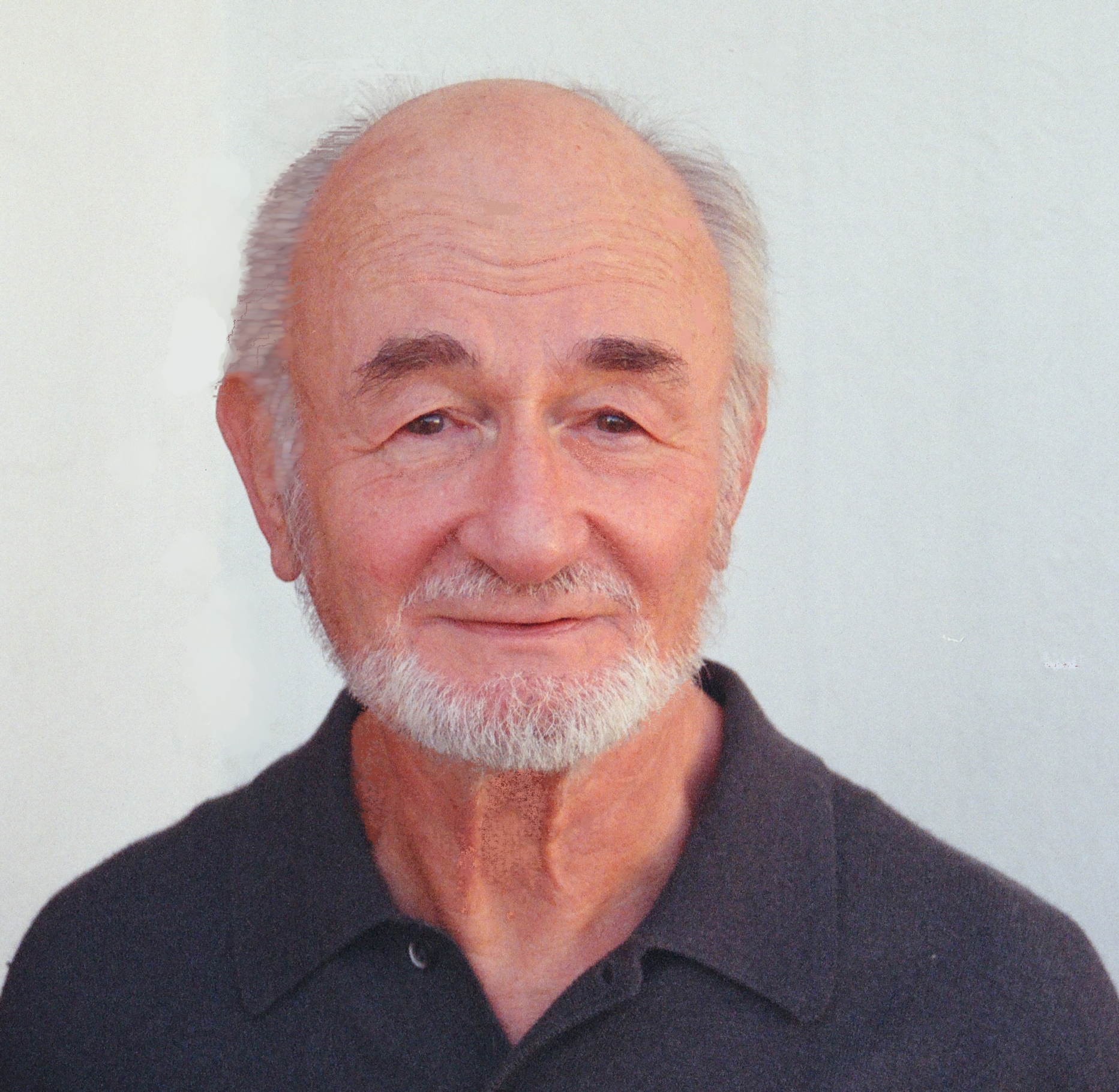 |
| Brian Harris, one of our brilliant pioneers. Source |
Studying human translation had, in fact, started to attract the attention of a few scholars, often as a way to pin down MT difficulties. In 1958, Jean Paul Vinay & Jean Darbelnet published Stylistique comparée du français et de l’anglais. In 1963, Georges Mounin published Les problèmes théoriques de la traduction. In 1964, Eugene Nida published Toward a Science of Translating and in 1965 John C. Catford published his equally seminal book, A linguistic theory of translation. Alexander Ludskanov published Prevezhdat chovekt i machinata (‘human and machine translation’) in 1967. All these authors borrow some concepts and views from MT perspectives and the information-processing paradigm of cognition—e.g., in Vinay & Darbelnet’s “strategies,” in Nida’s description of the translation process, in Catford’s understanding of translating as linguistic substitution, in Mounin’s discussion of language universals, and in Ludskanov’s notion of invariant information.
After WWII, many of the first empirical publications within cognitive and psycholinguistic approaches dealt with simultaneous interpreting, such as Eva Paneth’s M.A. thesis (1957, University of London), Pierre Oléron & Hubert Nanpon’s (1964) study on interpreters’ ear-voice span (EVS); and the PhD dissertations of Henri C. Barik (1969, University of North Carolina, Chaple Hill), Ingrid Pinter [Kurz] (1969, University of Vienna), and David Gerver (1971, Oxford University). Most of these pioneers were psychologists or psycholinguists, like Richard W. Brislin, Ghelly V. Chernov, Frieda Goldman-Eisler, Everdina A. Lawson and Anne M. Treisman. In general, simultaneous interpreting was for them but a peculiar task to trigger differential effects, and even language was deemed a secondary study topic when compared to message processing, attention and memory. Their efforts focused on manipulating a variable in the input (e.g., speech delivery rate) and then watching its effects on the interpreters’ output (e.g., input segmentation, EVS, pauses).
The work of these pioneers would later attract criticism from a group of professional interpreters turned scholars—the “practisearchers”—who dismissed the work of “outsiders” from psychology. Although it is true that the main interest of these “outsiders” was not simultaneous interpreting per se, their contributions were by no means negligible. For instance, based on the information-processing paradigm, Gerver (1975) laid down the first model of simultaneous interpreting. As a whole, these pioneers set the pace for the following generation of empirical conference interpreting researchers.
Meanwhile, in 1964, Otto Kade, a teacher of Russian and a self-trained conference interpreter, defended the first PhD dissertation on translation in (East) Germany, Subjektive und objektive Faktoren im Übersetzungsprozess. Ein Beitrag zur Ermittlung objektiver Kriterien des Übersetzens als Voraussetzung für eine wissenschaftliche Lösung des Übersetzungsproblems (‘Subjective and objective factors in the translation process. A contribution to determine objective criteria in translation as prerequisites for a scientific solution of the translation problem’). In his 1968 book, Zufall und Gesetzmäßigkeit in der Übersetzung (‘Chance and regularity in translation’), Kade described interpreting as a special kind of translating where the target language output is produced under time pressure because the original cannot be re-accessed. In doing so, he tied translation and interpreting into a single discipline, hence the German term Translation [tʁanslat͡sjo:n] as an unmbrella term covering Übersetzen (English 'translating') and Dolmetschen ('interpreting').
Kade also shifted the referential framework from psychology to linguistics. Since Chomskyan linguistics was about the language system and only considered perfect speakers-listeners in perfect communicative situations, empiricism was unnecessary. Very much in the MT tradition, Kade described equivalence in terms of correspondence between lexical units from two languages (or lack thereof). These moves paved the way for the first two major cognitive frameworks in the discipline: the Leipzig School and the Paris School.
|
[…] the 12th and last issue of Übersetzungswissenschaftliche Beiträge, with the theme “Interference in Translation,” edited by Heide Schmidt, was published in 1989, and contained contributions, not only by Švejcer (Moscow), Neubert (Leipzig) and Klaudy (Budapest), but also by Wilss (Saarbrücken), Kussmaul (Mainz-Germersheim), Holz-Mänttäri (Turku) and Snell-Hornby (Zurich). Many ideas from the Leipzig School had already been taken up elsewhere in the Western stream of translation theory, as in the work of Peter Newmark (cf. Newmark 1981). What is not so well known is Kade’s contribution to the then still embryonic field of interpreting studies. As a practising conference interpreter Kade made a substantial contribution to interpreter training (e.g., Kade 1965) and also to interpreting theory (e.g., Kade 1970) and took up contact with Danica Seleskovitch in Paris […] |
| Mary Snell-Hornby (2006: 29) |
 |
|
| Gerd Wotjak, one of the representatives of the Leipzig School. Source |
Chomsky’s views on language were extremely influential between the 1950s and 1970s. Language was to be studied in psychological, rather than in sociological terms (then more associated to structuralist linguistics). However, the main interest was in the language rules and not in actual production or reception, and such rules could be accessed through introspection.
In September 1956, the Institute of Interpreting at the Karl Marx University in Leipzig (East Germany) opened its doors. Since 1964, several scholars such as Gert Jäger, Otto Kade (deputy director from 1956), Albrecht Neubert, Heide Schmidt and Gerd Wotjak worked there in a joint effort to develop a Science of Translation that would come to be known as the Leipzig School. They agreed that all languages can express anything, but that they will do so in different ways. Translating was thus a special case of communication, a matter of code-switching. The Science of Translation was to be a branch of linguistics aimed at making statements on the mental mechanisms involved in linguistic replacement and in the transfer of meaning, that is, at developing “translation grammars.”
In 1965, the Leipzig Institute hosted what probably was the first international translation conference ever, with the motto “Grundfragen der Übersetzungswissenschaft” (‘basic questions for the Science of Translation’, Neubert 1968). In it, Kade acknowledged three components bearing on a text: an intellectual component (K1), an emotional component (K2), and a formal component (K3). Thus, he recognized the historical and social aspects of translation, but considered them idiosyncratic to each communicative event, and thus not acceptable as a basis for generalization. Consequently, personal, social and cultural aspects were intentionally left out of research and literary translation became an outcast.
In spite of its restrictive approach, the contributions of the Leipzig School were rich and varied. They soon recognized a “double nature” of translation (linguistic and communicative) and developed the notion of communicative equivalence, which put an end to the extreme formalism inherited from MT. Kade realized that the study of translation and interpreting needed to go beyond linguistics; Neubert was very pragmatic and first included sociocultural aspects and text linguistics later; Wotjak slowly drifted towards cognitive-linguistic approaches. To little avail, because some basic assumptions inherited from MT and the information-processing paradigm of cognition remained unshattered in their approaches and, by the mid 1980s, the Leipziger model of a Science of Translation based on generative linguistics was breaking through the seams.
The Paris School or Théorie du Sense
|
The main objection to the [interpretive] theory was and is that the authors failed, in the opinion of their critics, conclusively to prove [deverbalisation]. Seleskovitch and Lederer had in fact supported their hypotheses with a number of recorded interpretations, but their critics apparently did not feel that the recordings constituted sufficient proof. And this is where the matter still stands today, as neither the authors nor those who subsequently adopted their theory have been able to devise other methods of proving to the satisfaction of the sceptics that deverbalisation does in fact occur. The only thing that has changed is the terminology: Seleskovitch (1975, 1978: 333-341) and Lederer (1981a) referred in their early work to deverbalisation but in later publications (1981b) they have tended to use the term "conceptualisation" instead. They have never explained why they changed the terminology, so there is no telling whether the change was stylistic and/or semantic or whether the use of a more conventional term was simply an attempt to defuse criticism (which it didn't). […] One suspects (though this is really neither here nor there) that the failure to disprove it is due to the same causes as the failure to prove it. |
| Karla Dejean Le Féal (1998: 42) |
Danica Seleskovitch was the most prominent figure of the Paris school. She had been a top conference interpreter for years when she joined the Sorbonne University in 1957, where she remodelled the Institut des Hautes Etudes d’Interprétariat as a section of the École Supérieure d'Interprètes et de Traducteurs (ESIT, today part of the Sorbonne Nouvelle or Paris 3). Between 1959 and 1963, she was also AIIC’s executive secretary. She defended her PhD dissertation on note-taking in consecutive interpreting in 1973 and then created a PhD program which would become the mainstay of the théorie du sense, later known as the interpretive theory of translation.
 |
| Danica Seleskovitch. Source |
The Paris School developed as a reaction against the narrow views imposed by linguistics, then represented by the Leipzig School, but it also aimed to meet the pedagogical needs of interpreter (and translator) trainers. Rather than challenging the received views in linguistics on language and meaning, Seleskovitch drew from semiotics (through Mounin) and psychology to complement them. Meaning might well be stable and subject to equivalence and “transcoding,” but in human translation such transcoding would be reduced to specialized terminology as well as to proper names and units of measurement for which, Seleskovitch argued, 1:1 correspondences between languages did exist. Interpreting, on the other hand, was for her a matter of sense: a conscious, non-verbal representation in memory that emerged from the interaction of linguistic meaning and the interpreters’ “cognitive complements” (language command, world knowledge, situation appraisal). Interpreters would basically strip off language from messages to grasp their deverbalized sense and clad it later in the words of a different language.
The Paris School mistrusted experimental research by psychologists and, instead, favored observation and mainly introspection, much in the Chomskyan fashion. Hence, being an interpreter was very important to do such kind of research, and a whole generation of researchers led by Seleskovitch would be dubbed the “practisearchers”. Seleskovitch’s model was deductive and very abstract, so it was very difficult to falsify with anything but logical argument. Furthermore, its correlation with the then evolving models of the mind was sometimes doubtful. Marianne Lederer, Karla Dejean Le Féal, Jean Delisle (who added insights from discourse analysis) and Mariano García Landa, amongst others, made an effort to streamline Seleskovitch’s model and to flesh it out. Even so, many basic concepts, such as comprehension, remained highly idealized. The interpretive theory was first restricted to (conference) interpreting, then enlarged to apply to (nonliterary) written translation.
By the mid-1980s, many translation scholars had concluded that linguistics was not the right framework to study translation and interpreting, and that the discipline would never become an exact science. This, of course, was not solely due to the Paris School. In any case, several paths diverged at this point that seem to have been inspired by some trait from the interpretive theory. Many embraced James S. Holmes’ suggestion to enlarge the discipline with inputs from cultural and literary studies (e.g., works by André Lefevere), thereby echoing the Paris School bid for multidisciplinarity. This move led to the birth of Translation Studies, whose precedents as a discipline combining linguistic and literary strands can be found in the 1958, at the Fourth Congress of Slavists in Moscow.
Other scholars, such as Hans Vermeer, Katharina Reiß, Justa Holz Mänttäri and Christiane Nord, rejected linguistics and embraced the deductive, rationalistic stance from the Leipzig and Paris Schools to develop functionalist approaches. Still others would stick to empirical approaches but switched their referential framework back to psycholinguistics, thereby following Seleskovitch in focusing on translators rather than on translations. This later trend would come to be known as process studies.
The psycholinguistic stage in translation research
|
The days are gone when we believed that there are certain behavioural patterns that are necessary to achieve success in translation. We know by now that time factors, access to translation aids, leisured production, or professional routines do not account for success. […] One of the main findings from the research based on think aloud data, and from process research at large, is that it is dangerous to make sweeping generalizations about translation processes. There is wide individual variation in the processes of novices as well as those of skilled professionals. It has turned out, for example, that professional status does not necessarily guarantee high-quality performance, and conversely, that novices’ performance may manifest features of expertise. |
| Sonja Tirkkonen-Condit (2005: 405–406) |
The first attempts to peek into the translator’s black box were made possible by K. Anders Ericsson & Herbert A. Simon’s (1980, 1984) work on a data collection technique known as think-aloud method. They worked within the information-processing paradigm and claimed that introspective verbal reports provide valid data to access somebody’s stream of thoughts while performing a task. Basically, subjects would be requested to carry out a task while thinking out loud. Recordings of the sessions would be transcribed in protocols (TAPs), which could then be analyzed.
 |
|
| Wolfgang Lörscher. Source |
In 1982, Ursula Sandrock completed her Staatsarbeit (similar to an M.A. thesis) on the application of the Think-Aloud technique to analyze the translation process at the University of Kassel, (West) Germany. In 1984, Sandrock and her supervisor, Hans Wilhelm Dechert (whose specialty was contrastive psycholinguistics), presented a follow-up paper at the 3rd Colchester Second Language Acquisition Workshop (published as Dechert & Sandrock 1986). Pamela Gerloff, Hans P. Krings and Wolfgang Lörscher published works using TAPs also in 1986. Other researchers, such as Hans Hönig, Riitta Jääskeläinen, Paul Kußmaul and Sonja Tirkkonen-Condit, would soon join them. These early studies (inspired by the information-processing paradigm) focused on translation as a series of problem-solving tasks or as an overall problem-solving process. Research then widened to cover topics such as strategic vs routine behavior, macro- vs microplanning, often mixed with immediately observable behaviors such as corrections and use of dictionaries. The first experiments were carried out using foreign language learners as subjects, with no translation briefs and under loose laboratory conditions.
Soon researchers concentrated on learning about the translation process and also on apprehending successful behaviors that might later be applied to translator training. Professional translators, advanced translation trainees and novices—variously understood and described—became the usual subjects, their behaviors often contrasted against each other. No homogeneous theoretical framework sustained these research efforts. Data interpretation expanded to include psycholinguistic notions (e.g., competence), cognitive psychological models (e.g., top-down/bottom-up processing), new linguistic constructs (e.g., frames, scripts, schemata, scenes-and-frames semantics) and applied linguistics concepts (e.g., interlingua), together with ideas from the Leipzig and Paris schools (e.g., transcoding, sense and form orientation).
Professional translators were often found to process larger ST units, to make more inferences, to resort more to their world knowledge and also to display more strategic behaviors than unexperienced (often younger) trainees, but results became increasingly puzzling or even contradictory. Criticism mounted on research methods, but back then introspection was the best approach available, so it just diversified into monologue protocols, dialogue protocols, and group protocols. Retrospective interviews were also used, which bridged translation research and interpreting research. Mistrust of the very notion of accessing the real stream of thoughts grew stronger. This time, however, the empirical research on the mental processes of translation and interpreting had reached a critical mass and had settled as a distinct research domain within Translation Studies, witness the special issue of Meta 41/1, edited by Königs, and the focused meetings in Jyväskylä (1996) and Savonlinna (1998) hosted by Tirkkonen-Condit and Jääskeläinen (see also Kußmaul & Tirkkonen-Condit 1995) . Thus, rather than leading the whole enterprise again into dire straits, the difficulties were simply interpreted as the end of a stage, the passing of the torch to a new generation of researchers (see annotated bibliography in Jääskeläinen 2002).
The cognitive reorientation of research in simultaneous interpreting
|
While a Kuhnian paradigm shift can be said to have occurred in the discipline between the 1980s and the 1990s, the evolution over the past decade or so has been substantial but shows no such discontinuity; changes seem to flow more smoothly as a result of what has become regular interaction between scholars. |
| Daniel Gile (2009: 140) |
| María Teresa Bajo Molina studied working memory in bilinguals. Source |
Danica Seleskovitch’s retirement in 1990 paralleled the decline of the Paris School and coincided in time with a return to empiricism and a turn to multidisciplinarity that had actually started somewhat earlier, perhaps as far back as 1977 (Gerver & Sinaiko 1978). In 1986—the same year that witnessed the first steps of psycholinguistic approaches to empirical translation research—the SSLMIT from the University of Trieste organized a conference on interpreting (Gran & Dodds 1989) that globally challenged some received views. The main referential framework was still psycholinguistic within the information-processing paradigm (e.g., Sylvie Lambert, Barbara Moser-Mercer), but the field welcomed back researchers from other areas, such as neuroscience (e.g., Franco Fabbro) and cognitive psychology (e.g., Anette M. B. de Groot, María Teresa Bajo). Some researchers, such as Masaomi Kondo, Robin Setton and the late Miriam Shlesinger, would combine psychological and linguistic approaches. Hence, the overall tendency was to widen the framework from psychology into Cognitive Science.
Training and quality remained major research topics, but there were new focal points, like directionality, language-specific issues, and cognitive load (e.g., Daniel Gile 1995a, 1995b). Both descriptive or experimental research methods became an important issue, with ecological validity, sample representativeness and the indeterminacy of variables as primary concerns. Another remarkable feature was that the community of conference interpreting research widened far beyond France and Germany, and became more organized. The researchers in Trieste started to publish The Interpreter’s Newsletter in 1988, Gile set up the CIRIN Bulletin in 1990, the Interpreting Research Association of Japan (today’s Japan Association of Interpretation Studies) was founded in 1991, and Interpreting published its first issue in 1996. A conference held in Turku in 1994 (Gambier, Gile & Taylor 1997) marked another peak in cognitive and psycholinguistic approaches to conference interpreting.
In June 1995, the first major meeting solely focused on community interpreting (the Critical Link) was held in Canada. The attention of the Interpreting Studies community partially shifted away from both conference interpreting and cognitive approaches. Meanwhile, in translation, cognitive approaches would gain further recognition while they diversified. Let us first address the causes.
The (second) cognitive revolution
|
By the mid 80s of the last century it became clear that further developments of cognitive psychology were required to provide a solid foundation for a scientific psychology. Language, as the main tool of cognition, began to be the focus of all kinds of research, including developmental studies. Along with that came the realization that the first cognitive revolution had remained trapped by the presumption of individualism. Jerome Bruner (1986) was one of those who realized that social cognitive processes were prior to individual acts of thinking. This was the beginnings of the second cognitive revolution. |
| Horace Romano "Rom" Harré (2009: 181) |
| David Kirsh. Thinking with your body and other things. Source |
The expression second cognitive revolution may be a bit of an overstatement, because it downplays the precedents and underscores the magnitude of changes. Be it as it may, by the late 1980s the classical, information-processing paradigm had led to some major advances in machine translation of (written) language pairs, but it had also obviously failed to capture the basics of meaning and human meaning-making. Researchers started to look at language not as a limited set of hollow symbols, but as a window onto higher cognition. Linguistics became more interested in mental constructs (scripts, frames, schemata) than in rules. Brunner (1990) claimed that such constructs are used both to ascribe meaning and also to organize experience, and this contributed to pave the way to expand cognition to areas that had been purposefully excluded.
On the one hand, emotions are now considered part of cognitive processing (Ortony, Clore & Collins 1988). Thought has come to be seen as embodied, thereby ending the Cartesian dualist opposition between mind and body (e.g., Damasio 1994). Also, cognition is situated in an environment and not an endeavor of an isolated, autonomous processing machine (Clancey 1997). In fact, humans extend part of our cognitive processes into the environment (Clark 2008), thereby closing the gap between inner and outer experience. And rational thoughts are not always conscious (De Gelder, de Haan & Heywood 2001). On the other hand, schemata are partially conventional and thus shared by social groups. Cognition and culture are closely linked (Hutchins 1995), so schemata are the interface between neurobiology and social and developmental psychology. The self and self-consciousness became new research topics, and researchers started to look also at their neurocognitive foundations.
On the whole, the different strands behind these changes and advances offer somewhat partial but related answers to the shortcomings of the information-processing paradigm They are slowly converging into overarching principles that are fostering a renewal in cognitive approaches to translation and interpreting.
The cognitive reorientation of research in translation
|
The field is slowly but steadily moving towards updated understandings of cognition that have challenged the focus on isolated, conscious rational thought, and have opened the door to the study of emotions, intuition and uncertainty, and their influence on the ways people translate and interpret. The translators and interpreters’ experience and beliefs have been shown to have a bearing on the way they carry out their tasks, but not necessarily on their products. This has paved the way to study individual psychological traits and preferences, which compound into personal working styles. Much research is and will be carried out in labs, but now the full environment and conditions are also being observed, and research has also reached the working place. New settings and research topics call for an adjustment in research methods, and some multi-method strategies are being implemented that may soon shed light on the most appropriate ways of tackling different research goals. We may still not have the answers to many questions, but we are learning how to ask the right questions. |
| Ricardo Muñoz Martín (2014:72) |
Advances in information technology made personal computers cheaper and the translation industry and workforce adopted them massively by the end of the eighties. The new computerized environment has made it possible to register keystrokes and mouse use (keylogging) and also to videocapture the screen as the translation process unfolds. Time has become a quantitative parameter that concentrates the efforts of many researchers, such as Arnt L. Jakobsen, who developed Translog (today, Translog II, by Michael Carl) a keylogger designed for translation process research. Proponents of multimethod procedures, such as Fábio Alves (2003), soon welcomed eyetracking as an additional non-invasive data collection method (e.g., Göpferich, Jakobsen & Mees 2008). Both keyloggers and eyetrackers’ log files are often used to stimulate retrospective think-aloud as a way to triangulate data. Process and product approaches are now often combined (e.g., Englund Dimitrova 2005). Corpus linguistics, readability formulas, and concepts such as Choice Network Analysis (Campbell 2000) are or have been explored to incorporate text analysis into process research. Empirical works are not only more reliable; there are many more researchers carrying them out, so that Snell-Hornby (2006: 115) describes this upsurge as an “empirical turn.”
| Maureen Ehrensberger-Dow. Cognitive load and ergonomics. Source |
Methodological innovation (e.g., Chen 2020) and enhanced rigor (e.g., Mellinger & Hanson 2021) run parallel to theoretical renewal (e.g., Halverson & Marín 2021). Concepts from earlier (linguistic/communicative and MT) views such as competence (e.g., PACTE 2003), translation unit and equivalence still have some adherents, and developments within those lines, such as Relevance Theory (e.g., Gutt 2000) have an important impact. However, a shift towards using Cognitive Science—
Tackling a whole new range of research topics is now possible, thanks to the combined strengths of new methods and new approaches to cognition. For example, the role of figurative language in processes, products (Tirkkonen-Condit 2001) and in the theory (Martín de León 2017); the importance of expertise (Sirén & Hakkarainen 2002), feelings (Laukkanen 1996; Rojo & Cifuentes 2021), intuition (Hubscher-Davidson 2013), directionality (Whyatt, Witczak & Tomczak 2021) and metacognition (Shreve 2009) in cognitive processing; and the interaction within networks (Risku & Dickinson 2009) and with computers (O’Brien 2012) are increasingly under the spotlight. Research has not really abandoned the lab but it is definitely going into the workplace (e.g., Lavault-Olléon 2011).
Scientific research results are tentative by nature and those in cognitive translation & interpreting studies, far too varied to be summarized here, but see the noteworthy advances in many areas exemplified in the references in the previous paragraphs. All this would not be possible without larger ranks of researchers who are better organized and make full use of improved communication means. As the number of researchers in this realm grows rapidly in countries like Brazil, China, and Poland, research teams from different universities (e.g., Aachen, Poznan, Stockholm), centers, labs and groups (e.g., CRITT, CSTIC, EMOTRA, LETRA, MC2 Lab, Socotrans, TRA&CO) are gathering in focused meetings and networks, such as those organized by TREC (ICTIC series) and the CSTIC (ICCRTI series) and may also published in focused venues, such as Translation, cognition & behavior. Cognitive approaches finally seem to be on the right track and the next two decades will be crucial to determine whether it can deliver an empirical description and a solid explanation for at least some cognitive aspects of translation, and interpreting tasks.

Nearly any aspect of the human translation process may be subject of scientific, empirical studies from cognitive and psycholinguistic approaches. Traditional topics include problem-solving, decision-making, cognitive load, and aspects such as the use of working memory. Newer research lines have enlarged the scope to also include many other topics, mainly related to the interaction between translators or interpreters with other people, with tools and with their environment, from perspectives such as human-computer interaction, ergonomics; aspects of the process such as reading, writing, revising and post-editing and their relationship with similar monolingual behaviors; the role of emotions, consciousness, and thinking styles; and the nature of translation and/or interpreting expertise and its development. Comparisons between tasks or task variations with intra-subject designs and combined or coordinated international efforts are on the rise.