 |
 |
 |
 |
 |
 |
 |
SPA Técnicas / estrategias de traducción |
contents
Introduction | Difference from similar notions | Instrument of textual analysis | Dynamism and functionality | Defining characteristics | Classification of translation techniques | Research potential

There is some disagreement among theorists about translation techniques, not only regarding the terminology used but also where the very concept is concerned. There is no consensus on what the category should be called, with different names having been given to it (procedures, techniques, strategies), and the concept itself is sometimes confused with other notions.
This entry draws a distinction between the notion of translation techniques and other, similar categories, such as translation strategies and translation methods. It proposes a definition of translation techniques as an instrument of analysis for identifying and characterizing the result of translation equivalence in relation to the ST. Such a conception avoids the prescriptive character sometimes attributed to translation techniques and retains the idea of them being used in a functional, dynamic way, in keeping with the dynamism of translation equivalence. The entry also includes a classification that seeks to unify criteria from existing proposals and incorporate the main variations.
![[título del epígrafe]](2.2-X.png "[título del epígrafe]") Difference from similar notions
Difference from similar notions
While translation techniques and translation strategies are interchangeable terms in the title of this entry (as they are in many definitions and classifications), it should be noted that there are proposals according to which the two have different roles in problem-solving, with strategies being part of the process and techniques affecting its result. In that distinction, the term strategy refers to the procedures (whether conscious or unconscious, verbal or non-verbal) translators use to solve the problems that arise when carrying out a translation process with a specific objective in mind. Translators use strategies for comprehension (e.g., distinguishing between main and secondary ideas, establishing conceptual relationships, searching for information) and for reformulation (e.g., paraphrasing, retranslating, speaking out loud, avoiding words very similar to those of the ST). Strategies pave the way for an adequate solution to a translation unit, but the solution is actually found through the use of a particular technique. Some mechanisms can function both as strategies and as techniques. Paraphrasing, for instance, can be used as a reformulation strategy to solve problems in the process and as an amplification technique in a TT (paraphrasing a cultural element so that target readers can understand it). This does not mean that paraphrasing as a strategy inevitably leads to the use of the technique of amplification; it could also result in an adaptation, a description, a discursive creation, etc. Regardless of the terminology used, it is necessary to draw a conceptual distinction between the two mechanisms.
A distinction should also be made between translation techniques and translation methods, as the two terms have sometimes been used interchangeably and synonymously. Both concepts have a bearing on the result of the translation process, but a translation technique affects a text’s micro-units while a translation method affects the entire text. “A translation method is the performance of a given translation process according to a principle determined by the translator’s objective, a global choice applied throughout the text” (Hurtado 1996). Logically, there is a correlation between a text’s overall result, the translation method employed and the choices made at the micro-unit level, which are reflected in the use of a particular translation technique. Thus, for example, if the philological translation method is chosen (with a view to producing an academic translation), the techniques used most frequently, in keeping with that choice, will include amplification in the form of footnotes or in a glossary.
Instrument of textual analysis
A defining characteristic of translation techniques is their conception as an instrument of analysis for comparing translation solutions, rather than for comparing terms in two languages; as an instrument of textual analysis, in other words.
Vinay & Darbelnet’s (1958) proposal caused confusion as to what corresponds to language and what corresponds to texts. The proposal is structured around the comparison of languages and the examples the authors give to illustrate their procedures are decontextualized. Furthermore, they provide just a single translation in each case, resulting in fixed pairs of equivalents. A consequence of that is confusion between phenomena stemming from the comparison of languages and categories for analysing their similarities and differences, and phenomena stemming from the translation of texts, which require other categories.
When a translator chooses a translation technique, there are always legitimate alternatives. A technique is used as a result of being selected from among various options on the basis of the textual context to which it is to be applied, on the basis of all the characteristics and circumstances relevant to the TT.
The conception of translation techniques as an instrument of textual analysis not only separates them from the comparison of languages but also avoids the prescriptive character that has sometimes been attributed to them. Translation techniques are for describing, not prescribing; their function is not to indicate adequate translations for an item but to describe how the item has been translated in its textual context.
To preserve the dynamic dimension of translation, it is necessary to separate the definition of a translation technique from appraisal of its validity. A technique is a result of a choice made by a translator. Its validity is therefore determined by the specific textual circumstances of the item to be translated in its textual context. A technique is chosen on the basis of different variables that depend on the specific circumstances of the term in the contexts of the ST and the TT, as well as on the degree of asymmetry between the two.
The variables in question, which act as restricting or conditioning factors, include the text’s genre (letter of complaint, contract, tourist brochure, etc.), the type of translation (technical, literary, etc.), the mode of translation (written translation, sight translation, consecutive interpreting, etc.), the purpose of the translation and the characteristics of its readership, and the global method or type of equivalence chosen (interpretative and communicative, free, etc.). The degree of asymmetry is something translators generally measure in terms of transparency or acceptability (pragmatic, ideological or grammatical), which, in turn, depends on all the aforementioned variables (knowledge of the translation’s intended readership, genre conventions, purpose of the translation, etc.).
Thus, a decontextualized appraisal of a translation technique as justified, unjustified or erroneous overrides the principle of functionality and dynamism which should govern translation. A translation technique can only be meaningfully evaluated within a specific communicative context. Translation techniques are therefore neither good nor bad in the abstract, but rather functional and dynamic.
Translation techniques are an instrument for textual analysis of how translation equivalence works. They make it possible to identify, classify and name the options translators choose to translate micro-units of texts. Translation techniques affect the result of the translation process; to put it another way, it is in the result of the translation that the technique used is reflected. A translation technique is chosen on the basis of a discursive process that takes the textual context into account and targets an effect or a particular function in the TT. In summary, translation techniques have the following five basic characteristics: They...
- affect the result of the translation process
- are classified on the basis of comparison with the ST
- are applied to micro-units of text
- are discursive and contextual in nature
- are functional
There are other categories besides translation techniques for analysing a TT; coherence, cohesion, thematic progression and contextual aspects are also possibilities.
Classification of translation techniques
The classification of translation techniques proposed here is a revision of Molina (2001) and Molina and Hurtado (2002).
This proposed classification sets out to:
- Separate the concept of translation techniques from similar notions (translation strategies, translation methods and translation errors).
- Include only procedures corresponding to the translation of texts, omitting those corresponding to the comparison of languages.
- Preserve the functional nature of translation techniques. The definitions given do not appraise a technique’s suitability or correctness, which depends on its situation in the text, context, the translation method chosen, readers’ expectations, etc.
- Maintain the most widely used and accepted terms.
- Formulate new techniques to explain previously undescribed mechanisms.
Terms are sometimes translated by means of two or more techniques in combination. This possibility is included in the proposal of Newmark (1988), who calls such combinations doubles, triples and quadruples.
The classification proposed here features a total of 18 translation techniques. If a translation technique has an opposite technique, that is stated in its definition.
Proposed classification of translation techniques
|
Adaptation |
Making a shift in culture. |
Hasta la vista, baby (ENG) ⇒ Sayonara, baby (SPA) |
|
Amplification |
Adding clarifications (explicatory paraphrasing, footnotes, etc.). |
رمضان (ARA) ⇒ Ramadan, the Muslim month of fasting (ENG) |
|
Borrowing |
Incorporating a word or expression from another language into a TT. |
Lobby (ENG) ⇒ Lobby (SPA) |
|
Calque |
Giving a literal translation of a foreign syntagm that expresses a new concept or expression. |
Junk food (ENG) ⇒ Comida basura (SPA) |
|
Compensation |
Including an element of information or a stylistic effect in a different place. |
I was seeking thee, Flathead (ENG) ⇒ En vérité, c'est bien toi que je cherche, O Tête-Plate (FRA) |
|
Description |
Replacing a term or expression with a description of its form and/or function. |
Panettone (it) ⇒ Traditional Italian cake eaten on New Year’s Eve (ENG) |
|
Discursive creation |
Establishing a temporary equivalence that could never by anticipated out of context. |
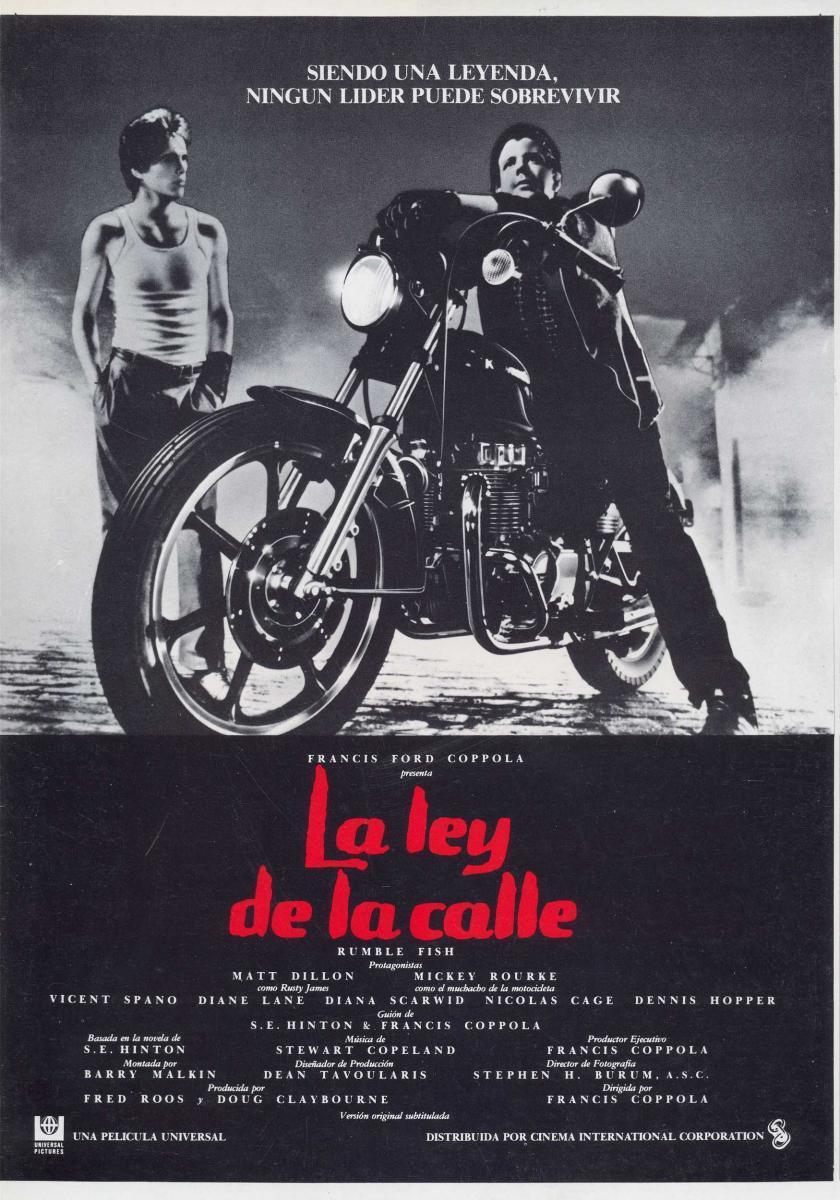
Rumble Fish (ENG) ⇒ La ley de la calle (SPA) |
|
Established equivalent |
Using a term or expression recognized (by a dictionary, through language use) as an equivalent. |
They are as like as two peas in a pod (ENG) ⇒ Se parecen como dos gotas de agua (SPA) |
|
Generalization |
Using a more general or neutral term. |
Guichet, fenêtre, devanture (FRA) ⇒ Window (ENG) |
|
Linguistic amplification |
Adding words without a grammatical or normative need to do so. |
No way (ENG) ⇒ De ninguna de las maneras (SPA) |
|
Linguistic compression |
Summarizing words without a grammatical or normative need to do so. |
Yes, so what? (ENG) ⇒ ¿Y? (SPA) |
|
Literal translation |
Giving a word-for-word translation of a syntagm or expression, but not of a single word. |
She is reading (ENG) ⇒ Ella está leyendo (SPA) |
|
Modulation |
Changing the point of view, focus or cognitive category. |
ستصير أباً (ARA) ⇒ You are going to have a child (ENG) |
|
Particularization |
Using a more precise or specific term. |
Window (ENG) ⇒ Guichet, fenêtre, devanture (FRA) |
|
Pragmatic variation |
Changing linguistic or paralinguistic elements that affect linguistic variation. |
Introducing or changing dialectal indicators, changing tone, etc. |
|
Reduction |
Suppressing an element of information. |
Ramadan, the Muslim month of fasting (ENG) ⇒ شهر رمضان (ARA) |
|
Substitution (linguistic, paralinguistic) |
Changing linguistic elements for paralinguistic elements or vice versa. |
Hand-on-heart gesture (ARA) ⇒ Thank you (ENG) |
|
Transposition |
Changing a grammatical category. |
He will soon be back (ENG) ⇒ No tardará en venir (SPA) |
Adaptation
Making a shift in culture. Replacing a cultural term with a term that is more common or functionally comparable in the target culture.
Example: the change of armadillo (armadillo) to erizo (hedgehog) in an Arabic translation of Cien años de soledad (One Hundred Years of Solitude):
|
“—No es sólo eso —rebatía Amaranta. Es que nacen los hijos con la cola de puerco. Aureliano José era sordo a todo argumento. —Aunque nazcan armadillos— suplicaba.”
|
"وكانت أمارناتا تجيب: <<ليس الأمر هكذا فحسب. وإنما يولد الأطفال على هذه الشاكلة بأذناب خنازير>>. وكان يصم أوريليانو جوزيه عن كل حججها ويستجير بها قائلا: <<حتى ولو ولدوا "كقنفذ>>." (—No es sólo eso —rebatía Amaranta. Es que nacen los hijos con la cola de puerco. Aureliano José era sordo a todo argumento. —Aunque nazcan como erizos —suplicaba.) |
|
ST: Gabriel García Márquez (1967 [1995]) Cien años de soledad Barcelona: Mondadori. |
TT: مائة عام من العزلة (1992 [1967]) Damascus: Dar al-Jundi, Arabic translation by Sami e Inam al-Jundi. |
Example: the change of Terminator 2’s catchphrase “Hasta la vista, baby” to “Sayonara, baby” in the dubbed Spanish version of the film:
 |
 |
| ST: video of original version Hasta la vista, baby. | Video of dubbed Spanish version Sayonara, baby. |
Amplification
Adding clarifications not present in the ST: extra information, explicatory paraphrasing, footnotes, etc. Example: adding “the Muslim month of fasting” to “Ramadan” in a translation from Arabic into English.
Footnotes are a type of amplification.
Example:
|
" (...) يقولون إن حاتم كان بدويا .. ولكنني أعتقد أنها مجرد كذبة." |
“People say Hatim* was a bedouin. But I think that’s a complete lie.” *Hatim, of the bedouin tribe of Taiy, is proverbial among the Arabs for his limitless generosity and hospitality. (Tr.) |
|
ST: KANAFANI, G. (1966) <<رجال في الشمس>>, 4th ed., Beirut: Mu’assat al-abhāt al-arabiyya. |
TT: Men in the Sun & Other Palestinian Stories (1999[1966]), Boulder/ London: Lynne Rienner Publishers. Translated from Arabic by Hilary Kilpatrick. |
The opposite technique is reduction.
Borrowing
Incorporating a word or expression from another language into a TT. Borrowing can be pure or naturalized. In the case of pure borrowing, the foreign word is not modified in any way. Example: using the English terms lobby and bestseller in a Spanish text instead of grupo de presión and superventas, respectively. Borrowing has a diachronic dimension. When a borrowed word or expression becomes standardly used in the target language, even with adapted spelling (football to fútbol and meeting to mitin in Spanish, for instance), it ceases to be a borrowed word or expression. Logically, borrowed words or expressions are transcribed if the two languages involved have different writing systems; the technique is still borrowing, however.
Calque
Giving a literal translation of a foreign syntagm that expresses a concept or expression new to the target culture. A calque can be lexical or structural. Examples: the Spanish terms comida basura and hora feliz, which come from the English terms junk food and happy hour, respectively. Calque has a diachronic dimension. If, over time, a calque becomes established among the speakers of a language and turns into a term or expression that is recognized (by a dictionary, through language use), it ceases to be a calque.
Compensation
Including an element of information or a stylistic effect in a different place in the TT because it cannot be reflected in the same place as in the ST. Vinay and Darbelnet (1958) give the example of the French translation of a sentence from The Jungle Book, “I was seeking thee, Flathead”. In this case, Kipling uses the archaism thee, rather than you, to convey majesty and respect. In French, however, none of the forms of the equivalent pronoun (tu, te, toi) has an equivalent archaic use, so the translator uses the vocative O to convey the same idea and puts it in a different position in the sentence: “En vérité, c'est bien toi que je cherche, O Tête-Plate”.
Example: in a translation intended first and foremost to be a reduced version, compensating for a plot element’s loss of intensity by placing it elsewhere in the text:
|
“Amaranta Úrsula seguía creyendo que era posible rescatar aquella comunidad elegida por el infortunio.” |
"فإن أمارناتا أورسولا، ظلت على اعتقادها بأن في الإمكان إنقاذ هذه البيئة التي انفردت بالعزلة وبما تعاقب عليها من كوارث ". (Amaranta Úrsula seguía creyendo que era posible rescatar aquella comunidad sumida en la soledad y elegida por el infortunio.) |
|
ST: Gabriel García Márquez (1967 [1995]) Cien años de soledad Barcelona: Mondadori. |
TT: مائة عام من العزلة (1989 [1967]) Beirut: Dar al-Auda. Translated into Arabic by Mahmud Masud. |
Description
Replacing a term or expression with a description of its form and/or function. Examples: translating “panettone” from Italian into English as traditional Italian cake eaten on New Year’s Eve; translating the Chinese word 鼎 (ding) into English as three-legged cauldron.
Discursive creation
Establishing a temporary equivalence that could never be anticipated out of context. This technique is often used in the translation of film and novel titles. Examples: the translation of the title of the film Rumble Fish into Spanish as La ley de la calle; the translation of the title of Manuel Puig’s novel Boquitas Pintadas from Spanish into Italian and English as Una frase, un rigo appena and Heartbreak tango respectively.
 |
 |
 |
 |
 |
| Rumble Fish (Francis Ford Coppola, 1983). | Spanish translation: La ley de la calle. | Manuel Puig. Buenos Aires: Sudamericana, 1969. | Italian translation: E. Cicogna. Milan: Feltrinelli, 1971. | English translation: S. J. Levine. London: Penguin Classics, 1996. |
Established equivalent
Using a term or expression recognized (by a dictionary, through language use) as an equivalent in the target language. Examples: translating the expression They are as like as two peas in a pod into Spanish as Se parecen como dos gotas de agua (which literally means They are as like as two drops of water); translating "حرب يونيو 1967" into English as the Six-Day War rather than as the war of June 1967, a literal translation.
Generalization
Using a more general or neutral term. Examples: translating any of the French terms guichet, fenêtre or devanture into English as window; translating the German term bratwurst into English as the more generic term sausage. The opposite technique is particularization.
Linguistic amplification
Adding words without a grammatical or normative need to do so. This technique is used with particular frequency in consecutive interpreting and dubbing. Example: translating No way into Spanish as De ninguna de las maneras instead of using an expression with the same number of words, such as En absoluto. The opposite technique is linguistic compression.
 |
 |
Linguistic compression
Summarizing words without a grammatical or normative need to do so. This technique is used with particular frequency in simultaneous interpreting and subtitling. Example: translating the question Yes, so what? into Spanish as ¿Y? instead of using an expression with the same number of words, such as Sí, ¿y qué? The opposite technique is linguistic amplification.
Literal translation
Giving a word-for-word translation of a syntagm or expression, but not of a single word. Examples: translating They are as like as two peas in a pod into Spanish as Se parecen como dos guisantes en una vaina (rather than as Se parecen como dos gotas de agua, the established equivalent); translating She is reading into Spanish as Ella está leyendo, maintaining the pronoun despite it being generally unnecessary in Spanish.
Modulation
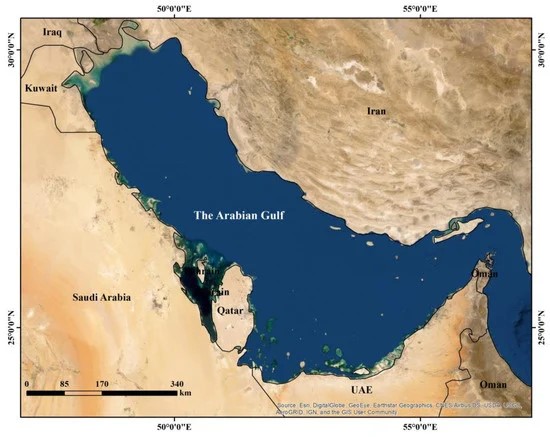
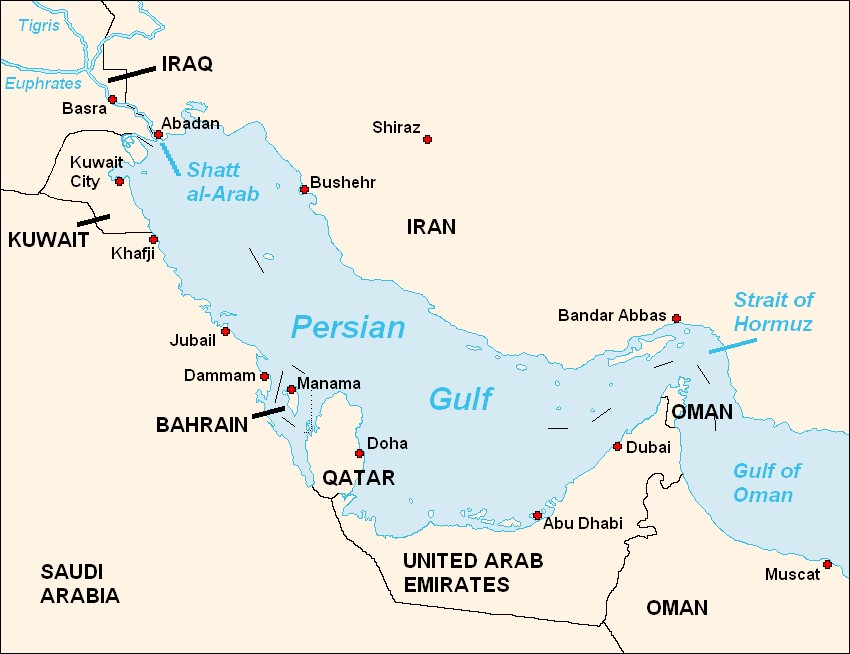
Changing the point of view, focus or category from that of the ST. Modulation can be lexical or structural. Example: translating ستصير أبا (literally, You are going to be a father) into English as You are going to have a child; choosing, on ideological grounds, between the synonymous terms Arabian Gulf and Persian Gulf in a translation
| Hanna-Barbera's Pixie and Dixie and Mr. Jinks (1958-1961). | Spanish translation: Pixie, Dixie y el gato Jinks. |
Particularization
Using a more precise or specific term. Examples: translating window into French as guichet; translating sausage into German as the more specific term bratwurst. The opposite technique is generalization.
Pragmatic variation
Changing linguistic elements or paralinguistic elements (intonation, gestures) that affect aspects of linguistic variation: changes of textual tone, style, social dialect, geographic dialect. This includes, for instance, introducing or changing dialectal indicators to characterize individuals in translation for theatre, changing tone in adaptations of novels for children, etc. Example: in the dubbed Spanish version of the Pixie and Dixie and Mr. Jinks cartoons, dialectal indicators are introduced for comic effect, resulting in the mice Pixie and Dixie having a Mexican and a Cuban accent respectively, and the cat Jinks having a strong Andalusian accent.
Reduction
Suppressing, partially or entirely, an element of ST information in the TT. Example: opting not to include the Muslim month of fasting in apposition to Ramadan in a translation from English into Arabic. The opposite technique is amplification.
Substitution (linguistic, paralinguistic)
 |
Changing linguistic elements for paralinguistic elements (intonation, gestures) or vice versa. This technique is chiefly used in interpreting. Examples: translating the Arab hand-on-heart gesture as thank you; translating the Indian waving-thumb-in-front-of-face gesture as “I’m embarrassed”:
Transposition
Changing a grammatical category. Example: translating He will soon be back into Spanish as No tardará en venir, changing the adverb soon for the verb tardar, instead of maintaining the adverb and translating the expression as Estará de vuelta pronto.

Translation techniques can be used as an instrument of analysis for describing and comparing the results of translation solutions. They make it possible to compare the options chosen by different translators to translate the same item, be it in different translations into the same language or in translations of a single text into different languages. Additionally, they make it possible to obtain data on the methodological option used in a TT. The translator’s pre-planned global approach to the TT, i.e. their selected translation method, can be identified by analysing their choice of certain techniques over others. For all the above reasons, translation techniques are a widely used instrument of analysis in descriptive studies.
There are numerous cases of Descriptive Translation Studies research in which translation techniques are used as an instrument of analysis to obtain empirical data to be studied. For instance, as an instrument for analysing the micro-units of texts, translation techniques can be used to: a) identify the application of a translation norm (Toury 1995), e.g., repeated use of the technique of borrowing to comply with the norm of exoticizing the TT; b) gauge the tendency towards one of the two poles at which a TT can be situated, that of the source language and culture (the pole of adequacy) or that of the target language and culture (the pole of acceptability), or towards either of the strategies of domestication and foreignization as proposed by Venuti (2004); repeated use of the techniques of adaptation and description, for example, would be indicative of a tendency towards the target language and culture and, possibly, towards the strategy of domestication; or c) compare translations performed at different times in the past and obtain data from a diachronic perspective, e.g., on the evolution of a word in a culture or in relation to power and ideology, or on the acceptance or rejection of a genre or topic (restrictions that are part of the concept of rewriting in Lefevere 1992).
Translation techniques have proven to be a useful instrument of analysis of how cultural references work in the translation process, having often been used to that end in studies. Some translation technique classifications that revolve around cultural references have been proposed (see Franco 1996; Molina 2001, 2006; Marco 2004).
Translation techniques are also used in Applied Translation Studies, particularly for assessing translations and in translation teaching.