 |
 |
 |
 |
 |
 |
 |
POR Portugal e Espanha - Contactos SPA Portugal y España - Contactos |
contents
Introduction | Medieval ages | The 16th and 17th centuries | The 18th century, age of transition | From the mid 19th century to the first third of the 20th century | From Estado Novo (New State) to our days | Conclusions | Research potential

Portuguese-Spanish relations have been marked by both moments of intense contact and deep apathy. Despite their geographical and historical proximity, Portugal and Spain have lived back to back for long periods of their histories. This idea has permeated the collective consciousness of both peoples until it has become a commonplace.
The present topic reflects the mistrust Portugal developed against Spain after the period known as the “Dual Monarchy” or Iberian Union (1580-1640), which crystallised itself in the saying De Espanha nem bom vento nem bom casamento; besides, this topic also conveys an air of contempt and superiority of Spain towards Portugal. Specialists usually use words such as estrangement, ignorance, hostility, indifference and distrust to characterise these relationships.
The results of this distance, in a more mental than physical way, have been the lack of interest in each other’s cultural manifestations, as well as the obligatory lament of those who try to counteract this situation. Examples abound from long ago and are found in most publications dealing with relations between these two countries.
In Babel ibérico (anthology that compiles texts on the relations between Spain and Portugal [2006] and Portugal and Spain [2008] through translational activity), Xosé Manuel Dasilva considered this work “useful for reconstructing the historical development of the contacts between the two countries” and added, in the introduction, that “it can also help to alleviate the almost constant distance between both of them” (Dasilva 2006: 6-7).
A few years later, Carlos Clementson, in the prologue to his bilingual anthology of Portuguese poetry, Alma minha gentil (2009), stated that “both peoples have always lived turning their backs on each other, like ‘two shoes in the same box’”. The analyst suggested that it was a conventionality among researchers “initiating any study or intellectual approximation to this culture, which is almost like a Siamese sister, […] by referring to this kind of secular fatality”. He highlighted that this idea had accompanied both Iberian communities throughout their histories; and also recognised that, in the last decades, “we are witnessing a gradual process of breaking away from such secular isolation” (Clementson 2009: 11-12).
Neverthless, Pilar Vázquez Cuesta pointed out, in her anthology, Poesía portuguesa actual (1976), that “as topical as the Hispano-Portuguese fraternity is the assertion that, since the restoration of Lusitanian Independence in 1640, there has been an almost total lack of mutual understanding between these two peninsular kingdoms”. The author brought up that “the scarcity of literary relations between Portugal and Spain during these almost three and a half centuries of parallel history” was not “uniform in nature” (Vázquez 1976: 7 ).
From a modern historiographic point of view, the image of "Spain and Portugal as brothers who turn their backs on each other" is now hackneyed (Cao 2012: 26). Throughout the cultural history of both countries, there have been real contacts, despite of the varying intensity, that a peninsular approach, perhaps, illustrates better than the traditional vision provided by each of the literary stories.
The Iberian Peninsula, thus, emerges as an intercultural space (Pageaux 2010), a polysystem where the complexity of intersystemic relationships materialises and favours the dialogue between the protagonists (Sáez 2014). Considering the space, we limit our research to contacts between Portuguese and Spanish languages through translational activity, not mentioning what has happened with the other peninsular languages. This activity was influenced by the linguistic proximity of both languages and by the Portuguese-Spanish bilingualism. The bilingualism prevailed at the Portuguese court from the second half of the 15th century to the 18th century, and its most apparent consequence was the shortage of translations, especially in Portugal. This fact has been accentuated by the idea, still in force, that Portuguese and Spanish were languages that educated classes read without difficulty, which indirectly fueled disinterest in each other's creations.
Xosé Manuel Dasilva adopted a similar approach in the entry "Literatura Portuguesa" of the Diccionario histórico de la traducción en España, edited by Francisco Lafarga and Luis Pegenaute in 2009. After Medieval Age, as well as between the 16th and the 17th centuries (marked by marriages among royal families’ members from both kingdoms; and ended with the annexation of Portugal by Philip II, two years after King Sebastian’s death, in the Battle of Alcácer Quibir [1578]), there was a distancing during the 18th century (perhaps the worst century in Spanish-Portuguese relations) that has been gradually easing from the mid-19th century on. With the establishment of a democracy after Salazar's and Franco's dictatorships; and the admission of Spain and Portugal into the European Union (in 1986), both countries went from living with their backs turned to each other to living hand in hand. A new image started to represent a time of common interests, which was consolidated in 1998 with the award of the Nobel Prize for Literature granted to José Saramago.
 |
| Alfonso X the Wise (1221-1284) [Source] |
Both the family ties and the beginning of the proper use of written languages favoured the first contacts between the two peninsular kingdoms. Alfonso X the Wise (1221-1284) promoted the translation of Arabic authors' texts into Castelian and ordered the most significant historical, astronomical and legal works to be composed in a Romance Language rather than in Latin. In his grandson’s reign, King Denis (1261-1325), all the documents issued by the court were written in Portuguese, and the translational process into Portuguese started. By his order, still in the 13th century, a corpus of Alphonsine legal texts was translated, that is to say, Flores de direito, Foro Real and Partidas (first legislation in Portuguese) (Hörster, Verdelho and Verdelho 2003-2006: 677).
In the 14th century, works of historiographic, religious and literary nature were widely translated into various peninsular Romance languages. In the middle of the century, Crónica Geral de Espanha (1344) was written under Alfonso X’s request and became the most significant Portuguese version of Primera Crónica General de España. From Castilian, Vidas e paixões dos apóstolos (Bernardo de Brihuega) and Pobre livro de confissões (1399; Santoyo 2009: 284, 288-289) were also translated into Portuguese. On the other hand, the Breton cycle stories were translated into Castilian from prior Portuguese versions, which came from original French texts. This type of Arthurian Literature encompassed works such as Libro de Josep de Arimatea, which derived from a previous Galician-Portuguese volume (Santoyo 2009: 293); and Demanda do Santo Graal, that introduced this topic in Portugal and served as a basis for the Castilian text (in 1515); although both were supposed to have a standard version in peninsular language. The Trojan war was equally widespread in the Peninsula and gave rise to two Galician-Portuguese translations that were derived from a previous Castilian version (Santoyo 2009: 283).
The 15th century in Portugal was marked by the beginning of prose translation of classical and medieval Latin texts. The development of such activity (sponsored by the House of Aviz, the dynasty that succeeded the House of Burgundy after the Battle of Aljubarrota in 1385) counted on the collaboration of Castilian humanists. In one of Alfonso de Cartagena's missions to Portugal (1421-1423), the future King, Edward the philosopher (1391-1438), asked him to translate Cicero's book De inventione into Castilian; and they talked, most likely, about the best way to translate from Latin to vulgar languages. The conversations (that were registered as advice) were collected in Leal Conselheiro (chapter 99), a miscellaneous work composed by the King before his death. During (1439-1448) Infante D.Pedro’s regency (Duke of Coimbra), the Cordovan Vasco Fernandes de Lucena translated Cicero's work De senectute into Portuguese, on the Infante's request. Before 1453, Peter the Constable (Peter of Coimbra), son of Infante D.Pedro, was the first Portuguese person to use Spanish language in order to self-translate la Sátira de infelice e felice vida (c. 1447). Before 1454, the first English work translated into Castilian, Confysion del amante, by John Gower, was prepared by Juan de Cuenca, based on a previous Portuguese version performed by Robert Payn (Santoyo 2009: 338-339).
|During the transition from the 15th to the 16th century, the figure of the German printer, Valentim Fernandes, emerged in Portugal. The artist was under Eleanor of Viseu's (Manuel I's sister) protection. He wrote a prologue for his translation of Livro de Nicolao Veneto (which he published in the same edition as Livro de Marco Paulo in 1502) that broadly translated the prologue Alfonso de Palencia had written in 1457 for his book Batalla campal de los perros contra los lobos (Fernandez and Sabio, 2003: 213). This example confirms the circulation of some ideas related to the concept of translation in the Peninsula. These thoughts highlighted the difficulties of translating from Latin to vulgar languages, and they also defended the transmission of meanings. As part of the widespread bilingualism in Lisbon cultural groups, Valentim Fernandes published, in 1501, Glosa famousissima sobre las Coplas by Jorge Manrique and Proverbios by Marquis of Santillana. He also translated Reportório dos tempos (1518) from Castilian, a work that inscribed itself in the overseas companies environment.
The numerous marriages between Portuguese and Spanish reigning houses’ members (around ten unions during the Avís dynasty), the exchange of students, teachers and confessors and the expansion of Spanish language developed literary bilingualism which was documented in Portugal since Peter the Constable’s domain. The Galician-Portuguese medieval supremacy as a poetic language in songbooks gradually gave way to a more significant presence of Castilian throughout the 15th century, leading to the fact that the Cancioneiro Geral by Garcia de Resende (1516) was used by seventy per cent of the poets.
Dominance and prestige were the reasons why Spanish Literature had the conditions to function as a source. Besides Gil Vicente (who adopted Castilian in twelve of his acts and mixed both languages in sixteen other works), there were some bilingual authors, such as Sá de Miranda, Luís de Camões, Jerónimo Corte-Real and; in the 17th century, António de Sousa Macedo and Francisco Manuel de Melo. Among the most celebrated writers of this time, only three of them were faithful to the exclusive use of Portuguese as literary language: Bernardim Ribeiro, António Ferreira and Jorge Ferreira de Vasconcelos. Even so, in Portugal, it was common to publish works in Spanish, around 126 in the 16th century, as explained in António Joaquim Anselmo’s work called Bibligrafia (1926). Moreover, this familiarity with the language was even more substantial during the Dual Monarchy, as documented by Domingo Garcia Peres in his book Catálogo (1890).
The predominance of Spanish coincides with the autonomous development of Portuguese as a literary language and harms the translation production. If we analyse the first volume of A Tradução em Portugal, written by António Augusto Gonçalves Rodrigues (1992), we will observe that the 16th and the 17th centuries are among the most impoverished years in terms of quantity and variety of translated works, 412 titles between 1495 and 1700. Plenty of them are religious works in Latin or Spanish, the two languages that mostly influenced Portuguese until the 18th century; and that were dominantly used by the educated classes members, waiving the presence of translations.
The ocurrence of Spanish was so regular that the Portuguese themselves used to translate into this language, as in the Frei Sebastião Toscano's case. He translated the San Agustín’s Confesiones into Spanish for the first time in 1564 (Marcos de Dios 2007: 48). It was also common to appeal to self-translations, as Pedro Nunes, in his Libro de algebra en arithmetica y geometria, whose Portuguese version was written in 1534, while the Spanish one was published in 1567, “once Castilian is more common in the whole Spain than our own language" (Sabio and Fernández 1998: 65).
This fact does not mean that there were no textual flows between both kinds of Literature, such as, for example, the circulation of the original Spanish text in Portugal and the allophone creation in Spain (Dasilva 2017: § 1). This contact, therefore, manifests “asymmetric or diglossic bilingualism” (Dasilva 2017: § 6) which results in the strongest Hispanicization of Portuguese since the 16th century; and which continues in works of some authors, such as José Saramago, untill present days (Venâncio 2014).
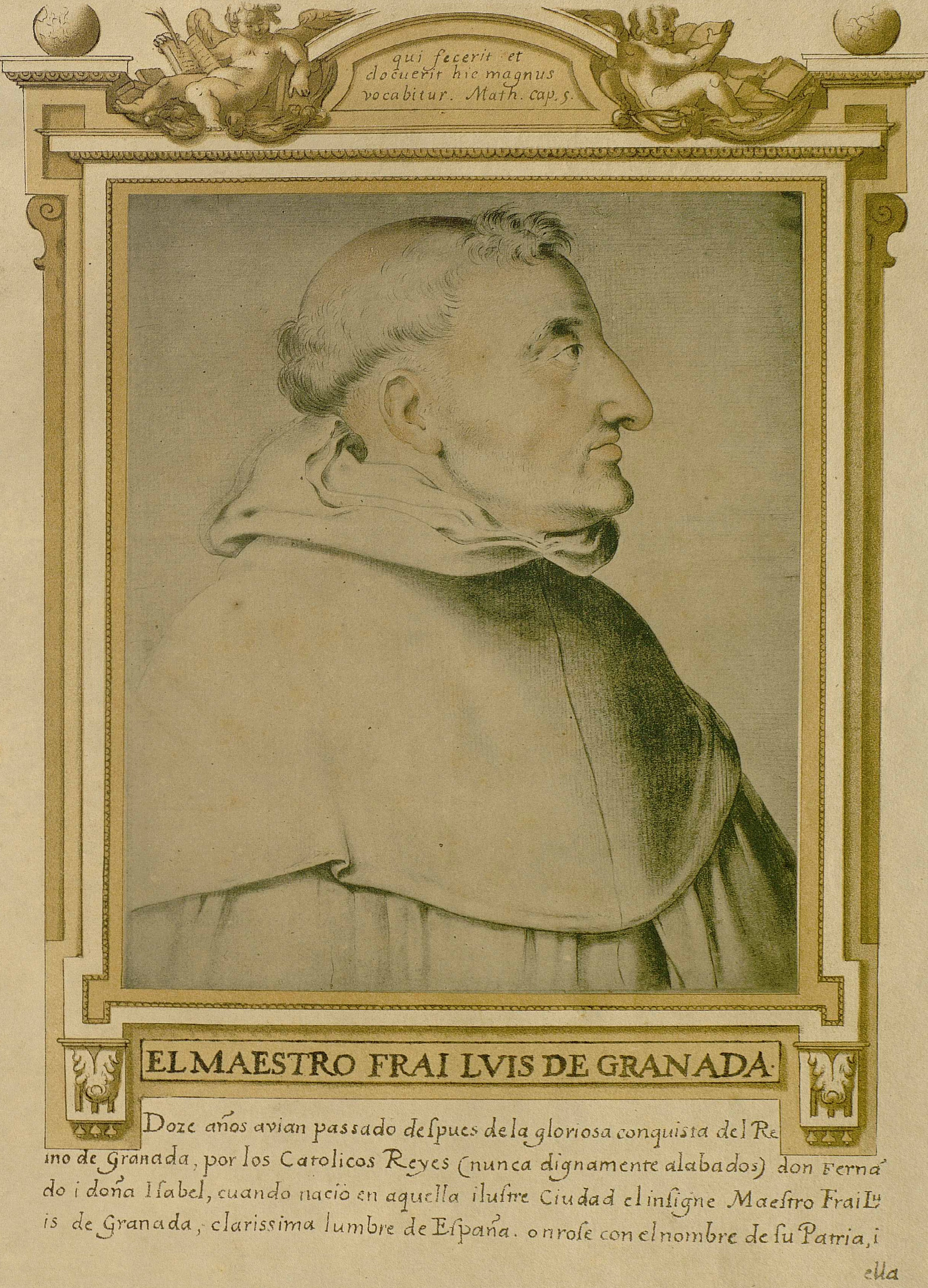
Religious and Spiritual Literature circulated in Portugal during the 16th, the 17th and much of the 18th century. Fray Luis de Granada's works (the only 16th-century Spanish writer who wrote in Portuguese, besides Father José de Anchieta in his missionary work in Brazil) had two editions in Latin, sixteen in Spanish and four in Portuguese until 1700 (Rodrigues 1992:28). The Flos sanctorum (1599-1601) by Father Pedro Ribadeneyra was translated in 1674 and widely disseminated in the first half of the 18th century. On the other hand, Thomas à Kempis's Contemptus mundi (Imitación de Cristo) was read in Portugal, since the middle of the 16th century, through the Spanish translation performed by Fray Luis de Granada, which had, at least, seven editions until 1649. Vaz Carrillo pointed out this dependence to justify the version of his Imitação de Cristo (1670) made in Portuguese: "Nem é digna de se aceitar a escusa de que já anda traduzido na Língua Castelhana; porque, posto que se comunique por este meio sua lição aos que não sabem a Latina, nem todos entendem com perfeição a Castelhana" [It is not fair to accept the excuse that it has already been translated into Castilian; because, considering it communicates, by its means, a lesson to whom do not know Latin, it is necessary to observe that not everybody perfectly understands Castelian] (Sabio and Fernández 1998: 78)
![Fray Luis de Granada (1505-1588) [Fuente].](Portugal-Espaa_Imagen2.jpg "Fray Luis de Granada (1505-1588) [Fuente].") |
 |
| Fray Luis de Granada (1505-1588) [Source] | Los Lusíadas, translated by Benito Caldera (1580) [Source] |
Translated works from Portuguese into Spanish are also documented, however, in a small number. We can highlight:
a) the chivalry novel Palmeirim de Inglaterra by Francisco de Moraes, probably composed in Paris between 1540 and 1544 and translated from 1547 to 1548;
b) the treatises Da Pintura antiga (1548) and Do tirar pelo natural (1549), written by Francisco de Holanda, translated in 1563 by the Portuguese painter Manuel Denis;
c) the two parts of Imagem da Vida Cristã (1563, 1572) by Fray Heitor Pinto, the first one translated, in 1571, by an unknown translator; and the second one, in 1580, by Gonzalo de Illescas;
d) Peregrinação, by Fernão Mendes Pinto, an autobiographical travel book written between 1569 and 1578, but only published in Lisbon in 1614. Its translation was performed by Francisco Herrera Maldonado, in 1620, under the title Historia Oriental de las Peregrinaciones de Fernan Mendez Pinto;
e) the courtesy treatise Corte na aldeia e noites de inverno by Rodrigues Lobo, prepared in 1619 and translated by Juan Baptista de Morales in 1622;
f) and the seven volumes of Sermones by Father António Vieira, translated between 1678 and 1687 by Francisco de Cubillas Donyaque and Pedro Godoy (Dasilva 2009: 924)..
However, the place of privilege is occupied by the epic poem Os Lusíadas (1572) whose disclosure was due to the work of Portuguese translators. In 1580, besides the Camões’s death and the creation of Iberian Union, two translations came out, sponsored, respectively, by the University of Alcalá de Henares and The University of Salamanca: the first one was performed by the Portuguese Benito Caldera, and the second one, by the Andalusian Luis Gómez de Tapia, who was also the first scholiast to make notes about Os Lusíadas. Without a common cultural interest, these two almost simultaneous versions of the poem could not be understood. In the 16th century, Os Lusíadas had as many translations in Castilian as there were editions in Portugal. The third translation, performed by the Portuguese Henrique Garcés, although made in Peru, appeared in Madrid in 1591. These translations introduced numerous cultisms in Spanish and helped to universalise the poem before translating it into any other language. The dissemination of Os Lusíadas in Spain culminates in the commented edition made by Manuel de Faria e Sousa (who was also Portuguese). This work was published in Madrid, in 1639, a year before the restoration of Portugal Independence, and it includes the first prose translation for the poems.
![[título del epígrafe]](2.2-X.png "[título del epígrafe]") The 18th century. Age of transition
The 18th century. Age of transition
![Dom Quixote, traducción anónima (1794) [Fuente].](Portugal-Espaa_Imagen4.jpg "Dom Quixote, traducción anónima (1794) [Fuente].") |
| Dom Quixote, anonymous translation (1794) [Source] |
The 18th century can be considered an Age of Transition in the history of contacts between Portugal and Spain. This period inherited some political issues from the previous century, which, in turn, produced a change in literary taste. It can be seen in the poor reception of Portuguese Literature in Spain, considering the translations of:
- Father António Vieira's Sermones varios (1711-1716, 21 vols); and;
- Francisco Manuel de Melo’s Historia de lo futuro (1726) and Carta de guía de casados (1724) (both authors from the 17th century);
Other translated texts that can be mentioned are Verdadero método de estudiar by Luís António Verney (1760-1768, 5 vols.) and various works by Teodoro de Almeida (Dasilva 2009: 925-926). Camões and Os Lusíadas were of no interest in this century, and we would have to wait until 1818 to find the fourth verse translation for this poem, made by Lamberto Gil. This translated work was published in two volumes in Madrid; and, for the first time in Spanish, its third volume (dedicated to the Rimas) presented the novelty of bringing a representative corpus of Camonian lyrics.
The reception of Spanish Literature in Portugal was a little better. The theatre felt the Spanish literary ascendancy between the 17th century and the first half of the 18th century. Among all theatrical authors, Calderón de la Barca was the most represented and translated one: O Alcalde de si mesmo (1783), Affectos de odio e amor (1783?), Comedia nova intitulada Apelles e Campaspe (1784), O Lavrador honrado (1784), O héroe lusitano, Príncipe constante e martyr (1794) and Ninguém fie o seu segredo (1797). Likewise, the influence of cloak-and-dagger comedies, with characters such as "el gracioso" (the gracious), would be evident in the structure of many 18th century productions. Within this trend, the comedy Vida de D. Quixote (1733) stood out, written by António José da Silva and inspired by the second part of the Cervantes's novel. Curiously, Don Quixote de la Mancha was not translated into Portuguese until 1794, in an anonymous version which followed another translations of Cervantes's works, such as Historia nova, famosa e exemplar da Hespanhola ingleza (1748), Historia do curioso impertinente (1783), Historia do amante liberal (1788). Throughout this century, some other books were translated, for example, Lazarozinho de Tormes (1721), Saudades de Inés de Castro...com o Poliphemo (1734) by Luis de Góngora y Argote ; Theatro crítico universal (1746) by Friar Feijoo; Vida e acções celebres e graciosas de Gusmão de Alfarache (1792-1793, 3 vols.) by Mateo Alemán or Fábulas (1796) by Iriarte (Sabio 2009: 211-212). This trend increased between 1780 and 1850, when, according to Cao (2016: 464), 484 titles were catalogued in Portugal, and, among them, 301 were translated works published autonomously. Thus, Cao concluded that the lack of knowledge in Spanish Literature is not as complete as believed; and, therefore, it would be necessary to rethink the state of literary relations between the two countries during those years.
From the mid 19th century to the first third of the 20th century
When Liberalism started in Europe, a mutual interest in Literature from both countries resurfaced thanks to the release of the essay La Iberia, written by Sinibaldo de Mas, which appeared in Lisbon, in 1851, and was translated into Portuguese, in 1852, by Latino Coelho. This work revived the Iberianist feeling in the Peninsula, which received a new impulse in the 300th anniversaries of Os Lusíadas first publication (1872) and of Camões’s death (1880) as well. The Portuguese Republican Party sponsored this celebration.
The verse translation for Os Lusíadas, performed by Conde de Cheste, was available in 1872. Shortly after, the prose translations, performed by Carlos Soler y Arqués (1873) and by Manuel Aranda y Sanjuán (1874), appeared; and the unpublished verse version, made by Gabriel GarcíaTassara, was produced, which may have been the fourth Spanish translation printed in a four-year period (Extremera and Sabio 1990). Apart from Camões, Cao pointed out (2008:35-42) that, until 1890, the romances written by Almeida Garrett (Fray Luis de Sousa, 1859, 1890; Viajes por mi tierra, 1861), António Feliciano de Castilho (Los celos del Bardo, 1870), Camilo Castelo Branco (Amor de perdición, 1872), and, above all, Alexandre Herculano (The Monasticón, Eurico el Presbítero, 1845, 1875; Páginas de Iberia. El Monasticón II. El monje del Císter, 1877; and some Leyendas y narraciones) were also translated.
Among these writers, Castelo Branco would be the most popular from the 1940s onwards. As far as Spanish Literature translation in Portugal was firstly concerned, according to Rodrigues (1992, 1993, 1994), we have been finding José de Espronceda’s, 3rd Duke of Rivas’s and José Zorrilla’s translated poems in journals since 1848. Other translated writers are Fernán Caballero (A filha do Sol, 1851; A gaivota, 1871), Mariano José de Larra (Noites de amor e ciúmes, 1859), Pedro Antonio de Alarcón (O chapéu de três bicos, 1871) or Juan Valera (Pepita Jiménez, 1875).
In 1876 and 1878, the second translation of Quijote was released in Portugal. It was a haphazard one, known as Castilho-Azevedo-Chagas, after the surnames of its three translators. It was followed by the Viscount of Benalcanfor's translation, published in Lisbon, in 1877-1878; and carried out with Luis Bretón y Vedra, who was in charge of interpreting the text. Before the end of the century, in 1888-1889, José Carcomo's translation came out as well.
The years from 1890 to 1936 were especially significant for Spanish-Portuguese literary relations. This period, which began with the British Ultimatum given by England to Portugal, in 1890, included the Disaster of 1898 and coincided with the Silver Age of Spanish Literature, inaugurating a "new paradigm" in exchanges between both countries during the Modernism and Vanguard Era. Encouraged by Republicans and Iberians, we found a “genealogy” of authors from both countries who proposed to structure “the building of a Peninsular Approach”, although that effort “did not manage to eliminate the image of dysfunctional neighbours” (Sáez 2014: 26- 27).
![José Maria Eça de Queirós (1845-1900) [Fuente]](Portugal-Espaa_Imagen5.jpg "José Maria Eça de Queirós (1845-1900) [Fuente]") |
| José Maria Eça de Queirós (1845-1900)[Source] |
In this period, the members of the 70’s Generation (responsible for the development of Realism in Portugal) had some of their works translated into Spanish as well, such as: Historia de la civilización ibérica, by the historicist Oliveira Martins, translated in 1894; and, above all, the novels written by José Maria Eça de Queirós. Queirós was one of the few Portuguese writers who had a constant, although intermittent, presence in Spanish lyrics (Losada 2010). His reception began in the 19th century (Crimen del Padre Amaro, 1875, 1882; El crimen de un clérigo, 1894; El primo Basilio. Episodio doméstico, 1884; La reliquia, 1887, 1892; El mandarín, 1880 - his most famous work with numerous translations until 2013) and continued until the first third period of the 20th century, between 1910 and 1930. Then, it culminated, in 1948, with the translation of Obras Completas by Julio Gómez de la Serna; and, from 1980 onwards, his works started to have their previous translations republished. Os Maias, his masterpiece, did not have a second translation until 2000, Los Maia, by Jorge Gimeno, who also translated El primo Basilio (2005).
Julio Gómez de la Serna, Francisco Villaespesa, Wenceslao Fernández Florez, Eduardo Marquina or Ramón María del Valle-Inclán translated Eça de Queirós’s books, with greater or lesser success. These were key names, along with Miguel de Unamuno or Ignasi Ribera i Rovira, for the dissemination of Portuguese culture in the first third part of the 20th century. On the other hand, Emilia Pardo Bazán and Curros Enríquez were responsable for this dissemination in the last third part of the 19th century. After Eça de Queirós, Eugénio de Castro, the poet of Oaristos (1890), was the most translated writer of this period, even his Obras Completas were published, in 1922, with translations by Unamuno, Villaespesa, González Olmedilla, Maristany or González Blanco ( Sáez 2014: 35-36).
Another widely publicized poet was Teixeira de Pascoaes, the creator of Saudosismo, who would have special relevance in the anthology Las cien mejores poesías líricas de la lengua portuguesa (1918), compiled by Fernando Maristany (Gallego 1996: 88-96; Sáez 2014: 38-39). Pascoaes’s works, as well as Guerra Junqueiro’s, Antero de Quental’s, Gomes Leal’s and Camões’s ones, were also translated in an independent volume of the collection Las mejores poesías (líricas) de los mejores poetas, published between 1916 and 1932 by the Cervantes Publishing House. Other Portuguese poetry anthologies were Díez-Canedo's Pequeña antología de poetas portugueses (1909?), Antología de la lírica portuguesa, edited by Martín Manrique (1928), with translations of poetry of all times by various translators; and Noventa y siete sonetos portugueses, by José María de Cossío (1933).
Likewise, magazines, such as Cervantes, Cosmópolis, La Pluma, Alfar and La Gaceta Literaria, played a fundamental role in Portuguese poetry reception (Gallego 1996: 89). During these years, some works were translated, for example:
- Júlio Dinis’s novels. He was a transitional writer, whose works were between Romanticism and Realism;
- Trindade Coelho’s short stories called Mis amores, which had their first versions published in 1899 and the second ones in 1919;
- Júlio Dantas’s theatrical works (translated by Villaespesa);
- Raúl Brandão’s several novels, among them, Humus, considered the first Portuguese existentialist novel (translated by Ribera i Rovira, 1925?).
Among the Spanish writers, Vicente Blasco Ibáñez occupied a privileged place in the Portuguese literary environment (Sáez 2007: 127), and Ramón Gómez de la Serna and his greguerías (short statements in which the author expresses a philosophical, pragmatic, or innovative idea) had enjoyed a great reception until he became the best known and most popular author of the Spanish new literary movement in Portugal (Sáez 2014: 42).
From the Estado Novo (New State) to our days
The beginning of Salazar’s Estado Novo and the period of the Spanish Civil War were marked by political propaganda between both countries, which would keep superficially friendly relations along with the respective dictatorships.
In order to study the exchanges between Spain and Portugal during the Estado Novo (1933-1974), it is essential to consult the project called Intercultural Literature in Portugal 1930-2000: a Critical Bibliography, an initiative of Universidad Católica Portuguesa in the Centro de Estudos de Comunicação e Cultura (Portuguese Catholic University – Communication and Culture Study Centre); as well as of Universidad de Lisboa in the Centro de Estudos Anglísticos (University of Lisbon – Anglican Studies Centre), which covers the years from 1930 to 2000 and which, for the period between 1930 and 1986, has almost 25 thousand records of translated works (CECC and CEAUL/ ULICES 2010).
As documented by Dionisio Martínez Soler, the reception of Spanish Literature in Portugal between 1940 and 1990 was marked by not only a quantitative but also a qualitative shortage of translations. For example, it was not until 1989 when José Bento translated Antonio Machado’s work, thanks to a grant from Spanish government institutions; and, except for García Lorca and, more moderately, Vicente Aleixandre, the Generation of '27 was not translated (Martínez 2000: 79). Martínez points out as the leading cause the fact that Spanish Literature has been considered a rival within the world canon. The author relates this phenomenon to the reciprocity of literary imports through the translation and the access to Spanish language by Portuguese readers, another commonplace in the history of cultural relations between both countries. He suggests that including works by Spanish writers in the worthy of translating corpus and, therefore, preserving and canonising these texts, requires a “justification” which would be the idea that they are works and authors that deal with Portuguese themes (Martínez 2000: 84).
Having this in mind, the most widely translated authors are:
- Miguel de Unamuno, due to his links with Portugal: Do sentimento trágico da vida (1953, 1989), A Tia Tula (1965), A agonia do cristianismo (1975, 1991), Por terras de Portugal e da Espanha (1989), Névoa (1990 );
- García Lorca, due to his role as a famous poet and victim of the Civil War: translated since 1936 in journals; and whose first complete translated work was published in a large corpus called Antologia Poética (1943), by Eugénio de Andrade, who translated it again in 1968 in another anthology, Trinta e seis poemas e uma aleluia erótica. After that, until 1993, there was no new anthology, when José Bento released a new one. By this time, the theatre was also translated, for example, Yerma (1955), A Casa de Bernarda Alba (1957), O Público (1989), among other works;
- Camilo José Cela, for portraying a violent Spain that fitted in with the stereotyped Portuguese vision of Spanish culture: A família de Pascoal Duarte (1952), A colmeia (1965), Mazurca para dois mortos (1983);
Don Quixote translations continued to happen, coming to present days (Sabio 2018). They were made by: Aquilino Ribeiro (1954-1955), Daniel Augusto Gonçalves (1978), Albertina de Sousa (1991), Daniel Augusto Gonçalves and Arsénio Mota (1999), Adelino dos Santos Rodrigues (sd), Miguel Serras (2005) and José Bento (2005).
In turn, Os Lusíadas had new translations into Spanish. Manuel Vallvé’s prose adaptation for children, made in 1914, inaugurated the 20th-century translations for this poem and was a precursor to Pedro González Blanco’s prose translation published in 1934. In 1955, Ildefonso Manuel Gilappeared’s verse translation was published, and he translated the poem again in 1982. In 1964, Guillem Colom’s and Miquel Dolç’s complete translation of the poem in Catalan came out in ottava rima (rhyming stanza form of Italian origin).
Coinciding with the fourth centenary of the poet's death, Aquilino Duque's bilingual edition appeared in 1980. Duque revised and republished it in 2016. Benito Caldera’s translation of Os Lusíadas (1580) was reissued twice: in 1986, by Nicolás Extremera and José Antonio Sabio; and, in 2007, by Elena Losada, who also reissued the translation of Lamberto Gil’s lyrics (1818) and translated Auto de Filodemo and Camões' three letters. Earlier, in 1998, Xosé Manuel Dasilva and Isabel Morán had translated Auto dos Anfitriões.
Gavilanes (1999) studied the reception of Portuguese Literature in Spain between 1970 and 1990. This author observed a more significant number of Portuguese works translated into Spanish in absolute terms; however, he pointed out that the situation was not so rosy in relative terms: during those years, Portuguese books did not reach the figure of 1% of Spanish publishing production (Gavilanes 1999: 92). A situation not significantly different from that was found for Spanish Literature in Portugal (Comellas 2007). The change in trend occurred in Portugal since 1990, with forty-two titles translated (Guardiola 1990) thanks to the institutional relations between the two countries and the resurgence of the publishing market. Editorials such as Publicações Dom Quixote, Companhia das Letras, Assírio & Alvim, Cavalo de Ferro or Ediciones Teorema, as well as a host of small publishing houses, have published, since then, contemporary Spanish writers’ works.
 |
 |
| Fernando Pessoa (1888-1935) [Source] | José Saramago (1922-2010) [Source] |
In Spain, the interest in Portuguese Literature from the 80s came from works by authors such as Fernando Pessoa and José Saramago. It would be endless to review all Pessoa's poems, fictions and essays translated into Spanish. Therefore, we highlighted his poetry published in general anthologies edited by Rafael Santos Torroella (1972), Miguel Ángel Viqueira (1981) and Ángel Crespo (1982), who had already translated Alberto Caeiro's poems (1957). We can also mention the compilations performed by José Luis García Martín (1982), José Antonio Llardent (1982), Ángel Campos Pámpano (2001) or Paco Moral (2016), not counting the translations of Pessoa's heteronyms’ works and his orthonymous books, for example:
- Mensaje (1997), translated by Jesús Munárriz and the most recent version, translated by Manuel Moya (2017);
- the short story El banquero anarquista [his mostly translated fictional prose], translated by Domingo Santos (1983), José Antonio Llardent (1983), Miguel Ángel Viqueira (1986), Jorge Gimeno (2001), Jorge García Bedia (2011) and Manuel Moya (2011);
followed by his work El libro del desasosiego, translated by Ángel Crespo (1984), Perfecto E. Cuadrado (2002), Manuel Moya (2010) and Antonio Sáez Delgado (2014), from a new critical edition.
José Saramago, the only Portuguese-language writer awarded the Nobel Prize for Literature until this moment, has had two main translators during his extraordinary reception in Spain: Basilio Losada was his translator from El año de la muerte de Ricardo Reis (1985) to Ensayo sobre la ceguera (1996); and Pilar del Río stood out from Todos los nombres (1998) to Alabardas (2014), an unfinished novel that Saramago left on his death in 2010.
Miguel Torga, another writer of Iberian roots, lived two significant stages in his reception in Spain: the first period began with the translation of his book of stories Bichos (1946) by María Josefa Canellada; and it continued with the translations by Pilar Vázquez Cuesta from 1949 to 1984, year in which she published her complete translation of Poemas Ibéricos in a bilingual version. The second period started in the mid-eighties and had its focus on the translator Eloísa Álvarez and the Alfaguara publishing house. Then, Torga began to be read more frequently thanks to the continuity in the publication of some of his narrative and autobiographical works: La creación del mundo (1986), Cuentos de la Montaña (1987), Piedras labradas (1987), Diario 1932 -1987 (1988), Rúa (1994), Diario 2 (1997), Bichos (1998) and Poemas Ibéricos (1998).
 |
 |
| Basilio Losada (1930-) [Source] | Ángel Crespo (1926-1995) [Source] |
Eloísa Álvarez is also a popularizer of Spanish Literature in Portugal: in 1994, she published, together with António Apolinário Lourenço, História da Literatura Espanhola (Lisbon: Edições Asa).
In Spain, we have three books about Portuguese Literature History published by Ángel Marcos de Dios and Pedro Serra (Salamanca: Luso-Española de Ediciones, 1999), José Luis Gavilanes Laso and António Apolinário (eds.) (Madrid: Cátedra, 2000) and María Jesús Fernández García, as coordinator (Mérida: Cabinet of Cross-Border Initiatives, 2011).
Fernando Namora and Vergílio Ferreira are authors well acclimated in Spanish lyrics as well, although with less projection than Torga. Moreover, António Lobo Antunes is the most translated writer in recent years, with twelve translations by Mario Merlino published by Siruela publishing house, from Tratado de las pasiones (1995) to Auto de los condenados (2003), which were revised by the translator Dolores Vilavedra for the new editions published by Mondadori and Debolsillo publishing houses. Since 2010, Antonio Sáez Delgado has become the official translator for Antunes’ work published by Random House. Therefore, he translated seven books, the latest being Para aquella que está esperándome sentada en la oscuridad (2021).
Two novelists still deserve to be mentioned for their wide dissemination in our days: The first one is Gonçalo M. Tavares, who has had Ana Rita da Costa Garcia as his main translator. However, his works El reino (2018), which brings together four short novels: Un hombre: Klaus Klump, La máquina de Joseph Walser, Jerusalén and Aprender a rezar en la era de la técnica or Un viage a la India (2014) and Una niña está perdida en el siglo XX (2016) were translated by Rosa Martínez Alfaro.
The second novelist is José Luís Peixoto, whose book called Nadie nos mira (2001) was transled by Bego Montorio and the works Una casa en la oscuridad (2008), En tu vientre (2017) and Autobiografía (2020) were translated by Antonio Sáez Delgado.
Finally, it is important to remember the role of anthologies in the dissemination of poets and poetic currents. On one hand, in Portugal, José Bento’s works, first Portuguese translator of La Celestina (1988) and prolific disseminator of classical and modern poetry, stand out: Antologia da poesia espanhola contemporânea (1985), which covers the 20th century; Antologia da poesia espanhola do Siglo de Oro (1993, 2 vols.) and Antologia da poesia espanhola das origens ao século XIX (2001).
On the other hand, in Spain, in the second half of the 20th century, we find Antología de la nueva poesía portuguesa (1961) and Antología de la poesía portuguesa contemporanea (1982, 2 vols.), by Ángel Crespo; Poesía portuguesa actual (1976), by Pilar Vázquez Cuesta; Los nombres del mar. Poesía portuguesa 1974-1984 (1985), by Ángel Campos Pámpano, and, closer to our days, the general anthology Alma minha gentil (2009), by Carlos Clementson, and Escribiré en el piano. 101 poemas portugueses (2015), an anthology translated by Jerónimo Pizarro and Nicolás Barbosa, as the previous one in a bilingual version.
The overall balance of contacts between Portugal and Spain through translation practice is moderately optimistic and breaks the paradigm of disinterest mentioned at the beginning of this entry. The dissemination of Portuguese Literature in Spain and of Spanish Literature in Portugal has been intermittent, based on individual efforts or on commemorations and celebrations that, when expired, did not have the desired continuity. Besides, over time, a well defined and sustained editorial policy for selecting, republishing and publishing the translations of the literature of each country has never existed.
However, it is also true, as we hope to have shown here, that the contacts have a long tradition and have permeated all the literary periods, with greater or lesser intensity. However, we understand that an exponential increase in translations in the 20th century, especially in the 90s, has happened.
The dissemination efforts have been a work of different translators who have very varied profiles, mostly anonymous and with little prominence. Thanks to their accomplishment, the flow of translations and the presence of writers from both countries have been maintained and kept alive in Portugal and Spain. Many of their translations are fragmentary, scattered throughout anthologies, magazines, and miscellaneous publications; therefore, it is up to the translation historians to bring to light all this heritage, order it, study it and give visibility to its protagonists.
Likewise, it is necessary to trace the “abundant communicating vessels” that lie in the subsoil of Spanish-Portuguese literary relations (Cao 2016: 211) and that are manifested, not only in translation but also in the intertextuality of themes, genres and models that Comparative Literature has to explore.

.jpg)


![Source]](https://pt.wikipedia.org/wiki/Fernando_Pessoa#/media/Ficheiro:Pessoa_chapeu.jpg)

![Source]](https://es.wikipedia.org/wiki/Basilio_Losada_Castro#/media/Archivo:Basilio_Losada_AELG_Distrito_Xermar.jpg)

We have studied the contacts between Portugal and Spain through the translation of literary works. With this in mind, we have adopted a peninsular, comparative and diachronic approach, in order to draw a panorama of the exchanges that have taken place between both countries throughout their histories.
We understand the term contact as the relationship between two cultures and their different degree of mutual influences. The concept comes from the polysystem theory, formulated by Itamar Even-Zohar in the 70s of the 20th century. According to this theory, translation is a specific type of transference that favours contact and interference between different literary systems. In this sense, we can observe the close relationship between Translation Studies, Literary Theories and Comparatist Analysis.
This research enables promising developments in the fields of Translation History and Comparative Literature, which share an interest in translated texts and, especially, in translated literature. In Translation History, the studies are focused on translators, translations in a broad sense and ideas about translations. In Comparative Literature, in turn, the investigations observe the exchanges between both kinds of literature (with their presences and absences) and the transfer of themes, genres and models.
Suppose we focus on the Iberian imaginary and the stereotypical vision that each country has of the other one. In that case, some other developments can occur in the studies on the history of translation reception, so it is possible to explain the impact of translation processes or to assess their effects on the new culture, and the history of ideologies.
As in every historical research, it is necessary to set the space-time frame that we are going to study and adequately select the work material. A sociological model would deal with studying the social and cultural context of translated texts and the changes caused by translations in the receiving system.
Other descriptive and comparative models could focus on analysing translations, on relating translation theories to other contemporary practices, on preparing translators’ biographies, on the conceptions of translation in different periods, on the role of reissuing translations and on phenomena such as retranslation, self-translation and even non-translation.
We have quite complete studies for the Middle Ages, the 16th and 17th centuries as well as the first third period in the 20th century, but there is still much to explore and delve into what has not been investigated yet.