 |
 |
 |
 |
 |
 |
 |
SPA Interpretación para los servicios públicos |
contents
Introduction | Liberté, fraternité, égalité... | The ethics of community interpreting | Controversial issues | Research | Training | Research potential

The development of communication (analogical, then digital) and transnational financial and political relations, together with lower prices popularizing transport from the mid-20th century on, made it necessary to respond to an ever-increasing demand for multilingual communication, which led to the professionalization of translation and interpreting. Many universities worldwide started offering Translation and Interpreting degrees in the nineties, when new countries added to the list of “classical receivers” (USA, Canada, Australia) of migrating population and became the temporary or final destination of many African, European, Latin-American and Asian migrants, regardless of whether these citizens migrated for economic or labour motives, fleeing from poverty and unemployment, seeking refuge from conflict or war, or in some cases, forging from a privileged and affluent position a better future for their offspring. In the case of countries such as Spain or Portugal, an important segment of population is represented by retired citizens from developed countries (in search of sun, greater purchasing power and prompter health care services), who become “residents”, a term which, unlike its less fortunate synonym “immigrants”, allows for a dignified status. Thus, Community Interpreting was born as a result of linguistic, cultural and ethnic diversity among segments of population worldwide and their need for interaction (be it through spoken or signed languages) with administrations in countries where (according to international law) linguistic minorities’ right to communicate and access services needs to be protected. Community Interpreting is required in: legal settings (such as police stations, prisons, asylum formalities, whereas judicial proceedings in courtrooms or tribunals would generally fall into Court Interpreting), social services, public institutions, health care, educational systems, business and industry, as well as in newer contexts such as faith-based organizations, emergency and disasters, military instances, newsrooms, theatres, and alike. From this perspective, community interpreters are the guarantors of communication, implementation and protection of the rights set forth by international treaties and institutions.
Two of the particularities that have been identified as specific for community interpreting are: its double directionality, which makes it cognitively more demanding, and its social status, which is far from (if not inversely) proportional with the difficulty of the task. Hale (2015) distinguishes a third one, which she explains in the following terms: “the need for interpreters in these settings is often more real than in international conferences, where participants can often speak a lingua franca […]”. This degree of “real need” that Hale mentions as indicative of the domain has not been thoroughly investigated so far and deserves, perhaps, further debate.
![[heading title]](2.2-X.png "[heading title]") Liberté, fraternité, égalité...
Liberté, fraternité, égalité...
The presence of immigrants can be beneficial for demographics and economy, but it can also give rise to tensions if the “host” country lacks the means to integrate them, or the adequate policies to articulate a mature and provident coexistence. As intercultural communicators, interpreters bear the heavy burden of helping to prevent and solve conflicts, alleviate racism and xenophobia and facilitate a harmonious coexistence of different cultures. But do states acknowledge this role? How have countries worldwide coped with the migration phenomenon during the last three decades? Their attitudes seem to have changed between the hopeful nineties, marked by the communist block collapse, and the gloomy two-thousands, marked by the capitalist stock-markets’ collapse.
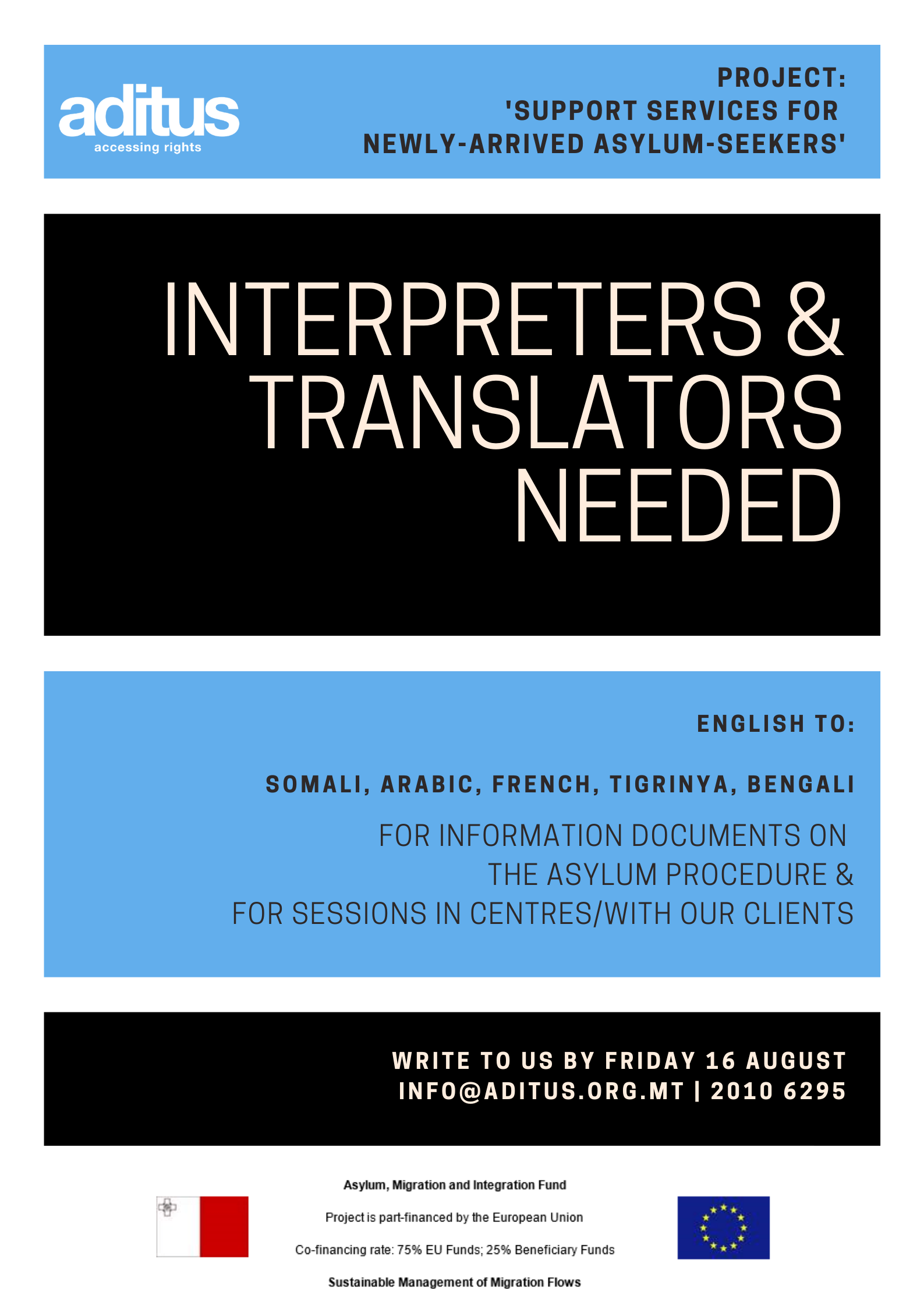 |
| Crises trigger the need for community interpreters & translators. |
Globalization on the one hand, and the technological revolution on the other, have showed us that human mobility has come here to stay and is now part of an irreversible reality. People do migrate as they always have in history, but their number has increased as, in fact, global population has. In 2020, 281 million, representing 3.6% of world population were on the move according to the International Organization for Migration. A great part of this migration is a consequence of colonialism, exploitation, poverty and wars. Although there is still much work ahead, some governments have become aware of the fact that migrants are not commuters and states cannot just call for them when they need to cover jobs not wanted by the locals and then send them back when economic crisis and the fall of the financial markets trigger populist measures based on discriminatory and racist precepts. On the other hand, some migrant “exporters”, such as former communist countries, call for their drained brains and qualified workers to return and rebuild their more or less destitute economies, while refusing to shelter refugees from war zones.
The outburst of the COVID-19 pandemics has brought a new global economic crisis. Aggravated poverty is provoking more migration, more human trafficking, more neo-slavery. NGOs warn against the subhuman conditions in which migrants work in different parts of the globe and their high exposure to contagion. This multileveled crisis is already having an impact on interpreting studies and especially on community interpreting with some branches in high demand, for instance Disaster Relief Interpreting (DRI) known to relay on volunteers, although in such contexts, as Pöchhacker (2015: 110) acknowledges, interpreting is part of the emergency management plan.
For the purposes of this contribution, the focus will be set on the first two decades of the 21st century as the period of the worldwide rising of community interpreting as a separate branch of interpreting studies. The permanent growth of migration flows during these two decades determined an increase of linguistic diversity which has often short-circuited communication due to linguistic barriers in the destination countries, generally between service-providers and service-aspirants, who are not proficient in the societal language. Community Interpreting (often performed voluntarily, without socio-professional recognition and therefore “inferior”) has become visible to local, regional and national authorities in a growing number of “receiving countries”, which must cope with a huge amount of displaced groups and devote a part of their budgets to integration policies, abiding not only by their government’s directives, but also by international bodies’ requirements in response to migrating phenomena. If in the late nineties and early two-thousands supranational structures such as the EU or the UN devoted a large amount of their efforts to migration, the millennial agenda brought new and pressing priorities.
The ethics of community interpreting
In her attempt to draw an international map of deontological codes and accreditation systems, Bancroft (2005) highlighted that in Africa, interpreting was almost absent, except for South Africa, with a professional association guided by its own ethical code. Asia did not offer a very distinct panorama, although an exponential growth in interpreting awareness on behalf of the Chinese academic community was registered. On the contrary, Australia, New Zealand and Canada showed an advanced level of professionalizing, with deontological and ethical codes and systems of accreditation. In Latin America, Conference Interpreting was still the best positioned among the professional branches with numerous emergent associations, while the “old continent”, governed by the AIIC in Conference Interpreting, stood out in Community Interpreting during the first decade of the 21st century with the National Centre for Languages in the United Kingdom (since 2011 integrated in CfBT Education Services), and the British National Register of Public Service Interpreters.
But do AIIC rules cater for the needs in Community Interpreting? Obviously, conference interpreting ethic codes and quality standards are better than nothing, but the social field has its own peculiarities and complexities, and the distinction by sub-fields (with their specific needs) is paramount lest the debate be barren (like a comparison between a simultaneous interpreting dealing with wood processing and a call from hospital emergencies about the allergic reaction of a child).
Instead of a panoramic by continents, Martínez-Gómez (2011) opted for groups of countries classified into: those who deny the necessity of a professionalised field and do not apply generic codes to community interpreting (Japan, Brazil); those who provide ad hoc solutions in contexts where generic codes do not apply to community interpreting (Italy, Spain, Belgium, France, Germany, Austria, South Africa, Denmark); countries that offer generic services and grant certification for several settings (Russia, Canada, United States, Low Countries, Norway, Finland) and finally, those who offer integral services guided by codes of ethics and national certifications for community interpreting (Australia, Sweden). For a description of the latter, see Hale (2011), who brings positive impressions shared by professionals in Australia (who feel “feel they are duly respected as professionals by service providers and service recipients alike”) to counter for usual feelings of denigration, and Norström, Fioretos and Gustafsson (2012) who describe and analyse the working conditions in Sweden and find a tension between professionalism and de-professionalization which affects the rule of law and integration.
These two mappings (Bancroft 2005 and Martínez-Gómez 2011) do not differ from the panorama described by Setton and Dawrant (2016: 377) with a vast majority of countries in which Conference Interpreting remains unregulated.
Given this panorama, the observation that we can draw is that governments worldwide have generally “passed the buck” to local agents, NGOs and universities, who have come up with partial solutions to improve communication and integration of migrating communities. Pivotal to this communication is community interpreting, a new yet old domain of Interpreting Studies whose practitioners, trainers and researchers have to adapt to changing situations and reinvent themselves permanently to keep the pace with geo-political, socio-economic and linguo-cultural transformations of current society.
The dynamic nature of this activity is mirrored by the variety of its names (bilateral, dialogue, social, and public service interpreting) arising from different professional and ideological standpoints. But its nebulous labelling is not just a terminological issue; it responds to (sometimes deliberate) ontological and epistemological uncertainties, strategic overlaps and operational hesitations, mainly between modes and situations of its performance.
Apart from the controversies over its name, Community Interpreting has given rise to some false equations, which are not exclusive to this branch, (as they can be traced down, in a lesser measure, also in Conference Interpreting). However, Community Interpreting displays a higher heterogeneity in terms of expectations on behalf of “committing users” (local authorities, social workers i.e. service providers) and “receiving users” (social services applicants) than Conference Interpreting in which communicative situations are more foreseeable and participants are generally acquainted with interpreters’ roles. I will mention three of these false equations which are frequent in Community Interpreting: 1) accurate equals literal; 2) bilingual equals interpreter; 3) co-national/co-ethnical equals advocating ally. The first equation conceives accuracy as literal transposition. Many service providers expect interpreters to produce a word-for-word rendition, ignoring that a purposeful, pragmatic and cultural approach would be a more exact definition of “accuracy” in community interpreting. The second equation takes for granted that any bilingual can perform as an interpreter, which determines service providers to hire “helpers” or “natural interpreters” who, (according to a vast literature in the domain) often summarize, introduce own commentaries, ask or answer questions instead of the allophone interlocutor disempowering her/him. A third equation refers to the interpreter’s role. As he/she often belongs to the linguistic community to which he/she operates/works, service providers and applicants tend to consider the interpreter an ally, an advocate, an involved participant, especially in encounters in which so much is at stake for one of the parties.
In what follows, two works, The Routledge Encyclopedia of Interpreting Studies (REIS) and ISO 13611/2014, will help us better understand what the place of Community Interpreting is within the realm of interpreting from both academic and professional perspectives.
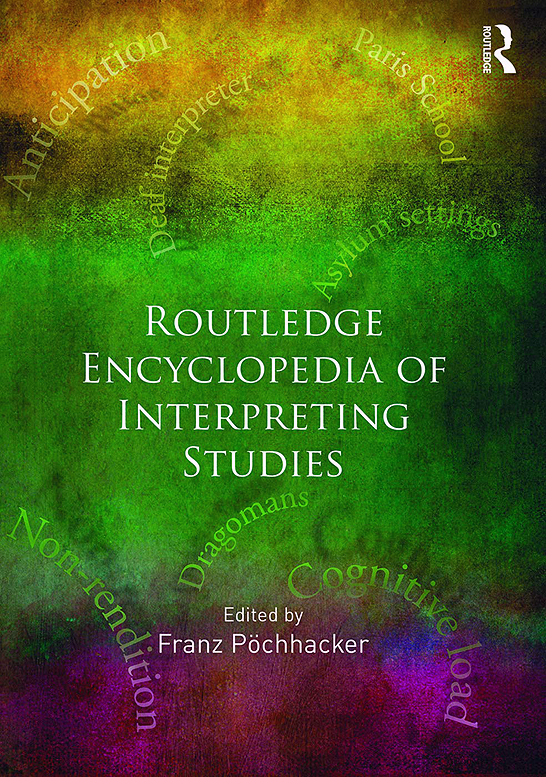 |
| The Routledge encyclopedia of interpreting studies (Pöchhacker, ed. 2015). |
The REIS embraces the field with its various domains and research traditions (not juxtaposed but rather ingrained) following both a macrostructure (history, profession, settings, methodology) and a microstructure based on conceptual links, in such a way that every headword is covered transversally across domains, modes and settings, not in a top-down mapping but rather in a bottom-up data driven approach. Several classification criteria organize the field both professionally and academically. Thus, the REIS offers a series of binary classifications according to: modality (spoken vs signed); temporal relation (simultaneous vs consecutive); modes (in situ vs remote); format (dialogue vs conference); status (professional vs ad hoc); technological involvement (human vs machine) and a more complex one based on the interaction’s nature. Thus, a further distinction is made between (a) inter-social interactions – covering international encounters (diplomatic, political, scientific, business) and (b) intra-social interactions, covering institutional, community contexts (legal, healthcare, educational). This criterium surfaces six different settings treated separately (asylum, mental health, parliamentary, paediatric, police and prison, of which only one does not fall into Community Interpreting, which means that this is the domain of intra-social interaction par excellence) and thirty types of interpreting (e.g. machine interpreting, video-remote, theatre, disaster, business, military interpreting and so on) labelled with the headword “interpreting” preceded by a qualifier which can in turn be clustered according to the process’s features.
However, depending on the country and scholarly tradition, not all the research in the field of community interpreting resorts to such comprehensive schemes, but rather handles a simplified chart to refer mainly to modalities, settings and types of interpreting, sometimes in an overlapped and contradictory manner.
According to ISO 13611/2014, community interpreting is needed in six main settings: public institutions (schools, community centres); human and social services (refugee boards, nursing homes); healthcare institutions; business and industry; faith-based organizations and emergency situations. It also enumerates sixteen professional competencies according to which interpreters should: apply active listening, memory and delivery skills, problem solving strategies, abide by the code of ethics, improve self-training, support client autonomy, use appropriate register and other of the kin. Interestingly enough, this section starts by exhorting community interpreters to be proficient in consecutive, simultaneous, sight-translation and note-taking. These requirements clearly cast out natural interpreters and ad hoc solutions adopted by some service providers. A list of seven interpersonal skills is added, including tact, self-control or cross-cultural skills. Also mentioned in ISO 13611/2014 are the twelve functions performed by community interpreters, among which: conveying the meaning of all messages without unnecessary additions, deletions, or changes; managing the flow of communication; requesting clarification; pointing to the existence of a cultural barrier; refraining from offering advice or opinion. The complexity of a such a “photofit image” of a professional who has to comply with all these components entailing skills, roles and ethics, may partly explain the slowness in professionalizing community interpreting. Finally, interpreters are expected to take on six responsibilities, as stated by the ISO 13611/2014 norms: they must adequately prepare for the event; introduce themselves; comply with the schedule; maintain appearance and behaviour; follow the protocols, and (responding to a recent scholarly topic but an old practitioners’ problem), raise issues of vicarious trauma.
There are two issues underlying Community Interpreting that have generated prolix debates. One regards remote interpreting, and, especially, telephone interpreting, a modality that provokes controversy, first, among interpreters: those who insist on the visibility of the communicative event as a premise to guarantee quality parameters versus those who think that under the profession’s threats (such as computers replacing humans or the generalized use of English Lingua Franca (ELF), to adapt means to survive. Secondly, among users, in a medical interview, for example, providers of the service interested in cost effectiveness versus users of the interpreting –patients and physicians who have their own agendas regarding the interpreter’s physical presence during consultations. According to Andres and Falk (2009), physiological studies do not seem to corroborate the perception that quality in interpreting is higher in face-to-face conditions in which Wadensjö (1999) observed greater fluidity. The experiments carried out with remote interpreting at UN, UNESCO, EU conferences, as Postigo, Varela and Parrilla (2013) show, registered high levels of satisfaction in users, unlike in interpreters, who complained of higher degrees of tension, tiredness and loss of concentration. Although widely used in community settings, remote interpreting is scarcely trained.
The other issue is the duality interpreting-mediation. A confusion between “mediators” and community interpreters has been perpetuated in some host countries such as Spain or Italy (where il mediatore linguistico e culturale or mediador intercultural is an umbrella term covering various linguistic services), which legitimized the creation of jobs (at local levels, on the staff scheme of town halls) for which the selection processes were often based on tailored regulations responding to a political will, rather than to a general plan to cover a social need. Thus, in some Spanish regions, members of immigrant communities (who were to a certain degree bilingual and bicultural but had no specific training as interpreters) were employed as mediators cum interpreters for local authorities. In Italy, Davitti (2013) acknowledges that interpreters “perform crucial coordinating and mediating functions” with assimilating rather than empowering results, while Garzone (2010) ascribes the confusion to the lack of an “institutionalized figure”. Pöchhaker (2008) already warned about the risk of unclear terms linking interpreting and mediation, such as face-to-face mediation, remote mediation, linguistic mediation and intercultural mediation, but Arumí (2018) still claims for scholarly elucidation. This duplicity has been also taken to the classroom, as Setton and Dawrant (2016: 372) show. They insist on interpreters not acting as “advocates (actively promoting one side’s interests) or arbiters (helping the parties reach an agreement)” and not accepting the role of mediators but on request and if ethically justified.
Academic research in interpreting began in the 20th century with the aim of creating teaching tools through which (self-taught) experienced interpreters could transmit their expertise to younger generations and it soon went on to reflect on interpreting as a discipline, giving rise to landmark works on the analysis of communicative needs, interpreters’ requirements, situational variables, and interpreting process and product descriptions. This section will cover some of the milestones and pole positions in research on Community Interpreting.
A diachronic view
It was not until the beginning of the 21st century that community interpreting attracted scholars’ attention on a large scale. After Shackman’s (1984) handbook that envisaged not only community interpreters but also the other participants (users, employers), one of the first monographic works was Interpreters in Public Services. Policy and Training by Baker, Hussain and Saunders (eds.) (1991) which outlined a diagnosis and claimed for interpreting services (especially in police stations and courts of justice) in the UK, given that the country was facing, after a strong immigration from former colonies, a new migration, more numerous, varied and diverse linguistically and culturally. The book devoted an extended chapter to legislation regarding matters of race, underaged, mental and physical disabilities, and a ground-breaking discussion on deontological codes for both social workers and interpreters. One of this book’s novelties is its preoccupation with natural interpreters as “bilingual staff who ‘help out’ with interpreting”. A didactic explanatory vocation inspired Translating cultures. An Iintroduction for translators, interpreters and mediators by David Katan (1999) while Liaison interpreting in the community, edited by Mabel Erasmus (1999) established parallelisms between Belgium and South Africa as it described interpreters’ training and accreditation, their professional activity and the presence or absence of codes of ethics. Mason's collective volume (1999) was a milestone for researchers in this young domain. He grounded his work in early empirical research in the seventies to identify the scientific community's preference towards sensitive situations where power, distance and threats to personal face play a role. Other issues detected by Mason as worthy of scientific attention two decades ago (role conflicts, group loyalty, participation frameworks, power, distance, image) remain of interest today, especially with regards to such present-day topics as visibility, ethics, emotions and trauma. An area approached by Bot (2005), exploring how the therapist–patient relationship may be affected by the variety of roles adopted by the interpreters in mental health interviews is experiencing a revival. If Mason’s is the first collection of insights drawing the lines which would characterize the research in the following years, the monograph by Sandra Hale (2007) was the first scholarly endeavour to give the field of community interpreting a comprehensive treatment.
Although sign language interpreting is often associated to Conference Interpreting due to the institutional frame where its intervention is mandatory, there are many non- conference contexts in which signed languages come closer to minority language interpreting. Research has proliferated in both fields in recent years as Gile (2017: 1430) scientometrically proved, and the mutual influences between researchers on interpreting in both spoken and signed languages have definitely enriched Interpreting Studies.
To sign or not to sign
Although signed interpreting constitutes from a modal perspective a branch in itself, it falls under community or conference interpreting in terms of setting. If spoken languages of migrating minorities are neglected by governments, signed languages, marginalized for ages, managed to place their priorities on governmental agendas in the second half of the 20th century, first in the US by creating the RID [Registry of Interpreters for the Deaf] in 1964. By 1972 the RID had its own evaluation and certification system. Other countries that officially introduced SLI at an early stage were Australia (where in 1977, the National Accreditation Authority for Translators and Interpreters (NAATI) was established, Sweden with interpreter training programs in adult education centres); and Canada, where the growing interest in community interpreting - both in spoken and signed languages - led to the hosting in 1995 of the “First International Conference on Interpreting in Legal, Health, and Social Service Settings”, which, from then on would be known as The Critical Link, the international event par excellence in Community Interpreting.
In the EU, Article 7 of the directive 2010/13/EU (European Parliament and Council, March 10, 2016) according to which,
Member States will encourage audio-visual communication services under their jurisdiction to ensure that their services are gradually accessible to people with a visual or hearing disability [...]
was amended by directive 2018/1808:
Member States shall ensure, without undue delay […]
and although Sign language interpreting (SLI) made its appearance on TV around 1950 (along with subtitling and audio description), it is not until the beginning of the 21st century that signed languages interpreters were hired and trained on a regular basis worldwide. However, the broadcast time and variety of TV genres offered in sign language is limited, as it is the guidance for best practices based on test results in this field.
 |
| A Video Relay Service session helping a deaf person communicate with a hearing person via a video interpreter (sign language interpreter) and a videophone. |
In addition, as technology has progressed and the Internet has turned into our daily source of information, accessibility gains momentum. Since the 2000s, accessible public services, websites, voice libraries have become ordinary. Since societies have grown older due to the higher life expectancy rate and lower birth rate in developed countries, media accessibility is essential for the aged not to risk social exclusion. Media accessibility, understood as a set of theories, practices, services, technologies and instruments providing access to audio-visual media content for people that cannot (properly) access it, is tightly linked to Community Interpreting. Anssari-Naim (2020) argues that community interpreting should be understood as part of the generic domain of accessibility, with interpreters, who eliminate the communicative barriers, as agents of accessibility.
Influential fields, theories and concepts
In the late 20th century, the migratory phenomenon, together with globalization, brought about a “social turn” in interpreting studies, fuelled by the influence sociology and anthropology exerted on the whole field of Translation Studies. This led to the application of theories such as Goffman's participation framework. Sociological frames in communication together with the concept of narratives, inspired various scholars, starting from Mona Baker’s Translation and conflict (2006), which opens a debate on the visibility of the interpreter in war zones, a setting criss-crossed by narratives, political constrictions, power and ideology. Baker delves into the interpreter’s power as owner of the meaning, an idea already explored by Wadensjö (1998) when describing the interpreter as a coordinator of the triadic exchange. This gave way to explorations into the paralinguistic features of the interaction (gaze, posture, gestures) which can be inclusive or exclusive as combined with power relations.
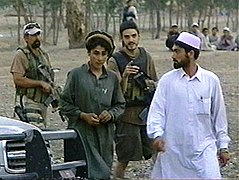 |
| Afghan Interpreter in war zone. |
Still within the sociological framework, Bourdieu's concepts of habitus, field, capital, illusion, were applied by Inghilleri (2005) to the socio-cultural context in interpreting and Angelelli (2000) applied Hymes’ ethnography of communication, whereas Bahadir (2004) tackled interpreters’ social roles and cultural identities. Pérez-González & Susam-Saraeva (2012) approached non-professional community interpreting from Appadurai’s anthropological perspective, while Iliescu (2012) delved into Le Breton’s sociological theory to draw on the symbolic construction of the body in medical encounters mediated by ad hoc interpreters. The use of natural interpreters and especially children in doctor-patient communication, is a recurring issue approached from the affective side and based on early empirical research on emotions.
From the neighbouring field of linguistics, Brown and Levinson’s theory of politeness was a prolific avenue explored by a numerous group of scholars. Still in force today, its applicability to interpreting is enriched by the counter-concept “impoliteness” introduced by Culpeper (1996).
Beyond linguistics, Cognitive Science, an ‘ally in the shade’ to researchers in (dialogue) interpreting who have tried to thresh the various processes that take place during this type of rapid, bidirectional interaction, provides solid scaffolding for scholarly insight in community interpreting. In the early 20th century, behavioural observation through experimental methods started to be used together with introspection, which had been an instrument of data collection since the 19th century. After the first theoretical works (1970s), the eighties witnessed a resurgence of introspective methodology, concerned with detecting routine and strategic behaviour in translators and interpreters. In the 1990s, the first computerized studies were conducted using an increasingly popular multi-modal methodology (video recordings, key tracking and eye tracking) that allowed for data triangulation. However, it was not until the 21st century that cognitive approaches made their comeback, this time to stay. In a field where study subjects vary and achieving a representative sample size is practically impossible, psycholinguistic methodology was difficult to apply. However, it gained momentum when researchers revisited Kussmaul's collective dialogue protocols and combined introspective and retrospective methodology.
Regarding concepts, quality seems to be among the most prolific and transversal. Hale, Ozolins and Stern (2009) argue that the interpreter’s techniques and ethics do not suffice to attain an optimum quality, the interaction between all participants being equally important. Quality also stands at the centre of García Becerra, Pradas Macías & Barranco-Droege (eds.) (2013) two volume monography which focused on the macro-context, best practices, ethical issues and deficiencies in various countries. Together with quality, explored by the pioneer works of Wadensjo or Pöchhacker, other issues with a specific impact on community interpreting such as: ethics, history, technology, terminology, competences, working conditions, training and professionalisation have been highly productive, as shown in Vargas (2012) or Iliescu and Ortega (2015).
The general tendency is for universities that offer T&I degrees to base their training on Conference Interpreting. With the boom of Community Interpreting in the 2000s, still maintaining Conference Interpreting as an undergraduate subject in the curricula, some universities decided to train their students in community interpreting at a postgraduate level, either through short intensive or MA courses, but these are temporary and isolated initiatives rather than long term structured action. Why is it so? One reason might be that universities and decision-makers take for granted that, as CI is assumed to represent the highest echelon of the profession, by mastering (some of) its skills, graduates will automatically be able to perform community interpreting. This has not yet been proved empirically, although community interpreters are required by the ISO norms to master simultaneous, consecutive, note-taking and sight translation skills, as we have seen. Another motive has to do with employability. As long as markets worldwide still hire “helpers” or informal interpreters instead of professionals, and, on the other hand, as long as governments are so slow in conceding linguistic minorities a status in their residence country that guarantees them full rights or allows them to have a voice, there will be no clear job niche and consequently, no structured training and unified certification in these spoken and signed languages. Shlesinger (2007: 148) criticized the oblivion and content of some users in front of the inadequate or even absent solutions to the reality of trained practitioners, who are still exceptions to the rule, with most of the work being performed by untrained, ad hoc bilinguals. A decade later Setton and Dawrant (2016: 147) summarize the situation in Community Interpreting training as encouraging. In spite of the inexistence of real training in some countries, its accelerated character and non-academic framework in some others, or its unusual aim as a “language enhancement” device in few cases, they conclude that “pressure for adequate training has been building for some time, and some isolated structured courses are beginning to emerge”. Gile (2017:1431) remarked the scope broadening, since training goes further traditional formulae to include “also initial acquisition of basic awareness and skills by less educated bilinguals and multilinguals in short courses”.
To reach their goals, training courses in community interpreting should be located in areas with significant immigrant or multilingual populations. The centres must comply with two conditions: the availability of trainers who are also practitioners and can teach using their own local and recent experience (based on the linguistic, terminological, cultural and social problems that communication may raise in that precise region) and the availability of internship programmes allowing trainees to practice in real situations which are similar to the scenery they will face when being hired. Obviously, the third condition is that there are employment opportunities for graduates of such courses. So far, universities have been reluctant to change their curricula and take the risk of training students for a profession that grants inferior fees and lower prestige than Conference Interpreting. Setton and Dawrant (2016) describe existing courses as shorter and focused on a narrower skillset, while devoting time and effort to “prepare trainees for more varied, unpredictable and psychologically and emotionally poignant situations than are commonly met in conference interpreting, putting the focus more squarely on the interpreter’s role and issues of mediation”.
The challenges posed to a global system of formal training and certification that enables a community interpreter to exercise this profession and expect adequate remuneration and recognition are related to at least two factors identified by Hale (2015: 1) the relatively frequent changes in the catalogue of languages required (depending on the migration waves of the time), which impacts not only the training but also the practicing of community interpreting; 2) the lack of a universal grid of compulsory requirements which hinders a unified certification system.
Possible solutions envisage non-language specific training as well as combined e-learning and face-to-face tuition intended to solve the language variety problem. In the post-covid era, with universities having technologically improved their capabilities, Community Interpreting is one of the fields in which a virtual community of practice that shares resources and know-how sounds less utopian.

One of the rampant avenues in Community Interpreting combines technological advances with cognitive science findings. Access to less invasive pupillometry techniques has opened the door to a new experimental horizon, mainly in conference interpreting (processing efforts, cognitive load) and timidly in community interpreting by scholars who developed the notions of monitoring and professional self-concept in community interpreters. Combining methodology from studies based on screen eye-tracking in translation (Muñoz 2016) with requirements of signed languages interpreting, Bosch, Soler & Orero (2020) explore the reception by deaf users of sign Language Interpreted contents on TV. Promising research lines might develop into exploring cognitive processes in different settings where the emotional load in communication and the highly stressful tasks performed by the interpreter. Important data on verbal and non-verbal human interaction are likely to be revealed.
Another prominent research line is the scientometric approach to the scholarly contributions in the field of Community Interpreting similar to those in the domain of Conference Interpreting that we owe to historical contributions such as Gile’s or Pöchhacker’s. The existence of corpora and databases as well as software specialised in data mining allows us to determine diachronic and diatopic tendencies, stringent issues, think-tanks at a larger scale.
 |
| Health care interpreting. Source Ayuntamiento de Alicante & UA (2019). |
A third domain of interest is signed languages. If sign language interpreting falls into community interpreting, so do the linguistic combinations with co-official sign languages in multilingual countries such as Spain. If deaf and hard of hearing are seen as a “linguistic minority”, community interpreting should comprise also the diversity of vernacular sign languages (e.g. Catalan Signed Language) as well as interpreting for deaf migrating minorities whose sign language is not the societal one and have to communicate with the non-deaf society via the signed language of their residence territory or the International Sign Language. The more states become aware of their own populations’ diversity, the more such communication issues authorities in “destination” countries will have to solve and researchers are expected to keep the pace.
Finally, related to the psychological dimension (emotions, vicarious trauma) that characterizes community interpreting as distinct from other domains, a new line of research is incipiently describing communication in situations of grieving, delivery of bad news and end of life situations. Since the beginning of the 21st century, medical sciences have devoted extensive study to these aspects and perhaps the time has come for Community Interpreting to contribute to an interdisciplinary, cross-fertilizing, systematic line of scholarly insight on these matters.