 |
 |
 |
 |
 |
 |
 |
SPA Swahili SWA Uswahili |
contents
Introduction | Translation into Swahili | Translation from Swahili | Institutions of Translation and Interpretation | Published Research into Swahili Translation | Research potential

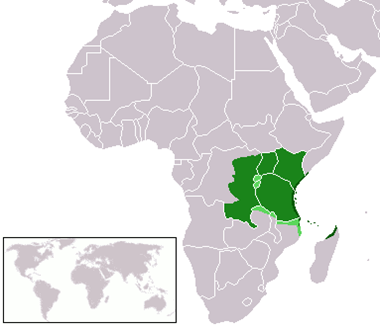
This entry outlines a history of literary translation into and from Swahili, a Bantu language spoken in East Africa by over 200 million speakers. Projecting outward into the Indian Ocean while remaining strategically connected to the African interior, the Swahili coast has long served as a vital crossroads for regional, transregional, national, and transnational forces. Trade, migration, political interests, colonial rule, liberation struggles, and transnational collaborations have not only shaped the sociopolitical landscape of this geographical area but have also fostered complex forms of cultural and literary transfers. Although the study of translation into Swahili is a relatively young academic field, recent publications, editorial initiatives, specialised conferences and the growing involvement of cultural institutions point to a growing interest in this area of research.
 |
|
The Swahili-speaking region [Source] |
Translation from Swahili into other languages began to take shape during the colonial period and alongside the establishment of academic chairs for African languages in European institutions. Although translations from Swahili into other languages remain a micro-reality, with only a limited number of published works, the potential of online publishing has recently sparked a revival of interest in this direction as well.
More broadly, the Swahili translation sphere—both as an intellectual field and as a body of translated texts—is currently experiencing a moment of renewed vitality. This momentum is reflected in growing academic attention, bold publishing initiatives, and the commitment of dedicated translators who are pushing the boundaries of the discipline. In addition, institutional interest is also on the rise, leading to strengthened translator training programs and the expansion of translation studies courses in East African universities.
**
Before the 20th century
The Swahili coast, strategically integrated into the trade routes and Islamic networks of the Indian Ocean, has long been a multilingual and cosmopolitan hub where translation played a central role. Literary translation has been instrumental in shaping Swahili literary culture. Oral tales circulating across the Indian Ocean—such as those from the Sanskrit cycle Pañcatantra and The Thousand and One Nights—entered the Swahili oral literary corpus largely through Arabic translations and were later collected by European missionaries and linguists like Edward Steere, Carl Gotthilf Büttner, and Carl Velten in the late 19th century. These stories were often adapted to local East African contexts, yet they introduced new motifs, characters (such as sultans, viziers, genies and demons), and narrative structures into Swahili storytelling.
The rise of Omani influence over East Africa and Sufi reformism in the 18th and 19th centuries, and the circulation of printed materials from the Ḥaḍramawt, Mecca, Cairo, and Bombay, further stimulated literary and translational activities on the Swahili coast. Beyond the oral sphere, literary translation played a defining role in the creation of a written poetic corpus, particularly through the composition of utendi (long narrative poems) and ukawafi (quatrains) that reshaped, adapted, developed and elaborated on Arabic historical and legendary narratives. These poetic forms were the dominant literary medium in Swahili until the twentieth century and served religious, moral, and historical functions. Texts such as Utendi wa Tambuka (Poem of the Battle of Tabūk, 1728), Hamziyya (Poem rhyming in Hamza, 1749), Utendi wa Ayubu (Poem of Job, late-19th century), and Utendi wa Mikidadi na Mayasa (Poem of Mikdad and Mayasa, 19th century), among many others, exemplify how Arabic narratives were translated and reimagined into Swahili verse.
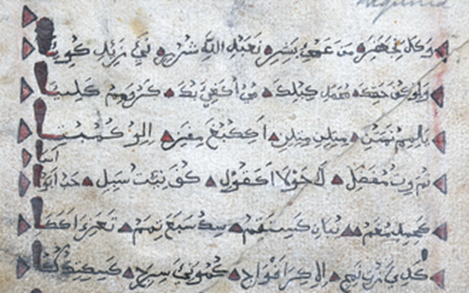 |
| The first lines of Utendi wa Tambuka [Source] |
The act of translation was deeply intertwined with poetic composition and held high cultural and social prestige, particularly among the waungwana (the Swahili nobility or learned class). Translating into verse signalled intellectual refinement and social distinction (Talento 2021: 103ff). Swahili poets often inserted elaborate metadiscursive commentary into their texts, reflecting on the origins of their narratives, their methods of composition, and the emotional and cognitive experience of translating. Terms such as kunudhumu (to compose poetry) and kudiriji (to write in verse) were frequently used interchangeably with the act of translation, illustrating a cultural understanding in which versification and translation were mutually constitutive (Talento 2025). Furthermore, this poetics of translation emphasised the continuity of literary tradition: creativity was not defined as radical innovation but as the skillful preservation and reinterpretation of inherited knowledge.
The missions and the colonial rule
In 1844, the Revd. Dr. Johann Ludwig Krapf, a German missionary from the Church Missionary Society, arrived in Zanzibar. A Bible translation effort (mainly in Kimvita, the Swahili of Mombasa, and Kiunguja, the Swahili of Zanzibar) commenced shortly thereafter and was supported by other missionaries such as John Rebmann, William Taylor, and Harry Kerr Binns. Bible translation initiated the process of shaping the orthography and lexicography of Swahili in Latin script (Swahili was up to then written in Arabic script (ajami)). The process of standardisation, which has originated a longstanding debate associated with colonialist practices, not only defined the written form of Swahili but also deeply influenced the fate of its various dialects and their literary traditions. The Zanzibar dialect, Kiunguja, was elevated as the standard variety while other dialects and their literary forms were increasingly sidelined. This choice was later formalised at the Education Conference held in Dar es Salaam from 5 to 12 October 1925, where Kiunguja was officially adopted as Standard Swahili.
Apart from the translation of Scriptures also European literature was brought through the Universities’ Mission to Central Africa (UMCA). Arthur Cornwallis Madan translated ecclesiastical and secular histories, as well as excerpts from Dante, Buddhist texts, and Socratic dialogues (Hellier 1940: 252). A central figure was Edward Steere, missionary and later Anglican bishop of Zanzibar. Arriving in 1864, he worked with freed slaves and used a small printing press (Hellier 1940: 251) to circulate his translations. Alongside Scriptures, he introduced Shakespeare and Greek mythology in simplified form. In 1867, he translated Tales from Shakespeare as Hadithi za Kiingereza, followed by Hadithi za Esopo (1880), and Mambo na Hadithi (1884), a collection including stories on Ulysses, Socrates, Romulus and Remus, and St. Peter. In 1889, he rendered The Heroes, or Greek Fairy Tales by Charles Kingsley as Mashujaa: Hadithi za Wayonani.
European Christian missionaries were also responsible for the first complete translation of the Qurʾān. This was done by Canon Godfrey Dale of the Universities’ Mission to Central Africa (UMCA) in Zanzibar with the title Tafsiri ya Kurani ya Kiarabu kwa lugha ya Kiswahili pamoja na dibaji na maelezo machache in 1923. As the translator clearly states in his preface, the reason for this translation task was to familiarise the Christian clergy with the content of the Qurʾān, in order to show the weaknesses of the Islamic credo. The arrival of missionaries and the establishment of colonial regimes also relied on the figure of the mtapta, or interpreter, who continued to play a central role in both colonial courts and trading activities. Among the most notable interpreters of the time was Selemani bin Mwenye Chande, “official interpreter to the Governor of German East Africa” (Rollins 1983: 50) and Mohamed Bin Abdulrahman Hamdani, the Kadhi of Kilwa, who also served as a court interpreter and was fluent in German, English, Arabic, and Gujarati (Hadjivayanis 2011: 22).
With the establishment of German East Africa, Swahili was used in lower education and administration. While many Swahili stories were translated into German in Europe, only a few German texts were translated into Swahili. Some appeared in the newspaper Kiongozi (Leader) including Wilhelm Tell, Hänsel und Gretel, and Schneewittchen. These missionary and initial colonial translations coexisted with local translation practices until colonial language policies imposed new hierarchies, reshaping the Swahili literary space. Translation activity intensified under British rule, particularly with the creation of the Inter-Territorial Language Committee (ITLC) in 1930. The Committee aimed to standardise Swahili and saw translation as a tool for linguistic unification (Report 1925). Initially, translations appeared in journals such as Mambo Leo (Today’s Affairs), then as books from 1928, mostly published in the UK, and mostly inserted into school curricula to sustain the development of colonial teaching.
Most translated titles were British school classics, including works by Haggard, Swift, Kipling, Stevenson, Defoe, Carroll, and Longfellow. A few came from French (Molière’s Le Médecin malgré lui and Voltaire’s Zadig, ou La destinée), Italian (Carlo Collodi’s Le avventure di Pinocchio: Storia di un burattino), and Arabic (The Arabian Nights). The most prolific translator was Frederick Johnson, ITLC’s first secretary. Between 1927 and 1935, he translated Treasure Island, King Solomon’s Mines, The Jungle Book, Uncle Remus, Gulliver’s Travels, Robinson Crusoe, The Song of Hiawatha, and Allan Quatermain.
 |
 |
 |
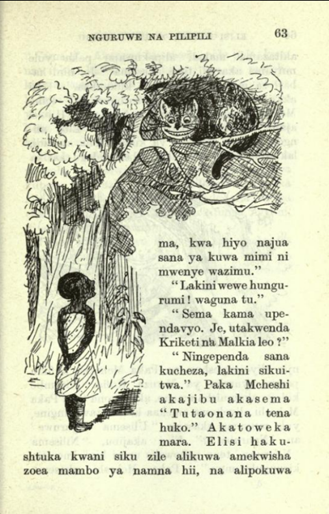
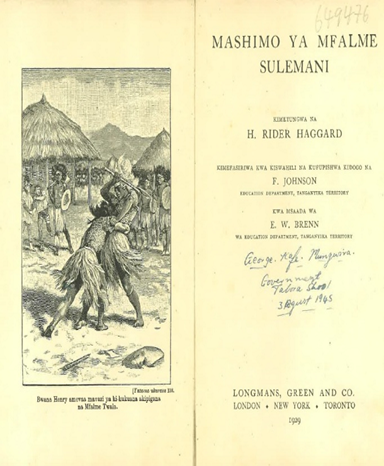
| From the translation of Alice in Wonderland, by Virginia E. St. Lo Conan-Davies [Source] | Title page of King Solomon’s Mines | Shaaban Robert’s translation of the Rubáiyát |
Colonial administrators (like Alexander Morrison and James William Murison) and missionaries (like Serafino Bella Eros) dominated translation. Only two women are known to have participated: Virginia E. St. Lo Conan-Davies, who translated, setting it into an East African environment, Alice’s Adventures in Wonderland as Elisi katika nchi ya ajabu (1940), and Isabelle Fremont, who translated several children’s stories in the 1940s.
Since the ITLC controlled publishing, African translators had limited roles, often labelled as “assistants.” This was the case for Edwin Brenn, for instance, a senior Education Department clerk, who worked with Johnson on Kisiwa chenye Hazina, Mashimo ya Mfalme Sulemani, and Hadithi ya Hiawatha. Others were erased, like E. Lewis, whose name vanished from the 1929 print version of Treasure Island after it had appeared in Mambo Leo.
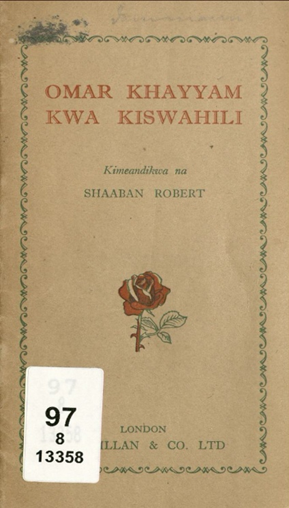
Changes came after 1946, when the ITLC opened to African members, allowing Swahili translators more agency. This marked a shift away from the school-centred translation model. Adult-oriented translations appeared, such as Voltaire’s Zadig translated by Abdulla M. Abubakr (1950), and FitzGerald’s Rubáiyát of Omar Khayyam translated as Omar Khayyam kwa Kiswahili (1952) by Shaaban Robert, the father of modern Swahili literature. Robert’s version marked a return to poetry, a genre previously neglected by colonial translators.
Indeed, although German and British scholars were well aware of Swahili’s rich poetic heritage, colonial translation practices nearly excluded poetry. The only translated poetic text, Henry Wadsworth Longfellow’s The Song of Hiawatha, was reduced to prose. By marginalizing poetry, the ITLC obscured a genre central to Swahili literary history, one that showcased linguistic refinement and cultural depth. This silence must be read in light of colonial discourses on translation. British officials claimed Swahili prose lacked intellectual or educational value and encouraged literary imports (Report 1925: 153). They also portrayed Swahili as incapable of rendering literary quality or “high thinking” (Report 1925: 160). Thus, while translation could confer symbolic capital, in the colonial Swahili context, it became a tool of “deconsecration” (Talento 2017), reinforcing narratives of deficiency in the target language and literature, at the advantage of the colonial enterprise.
In the 1950s, significant progress was made in religious translation. Led by the British and Foreign Bible Society (BFBS), which brought together various missionary efforts in East Africa, a version of the Bible in Standard Swahili and standardised orthography was completed in 1952. This Swahili Union Version soon became the most widely used Swahili Bible. In 1953, Kurani Tukufu, the second full Swahili translation of the Qur’an, was published in Nairobi, then still a British colony on the path to independence. Initiated in the late 1930s, this translation was intended as a response to an earlier version produced by the Christian missionary Father Godfrey Dale in 1923. Authored by Sheikh Mubarak Ahmad Ahmadi of the Ahmadiyya Muslim Community, Kurani Tukufu provoked immediate controversy due to the author's sectarian affiliation. This led to the publication of another Swahili translation by Sunni scholar Sheikh Abdulla Saleh Al-Farsy as a direct rebuttal.
The dawn of independence
 |
 |
 |
| Nyerere’s translations of Shakespeare |
With the independence of East African countries in the 1960s, translation flows changed significantly. Translations into Swahili increased, genres diversified (prose, poetry, drama, detective stories, satire, autobiographies), and agents expanded beyond colonial authorities and English-educated Africans. However, female translators remained rare—one notable exception was Bi. Thureya Kassim, who translated from Russian.
In Tanzania, translation was tightly linked to nation-building and first president Julius Nyerere’s socialist project of ujamaa. Translating became a political and patriotic practice, supporting the Swahilization of the political and social machinery, educational self-reliance, and cultural development. At the Tanzania Books Week in 1967, Samuel Mushi (1968: 8), the key promoter of Swahili at the Ministry of Culture, made a passionate call to individual citizens and writers to “assist the government” in the production of books in Swahili to support the Elimu ya Kujitegemea (Self-Reliant Education) experiment promoted by Nyerere. Translation was not seen as contradictory to this project. Not by Mushi, not by other cultural agents. George Mhina (1970), then director of the Institute of Kiswahili Research, argued that translation was essential for the development of Swahili. His view was imbued with confidence: ‘I believe we can do it provided we play our part” (Mhina 1970: 196).
This vision accompanied broader efforts to expand Swahili into various domains to meet the demands of a national language. As Swahili became the language of politics and democratic participation, translation assumed a key role in institutional life. In 1965, Sheikh Kaluta Amri Abedi led a panel tasked with translating legal texts and compiling a Swahili legal dictionary. Meanwhile, the translation of philosophical and scientific works by authors such as René Dumont, Kwame Nkrumah, and Frantz Fanon contributed to developing new terminology, while literary translations—especially Julius Nyerere’s—expanded Swahili’s political vocabulary. A key step was taken by the Tanzanian National Swahili Council (Baraza la Kiswahili la Taifa, BAKITA), which in 1979 launched a department dedicated to translating academic and technical texts to address the shortage of Swahili books in schools and training centres (Magoti 1981: 45). Between 1970 and 1980, BAKITA published a series of Tafsiri Sanifu (“Standard Translations”) to standardise terminology in sectors such as government, agriculture, engineering, and education, with results shared through the national newspaper Mzalendo.
The publishing of literature echoed this momentum: in both Kenya and Tanzania, series emerged that included translated titles; Waandishi wa Kiafrika (African Writers), Washairi wa Afrika (African Poets), Michezo ya Kuigiza (Drama), Hadithi za Kikwetu (Local Tales). Three main translation currents took shape: European classics, African literatures, and works from Russia and China.
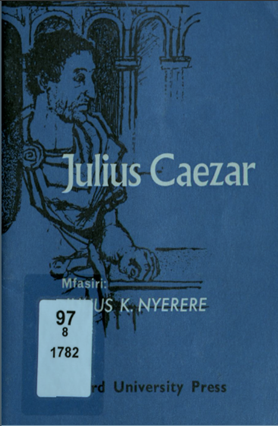
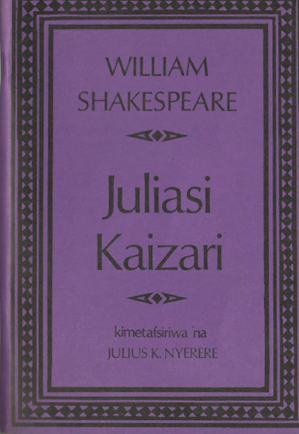
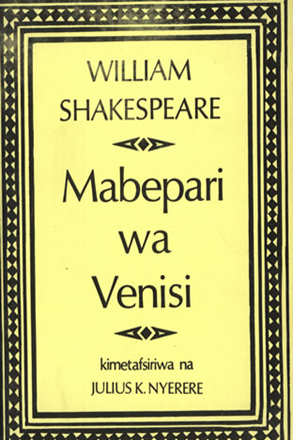
In the first post-independence decade, translating Shakespeare and other so-called Western classics, such as Sophocles, Molière and Conrad into Swahili was a priority for East African intellectuals, politicians and political activists (Julius Nyerere, Samuel Mushi, Joseph R. Kotta, Lugo Taguaba, Willy Theofilo Kisanji) involved in the project of building a national language and literature. Swahili versions of Julius Caesar, Macbeth, The Tempest, and The Merchant of Venice sought to affirm Swahili as a language capable of conveying high culture. As Nyerere (1969: vii) declared, with his translation of Caesar he aimed to challenge the idea of “watu wasiojua Kiswahili, ambao wanafikiri kuwa Kiswahili si lugha pana ya kutosha kueleza mawazo makubwa au ufasaha safi bila kuazima mno maneno mapya ya kigeni.” [those people who do not know Swahili – those who think that Swahili is not broad enough to express deep thoughts or stylistic elegance unless it uses loanwords extensively.]
 |
 |
| Gibran’s The Prophet in Swahili | Majia’s poetry |
Besides Shakespeare, other world literature classics were translated: Heart of Darkness, Tartuffe, The Old Man and the Sea, The Prophet, The Little Black Fish, Animal Farm, The Prince, The Good Woman of Setzuan. The Swahili version of Animal Farm, sponsored by US agencies and published in capitalism-aligned Kenya, was controversial in Tanzania. Translator Fortunatus Kawegere adapted the translation to a Tanzanian context, something which earned him a visit from the police.
In the 1970s, focus shifted toward African literature. Writers like Cyprian Ekwensi, Ayi Kwei Armah, Ngũgĩ wa Thiong’o, Chinua Achebe, Bediako Asare, Wole Soyinka, Thomas Mofolo, Ferdinand Oyono were translated in Kenya. In Tanzania, Okot p’Bitek and Ousmane Sembène stood out. Two relevant figures were involved in the translation of these two latter texts: p’Bitek’s Song of Lawino was translated by Nyerere’s secretary press Paul Sozigwa, while Ousmane’s Le Mandat into Swahili was the work of the renowned actress, playwright and scholar Amandina Lihamba, who adapted the text to a Tanzanian setting, implicitly critiquing Nyerere’s regime. Furthermore, the translation into Swahili of African authors involved also East African writers who originally wrote in English, such as Peter Palangyo, Grace Ogot and William E. Mkufya—the latter was a self-translator, a rare occurrence in the Swahili context—or that originally wrote in other East African languages; this is the case for the translation from Kikerewe of Aniceti Kitereza’s ethnographic-historical-familiar saga, a benchmark in east African literature, into Swahili as Bwana Myombekere na bibi Bugonoka na Ntulanalwo na Bulihwali.
Due to ideological affinities with the Tanzanian political atmosphere, translations from Russian and Chinese works gained prominence since the mid-1960s. Apart from literature, Russia and China also exported a wide range of genres, including historical chronicles, agronomy, literacy development, sports texts, and textbooks. Russian authors like Michail Sholokhov, Lev Tolstoy, Aleksandr Puškin, Nikolaj Vasil’evič Gogol and Maksim Gor’kij were translated by Tanzanians living in the USSR, such as Husein Abdul-Razak, Herman Matemu and Ben Ombuoro, or by Russian Swahili speakers, such as Vladimir Makarenko, and published by Soviet houses like Progress, Novosti and Raduga (Gromova 2004: 121). After a decline in the 1990s, translations from Russian regained prominence in the 2000s, thanks to the Russian-Tanzanian Cultural Centre (‘Kituo cha utamaduni cha Urusi na Tanzania’) in Dar es Salaam, which sponsored the translation of classical authors and folktales to include in the collection Maktaba ya fasihi ya Kirusi (‘Russian Literature Library’).
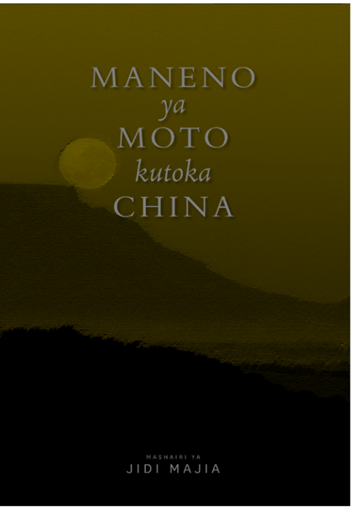
In 1964, the Foreign Languages Press in Beijing launched a Swahili department, employing both Chinese graduates and Tanzanian experts to translate political and economic texts as part of China’s internationalist strategy. Until 1993, when the department was closed, this effort produced a body of 258 translations including works of political and economic science, children’s stories, fiction and folk tales by authors such as Kuan Hua, Guo Xu, Huang Cheng, and Geng Geng. These translations were usually distributed through cultural centers. However, after the translation of the memorable Ballad of Mulan in 1986, Chinese literature saw a decline in the 1990s. It was later revived by the Confucius Institute in Nairobi, which in 2016 sponsored the translation of Jidi Majia’s poetry.
From the 1990s to the 2020s
Since the 1990s, literary translation has played a diminishing role in state policy, while literary flows have diversified in terms of sources and genres. Although school textbook publishing—favored for its economic returns—still dominates, both local and global factors have contributed to renewed interest in literary translation into Swahili.
 |
 |
 |
| Le Petit Prince in Swahili | Paulo Coelho's The Alchemist in Swahili | Gurnah’s Theft in Swahili |
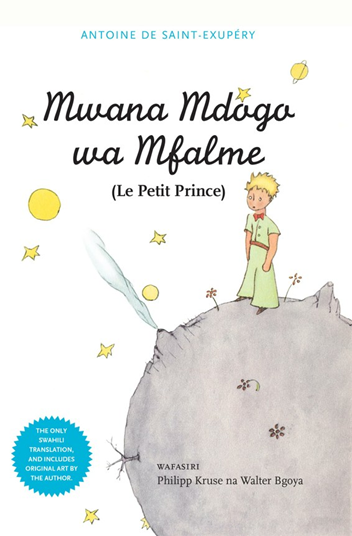
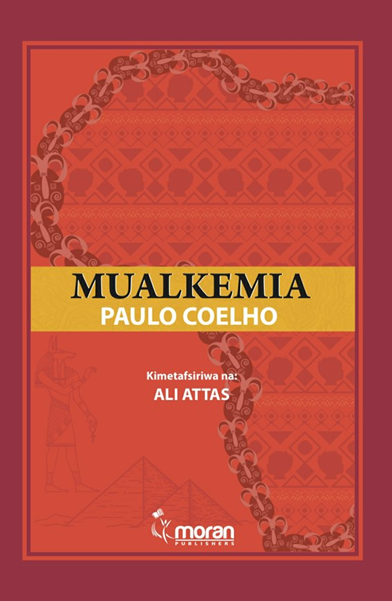
From the mid-1990s, and especially in the 2000s, there was a surge in translations of European classics. A notable initiative was Macmillan’s Hadithi za Kukumbukwa (Tales to remember) series (1993), which offered translations and retranslations of works like Oliver Twist, Robinson Crusoe, Gulliver’s Travels, Tom Sawyer, and Le Tour du monde en quatre-vingts jours. These years are also marked by internationalization of Swahili literary translation, with works from beyond traditional sources (UK, Russia, China). Significant examples of this internationalization include the translations of An Enemy of the People by Henrik Ibsen, Kalevala by Elias Lönnrot, The Search by Naguib Mahfouz, Vernisáž by Václav Havel, The Little Prince by Antoine de Saint-Exupéry, A Wager by Anton Chekhov, Telephone Tales by Gianni Rodari, The Alchemist by Paulo Coelho, and The Republic by Plato — the last translation undertaken by Julius Nyerere, which remained unpublished for more than twenty-five years after his death. Also noteworthy are the works of Nobel laureate Abdulrazak Gurnah: in 2023, Ida Hadjivayanis, a Swahili specialist at London-based SOAS (School of Oriental and African Studies), translated Paradise with the title Peponi, and in 2025 Gurnah’s new novel, Theft, was published simultaneously with its Swahili translation by Hadjivayanis. A monumental project was carried out by the publishing house Mkuki na Nyota between 2004 and 2016, with the release of a new nine-volume translation of The Thousand and One Nights (Masimulizi Kamilifu ya Alfu Lela u Lela au Siku Elfu Moja na Moja), edited by Hassan Adam, who taught for many years at the Institute of African Languages at the University of Cologne.
As these last two examples show, key to this expansion were scholars pursuing personal translation projects, such as the scholar and writer Emmanuel Mbogo, who authored a Swahili version of the Sundiata epic, and Ayub Mukhwana and Iribe Mwangi, who translated Othello in 2012. A further factor spurring vitality in the Swahili translation sphere is the involvement of regions once seen as peripheral, like the Democratic Republic of the Congo. In 2013, the scholar Kalunga Mwela-Ubi, together with Maliza Mwina Kintende and C. Mutoba Kapoma, translated two French plays, Victor Hugo’ Le Roi s’amuse and Jean-Luc Lagarce’s Les Règles du savoir-vivre dans la société moderne into a Congolese variety of Swahili, clearly defending this language and advocating a pluralistic vision of the Swahili language.
Diversified publishing platforms also played a role. Publishers like Genesis Press in the US have printed Swahili translations and re-editions of classics, while some writers, like Mlenge Fanuel Mgendi, have self-published translations and adaptations. Visionary editors such as Walter Bgoya (Mkuki na Nyota) have been instrumental in promoting Swahili as a language of world literature, publishing authors from Mahfouz to Gurnah.
Parastatal and diplomatic institutions have further supported translation. Italian literature, for example, reached Swahili readers through embassy-backed projects (such as the translation of Gianni Rodari’s Fiabe al telefono made by Michelangela Adamo) and projects sponsored by the Ministry of Foreign Affairs in collaborations with Institute of Italian Culture (like the translation of one the books of the successful series of Geronimo Stilton Mille meraviglie. Viaggio alla scoperta dell’Italia translated by Kimani Njogu). Lastly, the international recognition of African writers—most notably Gurnah’s 2021 Nobel Prize—has reinforced translation as both a cultural practice and a field of academic interest.
Since the 1990s, there have also been important developments in the field of religious translation. In 1996, the Biblia Habari Njema was published simultaneously in Kenya and Tanzania, sponsored by the Bible Society of Kenya (BSK) and the Bible Society of Tanzania (BST). It has since become the most widely used version and marks the first major Swahili Bible translation to be fully overseen and actively shaped by Africans at every stage.
Before East African independences and within the academic circle
The collection, transcription, and translation of Swahili literary texts—both oral and written—into European languages (such as German, English, and French) was a fundamental activity of missionaries, linguists, and ethnographers from the mid-nineteenth century onwards. As aids to evangelisation and the pragmatic management of the colonial engine, not only did German and British administrators, educators, and missionaries in East Africa learn the local languages, but some of them became leading linguists and historians who collected Swahili texts in the fields of linguistics, social anthropology, and literature. Through their work, a large corpus of Swahili literature including proverbs, folktales, historical narratives, travel narratives, riddles, ethnographic texts, religious poetry, songs and poems, was edited and published in Swahili and in translation.
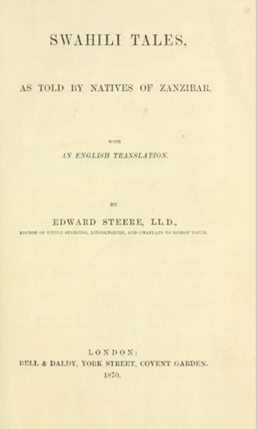
As early as 1870, Edward Steere published Swahili Tales as Told by Natives of Zanzibar, a collection that included folktales, riddles, and poetic compositions such as the Takhmisa ya Liyongo. In 1881, he edited Swahili Stories from Arab Sources, with an English Translation. Many of the tales collected served aetiological functions (e.g. the origin of banana, or of high and low tide), and a significant number reveal plots, character and themes reminiscent of Arabic narratives or feature Persian, Indian, Turkish, and even Aramaic motifs and influences.
Carl Gotthilf Büttner a missionary and first German professor of Swahili at the Seminar für Orientalische Sprachen in Berlin, published in 1894 Anthologie aus der Suaheli-Litteratur containing tales narrated by the Swahili lecturers Sleman bin Said and Amur bin Nasur. Büttner also edited and translated several classical poems of the 19th century, including Utenzi wa Shufaka (Poem of Compassion), Utenzi wa Miraji (Quatrain of the Heavenly Ascent) and Kutawafu kwa Nabii Muhamadi (Poem Concerning the Death of the Prophet Muhammad). His student, Carl Velten, who worked as an official interpreter for the Governor of German East Africa from 1893 to 1896 and later held the chair of Swahili studies in Berlin, not only collected travel literature and ethnographic descriptions of the coast. In 1898, he published Märchen und erzählungen der Suaheli that gathered 65 tales recorded from oral performances, among which there were tales about the trickster hero Abunuwasi, a canonical character of Swahili oral tradition derived from the famous poet Abū Nuwās (757–814).
 |
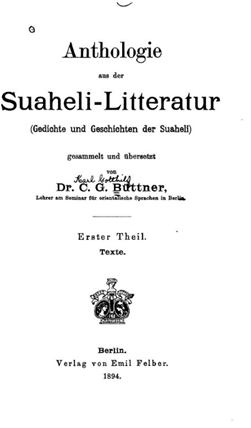 |
| Swahili Tales as Told by Natives of Zanzibar collected and translated by Edward Steere (1870) | Anthologie aus der Suaheli-Litteratur collected and translated by Carl Gotthilf Büttner (1894) |
In Britain, Alice Werner was a pioneering scholar of Swahili language and literature. She was particularly devoted to the study of oral traditions and Swahili poetry and her translations of classical poems such as Utenzi wa Ayubu and Utenzi wa Mikidadi na Mayasa were foundational. Together with William Hichens, she edited The Advice of Mwana Kupona upon the Wifely Duty, the translation of Utendi wa Mwana Kupona (1858 ca.) a famous didactic poem Mwana Kupona dedicated to her 14-year-old daughter, which stands as a notable literary achievement. Hichens also produced the celebrated (annotated) English translation of Al-Inkishafi, among the finest pieces in Swahili poetry, as The Soul’s Awakening in 1939, a metaphysical meditation on mortality and social decay believed to have been composed by Sayyid Abdallah bin Ali Nasir in the early 19th century. However, a first translation of this poem appeared in C. H. Stigand’s A Grammar of Dialectic Changes in the Kiswahili Language (Cambridge, 1915) by William E. Taylor, who also translated the Psalms (1904, published by the British & Foreign Bible Society) and was the editor of, among other works, African Aphorisms or Saws from Swahili-land (1891), which contains more than six hundred (annotated and commented) proverbs in the Swahili of Mombasa. Harold E. Lambert, defined the “greatest British scholar of Swahili in the twentieth century” (Frankl 1999: 47), translated historical texts such as The taking of T’umbe Town (1953), from the sub-dialect of Chifundi, and Habari za Mrima [Chronicles of Mrima, 1961], attributed to Shaykh Ali Hemedi al-Buhry, and literary masterpieces such as Utenzi wa Vita ya Uhud [Poem of the Battle of Uhud, 1962] and Wimbo wa Mwana Mnga [Ode to Mwana Manga, 1953], the sensual description of an Arabian lady attributed to the warrior-poet Fumo Liyongo, the national hero of the Swahili, whose texts, dated 16th century, are the most ancient Swahili written specimens of which we have evidence (Mulokozi & Sengo 1995: 29).
Among French scholars, Charles Sacleux stands out for having included the complete 19th century long poem Utenzi wa Qiyama (Poem on the Judgment), with French translation, in his monumental Dictionnaire Swahili-Français (1939). A missionary and linguist, Sacleux also recorded poetic and religious material during his decades of work in Zanzibar and the Comoros.
These works were a literature produced and circulated in academic circles in specialised publications and academic presses to fuel the teaching of the newly founded chairs of African languages (Berlin, Hamburg, London). In the mid-20th century, the translation of Swahili literary texts continued as a primarily academic endeavour targeting a European audience, closely linked to the institutionalisation of African Studies in European universities. Scholars such as Lyndon Harries, John W. T. Allen, Jan Knappert and Mohamed H. Abdulaziz played an instrumental role in the documentation of the Swahili literary richness and consolidating the study of Swahili classical poetry and its translation as a pillar of the field.
Knappert, a prolific Dutch scholar, in 1958 edited and translated into Dutch Utenzi wa Tambuka (1728), among the most ancient specimen of written Swahili poetry. His three volume Swahili Islamic Poetry included the translation of foundational texts including Ukawafi wa Miraji (1896) and late 18th-early 19th century poems such as Buruda ya al-Busiri, Utenzi wa Katirifu, and Maulidi poems (Maulidi ya Dali, Maulidi ya Nun, Maulidi ya wa), foregrounding the religious and didactic dimensions of Swahili verse. His anthology Four Centuries of Swahili Verse (1979) mapped a literary genealogy from early figures like Lyongo Fumo and Bwana Mwengo to 20th-century writers such as Shaaban Robert and Amri Abedi, and is rich in translation. Harries’ Swahili Poetry (1962) presented annotated excerpts from several canonical works, including Utendi wa Ras al-Ghuli, Utendi wa Liyongo, Utendi wa Mwana Kupona, Utendi wa Inkishafi and Maulid Barzanji. John W. T. Allen, another major figure, published a series of critical editions and translations of classical poems. His 1961 (1971) brought together key poetic texts such as Utendi wa Ngamia na Paa, Utendi wa Ayubu, Utendi wa Masaibu, Mikidadi na Mayasa, and Utendi wa Qiyama. Abdulaziz’s Muyaka: 19th Century Swahili Popular Poetry (1979) is a gem of literary criticism and a testament to the poetic achievements of Muyaka bin Haji al-Ghassaniy, an early nineteenth-century Swahili poet from Mombasa, who was the first known secular poet writing in Swahili.
For a long time, the translation of Swahili literature has remained primarily a scholarly exercise, central to the training of language and literature specialists and to inter-university collaborations — such as the long-standing projects (involving scholars over many years and from various institutions) that led to the publication of Liyongo Songs: Poems Attributed to Fumo Liyongo and In This Fragile World: Swahili Poetry of Commitment by Ustadh Mahmoud Mau.
From the 1970s
Translation from Swahili into other languages remains a promising yet underexplored field, particularly in relation to contemporary translation practices. Given that translations from Swahili are predominantly produced by academics engaged in the teaching of Swahili language and literature, the corpus of such translations largely consists of literary works. Swahili literature has been translated into a wide array of world languages, including Chinese, Swedish, Shona, Polish, Czech, alongside a longstanding tradition of translation into German, English, and Italian.
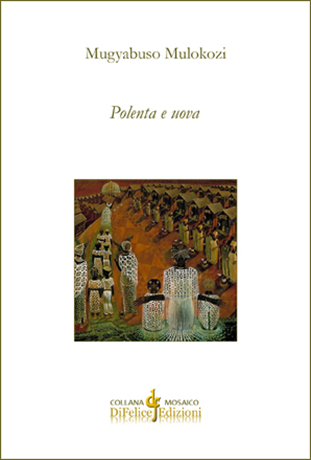
In the Italian context, the academic interest in translation from Swahili was significantly shaped by the establishment of the Chair of Swahili Language and Literature at the University of Naples “L’Orientale” in 1968 by Elena Bertoncini Zúbková. A prolific translator of Swahili literature into both Italian and her native Slovak—especially through specialised journals such as Revue svetovej literatúry and Plav—she published numerous poems, short stories, and plays in Italian literary magazines including Periferia, Linea d’ombra, Plural, and Smerilliana. Her work reached both prestigious publishing houses such as Mondadori and smaller, independent publishers like Di Felice and Abramo. This tradition of literary translation has been carried forward by Italian scholars working or formed at L’Orientale, who translated Said Ahmed Mohamed’s novel Utengano (translated by Flavia Aiello, a former student of Bertoncini Zúbková and now Professor of Swahili at Naples, as Separazione, 2005), poems by Euphrase Kezilahabi (translated by the poet and scholar Roberto Gaudioso) and Abdilatif Abdalla (translated by Flavia Aiello), and poems by the Congolese Patrick Mudekereza, who writes in a hybrid Swahili combining elements of French and Lingala (this is the joint work of Aiello and Gaudioso). In general, translations from Swahili into Italian tend to appear in literary journals and are closely linked to academic environments. Authors translated include those most studied in Naples and widely debated in literary scholarship, such as Kezilahabi, Mohamed S. Mohamed, Mugyabuso M. Mulokozi, Said Ahmed Mohamed, and Farouk Topan.
In the German context, literary translations from Swahili began to emerge in the post-independence period through academic engagement. Joachim Fiebach of the University of Berlin translated Kinjeketile (1974), the landmark play by Tanzanian dramatist Ebrahim Hussein, dramatizing resistance to German colonial invasion. Fiebach was not only Hussein’s PhD supervisor in East Berlin but had also been a visiting fellow at the University of Dar es Salaam, where he experienced the vibrant political and intellectual atmosphere of the 1970s. By the late 1990s, however, the publication of Swahili translations in Germany became increasingly precarious. In 1989, author and translator Ilija Trojanow founded the Munich-based Marino Verlag to promote African literature in German-speaking contexts. Among their titles was a translation of Shafi Adam Shafi’s Kasri ya Mwinyi Fuad by Karin Boden and Monique Lütgens, rendered via French and published with support from Litprom—the Society for the Promotion of African, Asian, and Latin American Literature—funded by a consortium including the German Protestant Church, development agencies, the German government, and the Frankfurt Book Fair. Other cases relied on personal initiative. Thus, in 2008, Barbara Schmid-Heidenhain founded the publishing house Edition Pamoja to publish her own translation of a novel by William Mkufya. In 2009, Guido Korzonnek, a graduate of the University of Hamburg and a professional study-tour guide, created Kalamu Verlag to publish audiobooks of his translations of Muhammad Said Abdulla’s detective fiction. In another example of academic involvement, Uta Reuster-Jahn of the University of Hamburg self-published her translation of Alex Banzi’s Titi la Mkwe using an online platform. These cases illustrate both the diversity and fragility of Swahili translation efforts, where academic engagement continues to be the main driver of production and significance.
 |
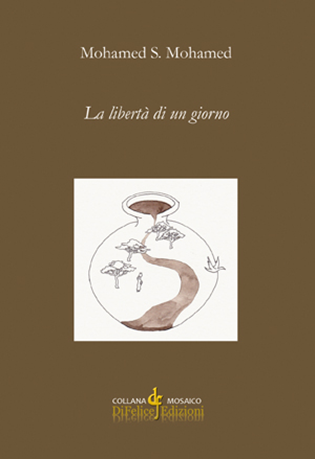 |
| Two book covers of Bertoncini- Zúbková’s translations | |
Translations into English have been produced in various contexts, particularly in the UK, the US, and East Africa. At SOAS University of London, key figures included Ida Hadjivayanis and Chege Githiora (the latter affiliated to Kenyatta University since 2021), both scholars of Swahili. In East Africa, self-translation and academic entrepreneurship have been prominent strategies: writers such as Ebrahim Hussein and Gabriel Ruhumbika have translated their own work, while figures like Kithaka wa Mberia have established their own publishing platforms (e.g. Marimba). In the American context, many translators of Swahili literature are scholars, poets, or writers themselves—such as Annmarie Drury, Nathalie Arnold Koenings, Meg Arenberg, and the late Ken Walibora—who often work collaboratively and share resources informally. Online platforms play a crucial role in this context, especially in the dissemination of Swahili poetry and short fiction. Notable venues include Words Without Borders, the Poetry Translation Centre, Asymptote, New Orleans Review, Warscapes, Raritan, The Dirty Goat, and Northwest Review. Translated authors include Ebrahim Hussein, Aniceti Kitereza, Gabriel Ruhumbika, Kithaka wa Mberia, Said Ahmed Mohamed, Mwenda Mbatiah, Abdilatif Abdalla, and Euphrase Kezilahabi. The latter’s controversial novel Rosa Mistika, once banned in Tanzania, gained renewed attention and was finally translated into English in 2025 by Jay Boss Rubin. An interesting project is the publication of Shuwari (“The Calm;” Buluu Publishing, 2019), the latest collection of poems by renowned Swahili poet Haji Gora Haji from Tumbatu. The book was released as a bilingual flip-over edition, featuring the original Swahili poems alongside their English translations by Flavia Aiello and Irene Brunotti (the latter affiliated with the University of Leipzig).
The many languages into which Swahili is translated are linked to the existence of university teachings in the respective countries.
In the late 1970s and 1980s, several works were translated into Chinese included those by Shaaban Robert, Euphrase Kezilahabi, Shafi Adam Shafi, Mohamed S. Mohamed, Farouk Topan, Penina Muhando, and Ebrahim Hussein, as well as traditional Swahili folktales. Two translators stand out for their prolific output: Ge Gongshang (1940–2007), a trained ethnologist who studied Russian and Swahili at Beijing Foreign Studies University, and Cai Linxiang (b. 1945), a prominent translator of African literature and a graduate of the China Communications University. Cai translated nine Swahili books into Chinese, in addition to three major works by Ngũgĩ wa Thiong’o, thus contributing significantly to the Chinese reception of African literary production (Lei 2018).
Translations from Swahili into Russian began in the 1930s with oral literature for language teaching and gained momentum in the 1960s alongside Soviet engagement in Africa. Key works by Shaaban Robert were translated by Andrei Zhukov, a leading expert on classical Swahili literature and head of the African Studies Department at Leningrad University. Other important contributions include Leonid Gankin’s translations of novels by Shafi Adam Shafi and several Swahili folktales published in the Moscow-based almanac Africa (1970s–1990s). Since 2000, literary translation from Swahili into Russian has continued in academic settings, especially through journals like Pod nebom Afriki moyei and Afrikanskiy sbornik, often featuring work by advanced students and scholars from Moscow and Saint Petersburg universities (Gromov 2018).
In Egypt, Al-Azhar University and the National Centre for Translation in Cairo have played a central role in translations from Swahili into Arabic. Literary translations from Swahili into Arabic outnumber those in the opposite direction (Salah 2018). Most translators are Swahili scholars affiliated with Al-Azhar. Between 2005 and 2015, several literary works were translated, including the novels Almasi za bandia by Chachage S. L. Chachage and Haini and Vuta n’kuvute by Shafi Adam Shafi; the plays Wakati ukuta by Ebrahim Hussein and Kilio cha Haki by Alamin Mazrui; and the historical text on Kiswahili Historia ya Kiswahili by Shihabuddin Chiraghdin and Mathias E. Mnyampala (Salah 2018).
Translations from Swahili into French have largely been shaped by the personal interests and initiatives of individual translators, rather than by a coordinated or strategic editorial policy. The resulting body of work includes texts such as Maisha ya Tippu Tip, Shafi Adam Shafi’s Kasri ya Mwinyi Fuad, Aniceti Ketereza’s Bwana Myombekere na Bibi Bugonoka, Ntulanalwo na Bulihwali, Euphrase Kezilahabi’s Nagona and Mzingile, the collection Safari za Waswahili and works by Shaaban Robert such as Maisha yangu and Kusadikika, the latter translated in 2025 by Aurélie Journo and Nathalie Carré, in collaboration with Alliance Française in Dar es Salaam and leading Tanzanian publisher Mkuki na Nyota. These translations often emerge from specific encounters, academic exchanges, or personal research interests, highlighting the role of chance in postcolonial intercultural engagement (Xavier 2018).
In Poland, Iwona Kraska-Szlenk (University of Warsaw) has translated the Utenzi wa Shufaka, selected oral tales from the 19th century (collected by Steere and Büttner), poems by Kezilahabi, and a short story by Ruhumbika. Her predecessor, Eugeniusz Rzewuski, translated Kinjeketile and excerpts from Shaaban Robert’s Maisha Yangu na Baada ya Miaka Hamsini. Other translations include Abunuwasi stories (transl. by Alicja Małecka), excerpts from Utenzi wa Fumo Liyongo (transl. by Rajmund Ohly), and poems by Muyaka. These translations have largely appeared in academic publications and journals such as Elipsa, Dialog, Przegląd Orientalistyczny, and Afryka. The specialised journal Estudios de Asia y África of El Colegio de México has had the merit to make available Swahili literature into Spanish: two Swahili children’s tales translated by José Arturo Saavedra Casco in 1998 and Euphrase Kezilahabi’s short story Wasubiri Kifo, translated first into English by Leonard Lisanza Muaka and then into Spanish by Germán Franco Toriz (2000), whereas Chege Githiora translated a selection of poems by Shaaban Robert. In Sweden, Swahili translations include Aniceti Kitereza’s family saga and several of Nyerere’s political essays.
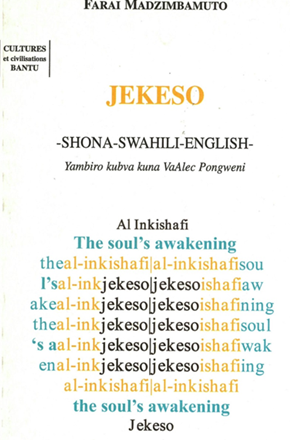 |
| Jekeso, a Shona rendition of the Swahili poem Al-Inkishafi |
An interesting and rare example of inter-African translation is Jekeso (2010), a Shona rendition by Farai Madzimbamuto of the Swahili poem Al-Inkishafi. Titled Enlightenment, this trilingual edition (Shona, Swahili, and English) represents the first known translation of this canonical poem into another African language, highlighting the largely untapped potential of African-to-African translation practices, an area that remains notably underexplored. Indeed, in the landscape of literary exchanges concerning Africa, translation has overwhelmingly flowed from Europhone languages into African ones, and to a lesser extent from African languages into Europhone languages, while direct exchanges between African languages themselves have been exceptionally rare.
Overall, contemporary publishing markets show only limited interest in Swahili literary translation, which often competes with other African literatures—particularly Anglophone authors from East Africa who receive more international recognition and visibility, such as Yvonne Adhiambo Owuor, Grace Ogot, Meja Mwangi, and Binyavanga Wainaina. In some cases, publishers act as gatekeepers, avoiding works that display linguistic or formal heterogeneity. The export of Swahili literature has not followed coordinated editorial strategies or benefitted from systematic translation policies. No central infrastructure exists to promote translation initiatives, broker translation rights, or provide consistent funding. In this landscape, translators often function as multifaceted agents. They select works, organise collaborations, acquire rights, and carry out translations—often without remuneration. They may also self-publish or establish publishing ventures to ensure that Swahili literary texts reach new audiences. These individuals frequently promote their work through self-organised readings and academic events, such as those held at the annual Swahili Colloquium at the University of Bayreuth. In sum, academic institutions play a pivotal role in advancing Swahili literary translation and in validating its importance as a scholarly pursuit. Translators are often embedded in academic and literary networks, and while academia lends credibility and a space for reception, it rarely provides the financial support needed to sustain translation work.
![[heading title]](2.2-X.png "[heading title]") Institutions of Translation and Interpretation
Institutions of Translation and Interpretation
Since the late 1980s, translation studies has gradually gained academic and institutional recognition in Swahili-speaking countries of East Africa, particularly in Kenya and Tanzania. This development has been marked by the establishment of university programs, the organization of translation-focused conferences, and the creation of specialised centers and professional associations for translators and interpreters.
A landmark moment came in 1989, when the University of Dar es Salaam hosted the FIT-UNESCO Round Table Conference on translation in Africa. The proceedings, later published as Problems of Translation in Africa (1990), emphasised terminological development and translator training. Since then, Swahili translation has attracted attention in both regional and international scholarly circles. The 2013 Swahili Colloquium in Bayreuth, an important annual event for international Swahilists, was entirely devoted to tafsiri (translation), bringing together interdisciplinary contributions from linguistics, postcolonial studies, development studies, and media translation. Furthermore, the East Africa Interpreters and Translators Association (EAITA), established in 2016, organises the annual Africa International Translation Conference (AITCO), usually hosted in East Africa.
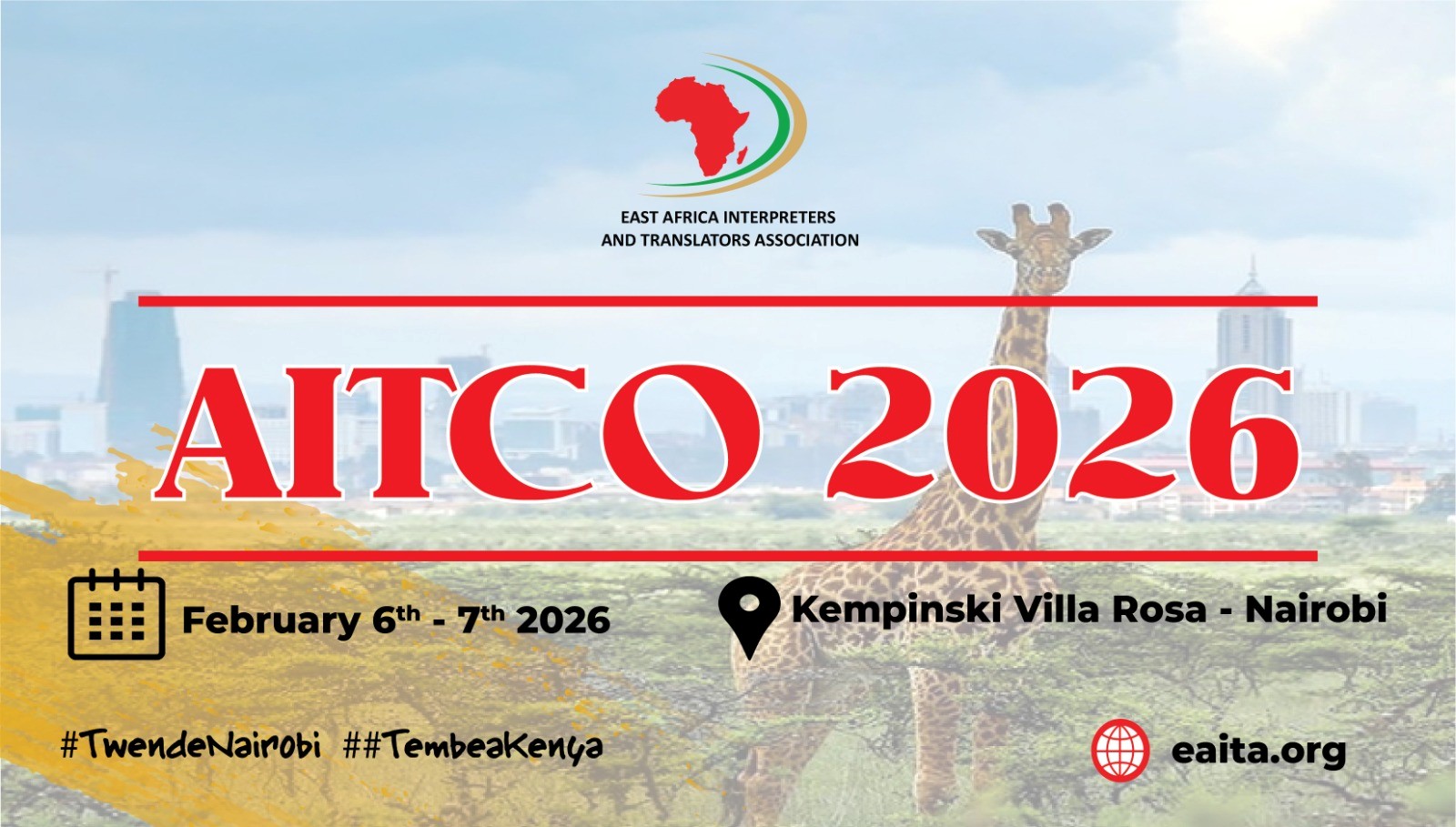 |
| Announcing the Africa International Translation Conference (AITCO) |
Several institutions in the region now offer translation-focused education and services. The Institute of Kiswahili Studies at the University of Dar es Salaam includes a Centre for Terminology, Translation, Interpretation and Language Technology. The National Swahili Council, BAKITA (Baraza la Kiswahili la Taifa), hosts the Idara ya Tafsiri na Ukalimani, a department responsible for terminological standardization in fields such as medicine, law, science, and technology. Their outputs are published as Tafsiri Sanifu (‘Standard Translation’) and disseminated to government ministries and cultural institutions.
At the academic level, universities across East Africa offer programs in translation at undergraduate and postgraduate levels. These include Moi University, South Eastern Kenya University (SEKU), Kibabii University, Egerton University, and Kabarak University in Kenya, as well as the University of Dar es Salaam, the Muslim University of Morogoro, and the University of Dodoma in Tanzania. The University of Nairobi provides comprehensive BA and MA programs in translation and interpretation through its Department of Linguistics, Languages and Culture, while Kenyatta and Moi Universities embed translation modules within broader language and communication studies. At Dar es Salaam, translation theory and practice are integrated into linguistics and literature curricula, and postgraduate theses often focus on the role of Swahili in national and regional communication. Notably, the Centre for Translation and Interpretation at the University of Nairobi—founded in 2010 in partnership with the United Nations and the European Union—offers MA programs in translation and interpretation, training professionals from across East Africa in conference and community interpreting.
Professional associations have also played a key role in furthering the institutionalisation of translation. Tanzania’s translators’ association (CHAWATA) has existed since 1982 and is affiliated with the International Federation of Translators (FIT). In Kenya, the Kenya Translators and Interpreters Association (KETIA) was established in the early 2000s. A regional initiative, the East Africa Translators and Interpreters Association (EATIA), mentioned above, brings together professionals from Kenya, Uganda, Tanzania, Rwanda, and Burundi.
Published Research into Swahili Translation
Although academic journals exclusively devoted to translation studies are rare, translation-related research appears in broader journals such as Kiswahili (University of Dar es Salaam), Mwanga wa Lugha (Moi University), and Chemchemi (Kenyatta University). A notable exception is the special issue of Swahili Forum edited by Uta Reuster-Jahn and Serena Talento in 2018, titled Swahili Literature in Global Exchange: Translations, Translators and Trends. This issue includes case studies on translations involving Swahili and other languages such as German, Italian, English, French, Arabic, and Chinese. The contributions, in English and Swahili, examine translation practices both from a micro-perspective (strategies and approaches) and a macro-perspective (institutional and cultural frameworks), positioning translators as cultural mediators affected by social, political, and market constraints. Another key contribution is the bilingual (Swahili–English) special issue of Eastern African Literary and Cultural Studies (EALCS), Trends in East African Swahili Literatures (vol. 5, issues 3–4). The guest editor, the late Ken Walibora, described this as a step toward “kuendelea kukiweka Kiswahili mbele na peupe katika ramani ya dunia” [catalys[ing] the elevation of Kiswahili to front and centre in the global scene] (2019: 153).
Scholarly literature on Swahili translation has developed along three main research trajectories: the linguistic approach involves textual analysis of translated Swahili works (e.g. Aiello Traore 2013; Harries 1970; Magoti 1981); the literary approach explores how translations contribute to the emergence of new themes, styles, and genres (e.g. Ryanga 1985; Zaja 2002; Zhukov 1996); the historical-ideological approach considers especially the contribution of translation to nation-building, intellectual decolonization, and language development (e.g. Aiello Traore 2014; Arenberg 2016; Mazrui 2007, 2017; Mhina 1970; Mwansoko 2005; Ruhumbika 1983).
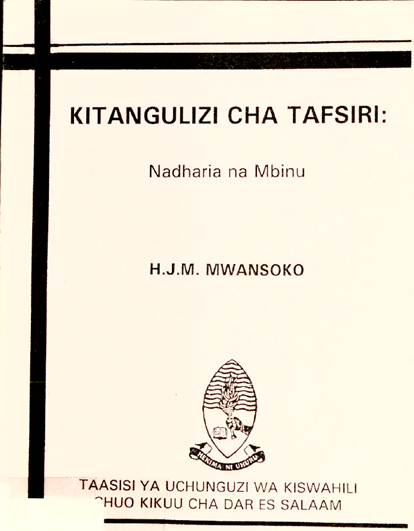 |
| An Introduction to Translation: Theory and Method, the first translation-studies textbook in Swahili (Mwansoko 1996) |
Scholarly contributions on translation from Swahili have predominantly taken the form either of reflective accounts by translators themselves, examining their own translational choices (e.g. Aiello Traore 2005; Arenberg 2012; Drury 2006; Garnier 2018; Koenings 2018; Nocera 2005), or of historical overviews produced by researchers documenting key developments in the field (e.g. Zhukov 1998; Reuster-Jahn 2018). The first Swahili-language textbook on translation as a discipline is Kitangulizi cha Tafsiri: Nadharia na Mbinu [Introduction to Translation: Theory and Practice] (1996) by Herman J.M. Mwansoko, a prominent Tanzanian translation scholar. Other important Swahili publications include Nadharia za Tafsiri, Ukalimani na Uundaji wa Istilahi [Theory of Translation, Interpretation and Terminology], edited by Hadija Jilala, Senior Lecturer of Translation and Kiswahili Studies at the Open University of Tanzania, in honor of Mwansoko, and Simiyu Wanjala’s Misingi ya Ukalimani na Tafsiri [Principles of Interpreting and Translation] (2011), a textbook aimed at schools and universities.
Among recent English-language contributions, Cultural Politics of Translation: East Africa in a Global Context by Alamin M. Mazrui (2016) investigates how translation operates as a counterhegemonic act in the postcolonial condition. Drawing on decades of Swahili translation practice, Mazrui explores the relationship between translation, modernity, identity, and global-local power dynamics. Other relevant works include Edward Wilson-Lee’s thematic work Shakespeare in Swahililand (2016), Zaja’s Literary Translation in Kiswahili (2011), which presents case studies on the translation of The Merchant of Venice, The Kalevala, and Une si longue lettre, and Mwangi’s Translation in African Contexts (2017), which uses postcolonial and queer theory to position translation as a cosmopolitan and political practice. Ida Hadjivayanis’s PhD thesis (2011) is the first to apply polysystem and norm theory to Swahili translation, offering a valuable empirical analysis. Finally, Talento’s Framing Texts/Framing Social Spaces: Conceptualising Literary Translation in Three Centuries of Swahili Literature investigates the construction of a discourse on literary translation from a sociological lens, showing how literary translation practices have evolved and how they correlated to shifting historical and social contexts.
Taken together, these initiatives and scholarly contributions mark the consolidation of translation studies as an emerging discipline in Swahili-speaking East Africa and in global learning institutions.
Research potential
While interest in translation from and into Swahili is steadily growing, many research avenues remain underexplored. Promising work could emerge from the intersection of historical (macrohistory, microhistory, histoire croisée), sociological, semiotic, digital approaches, and genetic translation studies approaches applied to both institutional and everyday practices of translation in Swahili-speaking contexts.
An area that deserves more interest is the precolonial Swahili coast, a multilingual and cosmopolitan environment marked by vibrant religious, literary, and commercial exchange. Here, translation—understood in the broad semiotic sense proposed by Marais (2019)—was central to interactions among diverse communities. Further research could examine the role of interpreters and cultural mediators before and during the arrival of missionaries and colonial administrators, highlighting how translation shaped early cross-cultural encounters and power relations. This also includes attention to Swahili oral and written verbal arts, which often embed theoretical reflections on translation processes.
The institutional translation field also offers fertile ground for inquiry. Swahili plays a crucial role in policy implementation in health, education, law, and agriculture across East Africa. Public bodies like BAKITA and TUKI have been central in developing terminologies and translation norms, a process worthy of in-depth historical and linguistic analysis. Beyond formal institutions, translation facilitates public health campaigns, development projects, and humanitarian work, often involving NGOs and international organizations such as WHO, UNICEF, and AMREF. This opens space for investigating community translation practices and informal mediation, especially in multilingual urban areas and refugee contexts, including legal interpreting in court systems. The media and publishing sectors also rely on translation. Newspapers (e.g., Taifa Leo, Mwananchi) and broadcast outlets (e.g., BBC Swahili, KBC, TBC) routinely translate global news content, while also navigating linguistic choices that reflect regional identities and audiences. Meanwhile, translation among African languages remains understudied. Examples such as Swahili–Shona–English translations of Al-Inkishafi suggest a need to explore intra-African translation histories and methodologies.
The digital realm is increasingly shaping how Swahili texts are produced, translated, and circulated. Online platforms enable collaborative, activist forms of translation that challenge the constraints of traditional publishing. Digitally published Swahili poetry and fiction often defy genre expectations and register uniformity, pushing back against market-driven stereotypes of African literature. Furthermore, projects such as Masakhane and AfricaNLP promote participatory approaches to natural language processing, enhancing access to Swahili across digital services, while raising important questions about equity and representation in global AI systems. Future research on these topics can contribute significantly to both African and global translation studies.