 |
 |
 |
 |
 |
 |
 |
CAT Traducció catalana SPA Traducción catalana |
contents
Introduction | First manifestations (13th-15th centuries) | The Modern Age (16th-18th centuries) | From the 19th century to Modernisme | Modernisme| Noucentisme and the first third of the 20th century | The 20th century: from the post-war period to the transition to democracy | From the end of the 20th century to the present | Research potential

Catalan translation has multiple studies, a few of which can be consulted in the bibliography of this entry. It is from all this compiled material that the history of translation into Catalan can be reconstructed. It should be noted the fundamental importance that translation has had for the configuration of the Catalan language and literature, since its inception.
The history detailed here is still partial for two reasons: the first is the brevity of the text and the second is the uneven knowledge of Catalan translation in different historical periods. As regards the first manifestations of the Catalan language and literature, there are numerous prestigious studies and scholars who have approached the translations of the medieval period and their fundamental relevance. Despite this, due to the difficulty (or impossibility) of accessing many documentary sources, these approaches can only be considered partial. Regarding Modern Age, it is a time of decline in Catalan production due to the historical vicissitudes in which it moves, and, therefore, it has been a relatively little studied period and one that has not aroused special academic interest. It seems that, recently, interest has increased considerably, and important studies are being published. This will surely clear out many dark points of these three centuries. Finally, from the 19th century, translation was of capital importance in the resurgence and subsequent modernization of Catalan literature. Although some work remains to be done, there are numerous general and particular studies that clear the panorama of Catalan translation to this day. Therefore, the text presented here is an approximation in every sense and should be completed, corrected, and improved with the studies on Catalan translation to come.
![[título del epígrafe]](2.2-X.png "[título del epígrafe]") First manifestations (13th-15th centuries)
First manifestations (13th-15th centuries)
As in most languages that derive from Latin, the oldest Catalan texts are translations of Latin texts. These texts are pragmatic, and these will basically be the types of text that will be translated until the middle of the 14th century. Among these texts there are three large groups: the historical and legal ones, the religious ones, and the medical and scientific ones.
In the first group there are the oldest texts, such as two fragments of the Visigothic code and the Usages of Barcelona (12th century) or the Furs of Valencia (13th century), in addition to the romance of the universal chronicle of Martin of Opava and the Chronicon mundi of Lucas de Tui.
 |
| Homilíes d’Organyà are one of the first known texts in Catalan. [Wikimedia]. |
On the other hand, there are more examples of translations of a religious nature, among which Homilies d’Organyà (first half of the 13th century) stands out due to its antiquity, the Golden Legend, by Jacobus de Varagine, for its cultural influence, and the Dialogues, by Saint Gregory the Great (late 13th century). Other outstanding works, already in the 14th century, are Somme le roi, by Friar Laurent, and Tractatus de Purgatorio Sancti Patricii. As far as biblical texts are concerned, there are many complete and fragmentary texts already from very early dates (1234). Catalan versions of the New Testament have existed since the 13th century, probably translated from Occitan and, later, French versions.
The most abundant texts of this time, however, are those of a scientific and medical nature, which allow access to science to doctors with and without training, and the dissemination of scientific knowledge among the nobility. Among the translations preserved, Regimen Sanitatis, by Arnaldus de Villa Nova, translated by Berenguer Sarriera, or Cyrurgia, by Theodoric Borgognoni, translated by Guillem Corretger, both texts from the first decade of the 14th century, stand out. Also noteworthy is a special interest in Arabic medical works and in scientific treatises of an informative nature, such as the French Sidrac and the Latin Secretum secretorum. Likewise, natural philosophy also had its importance, with the only translation into a vulgar language at the beginning of the 14th century of Dragmaticon philosophiae, by William of Conches, in addition to the intense activity of Ramon Llull, many of whose works were published in double version, Latin and Catalan, and even in some cases promoted by Llull himself. In the same way, Llull was also a translator and promoter of translations of Latin and Arabic scientific texts.
 |
| Ramon Llull, a key figure in Catalan literature of the 13th century. [Wikimedia]. |
From the second half of the 14th century, during the reign of Peter III of Aragon and his sons, important cultural changes took place, and they changed the merely utilitarian use of the Catalan translation. The translators to date were clergymen, lawyers and doctors, for obvious reasons, while from that moment on there is a certain specialization of translators, among which the ecclesiastics stand out (Antoni Canals, Pere Saplana, Antoni Ginebreda, Jaume Domènec or Joan de Montsó) and the officials and scribes of the royal court (Mateu Adrià, Jaume Conesa, Bernat Metge, Ferrer Saiol, Guillem de Copons, Jaume Castellà or Guillem Fontana). It is not a trivial phenomenon, because their prose was based on the guidelines of ars dictaminis and their translations included glosses and reflections on the translated works and their way of translating them.
Historiography was the common thread of the cultural change developed in the court of Peter III and his descendants, and translation played a key role. A paradigmatic example is Compendi historial, commissioned to Jaume Domènec and continued by Antoni Ginebreda after his death, which is essentially a translation of Speculum historiale, by Vincent of Beauvais. Other translations of prominent historiographical texts are Guillaume de Nangis’s chronicle, two different versions of Histoire ancienne jusqu’à César and Històries troianes, Jaume Conesa’s translation of Guido delle Colonne’s Historia destructionis Troiae. It is also worth mentioning the ancient history introduced through classical texts, such as the works of Flavius Josephus, Res gesta Alexandri Macedonis, by Julius Valerius, or Bellum Iugurthinum, by Sallust.
The anonymous translations of Lletre del preste Joan, from a French or Occitan text, La flor de les històries d’Orient, by Hayton of Corycus, Voyage d’outremer, by John Mandeville, and Llibre de les províncies e de les encontrades, by Marco Polo, respond to geographical and geopolitical interests.
On history and geography, but also on many other disciplines, from natural philosophy to ethics, it is Llibre del tresor, by Brunetto Latini, translated by Guillem de Copons, which was a reference for the most outstanding Catalan writers of the time, like Francesc Eiximenis, Ausiàs March and Joanot Martorell. There are many other works of an encyclopaedic nature such as the one mentioned above, as well as others of a technical, scientific, and medical nature, which represent a continuity with past eras.
It is interesting to highlight at that time the translation of Latin classics, such as Ovid and Seneca, which combine an ethical and philosophical interest, as well as a literary one. Some examples are Guillem Nicolau’s translation of Heroides, by Ovid, and Seneca’s anonymous translation of eight Tragedies, which also had a strong influence on March and Martorell.
During the reigns of the first House of Trastámara’s kings, Ferdinand I (1412-1416) and Alfonso IV (1416-1458), there were few differences referring translated works: classical texts, especially philosophical ones, were expanded and Catalan literature was introduced in the modernity with the incorporation of Italian texts by Dante, Petrarca and Boccaccio, whose translations decisively influenced the Catalan literary model, as can be seen, for example, in the prose of Bernat Metge. It is also worth noting at that time the increase in the reading public.
Among the different translations of Italian texts of the time, the version of Dante’s Commedia by Andreu Febrer in 1429 stands out. This version is especially remarkable for being of a marked literary character and the first in verse, so there is a clear will to transfer not only the content, but also the form, something unprecedented until that moment.
In the second part of the 15th century, at the time of the incunabula printing press, the work of translators such as Martí de Viciana, Francesc Prats (forefather of translations from Spanish into Catalan), Jordi de Centelles, Lluís de Fenollet and Francesc Alegre (translator of Bruni and Ovid, and introducer of a more modern concept of translation, detached from the most absolute literalism) is remarkable.
It is especially interesting the propagation of the literary language model of Joan Roís de Corella, which can also be appreciated through translation, as in the case of Imitatio Christi, by Thomas à Kempis, translated by Miquel Peres (1482), or in the versions of Bernardí Vallmanya, especially in his translation of Cárcel de amor, by Diego de San Pedro (1493).
Also from that time it is necessary to highlight the diversity of biblical texts that emerged. Among them, in 1478 the complete text of the Bible was printed in Valencia under the auspices of Saint Vicent Ferrer, who wanted to be an “official” and canonical version, although his purpose was not successful due to the intervention of the Inquisition, which destroyed practically all its copies.
The Translat. Traduccions al català medieval fins a 1500 database catalogues the works translated into Catalan up to 1500 on spirituality, philosophy, history, and literature. It does not include biblical, scientific, or liturgical texts, with some exceptions; for scientific texts, it can be consulted Sciència.cat, and for biblical texts, Corpus Biblicum Catalanicum. There are neither included the translations of Ramon Llull’s Latin works, which can be found at Base de Dades Ramon Llull.
The Modern Age (16th-18th centuries)
The appearance of the printing press and the increase in cultural relations in the Modern Age gave an important boost to the translation activity. Translations show the classicist literary canon of the time and a concern not only exclusively for the content, as in medieval times, but also for the form, which entails, in turn, an increase in “theorizing” about how it was translated. However, until recently, this translation activity has not been studied in depth during the Renaissance, the Baroque and the Enlightenment, probably because it coincides with the period traditionally known as Decadència (Decadence), in which literary activity in Catalan ceased to be a European reference, as it had been in medieval times, due to the Castilianization of the upper echelons of society.
The translation of the Greco-Latin classics is one of the highlights of the time. Critical editions and new more rigorous translations appeared. Their forms and genres also stimulated the own creation in Catalan.
 |
| Sant Miquel de Cuixà, the nerve centre of translation in Roussillon in the 18th century. [Wikimedia]. |
It is necessary to highlight in this sense the precursor and pioneering translation of 1494 by Francesc Alegre of Ovid’s Metamorphoses. In the prologue, Alegre opens a range of possibilities that involve taking a further step in the conception of translation as it was understood and practiced up to that moment: he explains his translation criteria, defends the profession of translator, and argues that the recovery of the classics is a factor of modernity, the main reason for translating the work. He also provides arguments for the retranslation of works and for a type of translation that goes beyond word for word.
In the 16th century, it is also worth mentioning the work of Rafael Moix, Cicero’s translator. His translations have a clearly didactic character due to their textual arrangement, with the translation interlinear with the Latin original, and the lexicographic indices and rhetorical figures in the appendix. Although written texts are not preserved, Latin playwrights were also represented, such as Terence’s Eunuchus in 1592.
In the Baroque, Ovid adaptations stand out, first by Francesc Fontanella, the best Catalan writer of the second half of the 17th century, and then by Agustí Eura, faithful to the Baroque style still in the 18th century. In both cases, the translations propose to amplify Ovid’s verses with abrupt rhetorical figures and lexical oppositions typical of the baroque style.
During the Enlightenment there is a Josep Ullastre’s translation of the Aeneid, by Virgil, although the most outstanding work is undoubtedly that of the Minorcan Antoni Febrer Cardona. Febrer translated Cicero, Virgil, Phaedrus, Horace, and Ovid into Catalan, especially in the first decade of the 19th century. His classical adaptations have an instrumental character, since his main concern was pedagogical: allowing students to read the Latin original more easily, as he explains in different prologues, where he also explains his translation criteria: to follow fidelity without offending elegance and elegance without damaging fidelity. His pedagogical will is not only seen in the way of translating, but also in the genres that he translated: Ciceronian dialogues and the fables of Phaedrus are exponents of the didactic literature promoted by Neoclassicism. Febrer himself is an exponent, with his Diccionari menorquí, espanyol, francès i llatí, of the new instruments that the Enlightenment introduced to improve the quality of translations, such as grammars, language learning methods, and bilingual and multilingual dictionaries.
Regarding the translation of classics from the Modern Age, Barcelona and Valencia were centres for the dissemination of the great European classics, but mostly in Spanish versions. In Catalan, Pere Joan Comes translated with adaptations and without indicating it the third book of the Historiarum Ferdinandis regis Aragonum, by Lorenzo Valla, in Història de Joan Fivaller (1583). Through handwritten copies, the prose of Antonio Beccadelli in Dels fets e dits del gran rey Alfonso, translated by Jordi de Centelles at the end of the 15th century, and Epístolas familiares, by Antonio de Guevara, in anonymous translation at the end of the 16th century or the first years of the 17th century.
The new pedagogical methods of humanism also had versions in Catalan, such as the Introductiones latinae, by Elio Antonio de Nebrija (1501, reissued in 1505 and 1508), as well as the Lexicon ex sermone latino in hispaniensem and the Dictionarium ex hispaniensi in latinum sermone, adapted by Gabriel Busa in 1522. Other more traditional texts had a wide popular dissemination, such as Isopet, a compendium of Aesop’s fables, published for the first time in 1493 (although the first preserved edition is from 1550); General història de l’esforçat cavaller Partinobles, comte de Bles, y aprés fonch emperador de Constantinobla, a translation of the French roman Partenopeus de Bloi, published in Tarragona and reprinted 21 times until 1866, and Història del noble y esforçat cavaller Pierres de Provença, fill del comte de Provença, y de la gentil Magalona, filla del rey de Nàpols, y de las fortunas y treballs que passaren en la sua enamorada vida, already documented in 1538. In the last two cases, the Catalan version is based on the previous Castilian versions. Despite their diffusion, they were not a model for Catalan writers, but filled the void of Catalan novels of that time.
In the Baroque, the poetic versions that Francesc Fontanella made of Marco Girolamo Vida and some verses of the 12th song of Gerusalemme liberata, by Torquato Tasso, are worthy of note.
It is in the second half of the 18th century and the beginning of the 19th that a true flowering of translations of great European authors into Catalan, especially French, takes place. This outbreak had two very specific origins: Roussillon and Minorca.
In Roussillon drama translations by a group of ecclesiastics stand out singularly: Miquel Ribes translated Polyeucte (1789), by Corneille, and Athalie (1788) and Esther (1792), by Racine; Sebastià Sabiuda and Antoni de Banyuls de Montferrer translated separately Zaïre (1770 and 1780-1782, respectively), by Voltaire, and an anonymous contemporary translated Monsieur de Pourceaugnac, by Molière. Although the group was dissolved with the secularization after the French Revolution, some members took up residence in Barcelona, where translations continued during the first third of the 19th century; some examples are the versions of Le médecin malgré lui, by Molière, and La mort de César, by Voltaire.
In Minorca, during the English domination, in the first half of the 18th century, it is known the translation of several English authors (Addison, Young and Wieland), although only Saphira, by Joseph Addison, in Joan Soler’s version, has been preserved. In the second half of the 18th century, and because of the brief French domination, two French comedies were translated: Les plaideurs, by Racine, and Le malade imaginaire, by Molière; both translations are anonymous, although the last one is attributed to Pere Ramis, brother of Joan Ramis, the most representative playwright in Catalan neoclassical literature. Already in the 19th century, the aforementioned Antoni Febrer Cardona translated a remarkable set of neoclassical works: the oratorio Schöpfung (La creació del món, 1807), by Haydn, from a French version; Cathécisme historique (1810), by Claude Fleury; Odes sacrées (1825), by Rousseau; Géographie universelle (1826), by Claude Buffier, and two dramas and four Latin tragedies by François Gabriel Lejay (1833-1836). It is worth mentioning Vicenç Albertí Vidal, contemporary of Febrer, who translated four comedies by Molière (Dom Juan o el convit de l’estàtua, L’amor metge, El muson noble o don Pere per excel·lència and Don Pere de Ñiquiñac –Monsieur de Pourceaugnac); five comedies by Goldoni (El pare de família, La viuda astuta, La dona venjativa and Pamela); three dramas by Metastasio (Siroe, Aquil·les and Demofoonte); El barber de Sevilla o la precaució inútil, by Beaumarchais; El baró, by Moratín, and El geperut gelós (El celoso don Lesmes), by Rodríguez de Arellano. Albertí adapted the works to the Minorcan reality, since they were translations destined for their representation in the theatre of the house of mercy in Mahón, directed by Albertí himself. In addition to drama, Albertí also translated into Alexandrian dodecasyllables La Alonsíada, an epic poem about the conquest of Minorca, originally written in Spanish by Joan Ramis.
Unlike contemporary literature of the time, traditional literature, and mainly that aimed at promoting religious education and popular piety, continued to be translated into Catalan, the most accessible language for the general population. It should be considered, however, that on numerous occasions these were indirect translations, made from a previous translation into Spanish.
In this area, the Catalan version of Dança de la mort (1497), by Mathieu-Nicolas Poillevillain de Clémanges, performed by the royal archivist Pere Miquel Carbonell, should be highlighted, due to its influence on the Catalan religious drama of the 16th century; Carbonell continued the work with 50 added stanzas with characters from the Chancellery. It is also noteworthy the translation of Flos sanctorum, by Jacobus de Varagine, published eight times between 1494 and 1565. Other interesting works are the Imitatio Christi, by Kempis, with two independent Catalan versions in the 17th century, one by Pere Gil (Barcelona, 1621) and another by Pere Bonaura (Perpignan, 1695), the Catalan version of the Nieremberg catechism (1642) or the anonymous translation of Veritats eternes (1761), by Bernardino Rossignoli.
Self-translation is a relatively common phenomenon in the Modern Age. Given the impossibility of publishing the works in Catalan, many authors chose to translate themselves into Spanish. Some examples are Història de València, by Pere Antoni Beuter (Crónica general de España y especialmente del reyno de Valencia, 1546); Crónica de la ciudad de Valencia y su reino (1564-1566), by Martí de Viciana; Libre de las grandesas i cosas memorables de la antiquíssima, insigne i famosa ciutat de Tarragona, by Pons d’Icart (Libro de las grandezas de Tarragona, 1573); Història general del regne de Mallorca, by Joan Binimelis, whose Spanish version was not printed either, or Desenganys de l’apocalipsi (1673), by Magí Cases, amplified in its Spanish version.
From the 19th century to Modernisme
In the first third of the 19th century, it is worth highlighting the work of the aforementioned Minorcan translators, Antoni Febrer Cardona and Vicenç Albertí, with the translation of neoclassical and classic Latin texts by the former, and the adaptation of drama texts by the second.
 |
| Lo Gay Saber was, in two different periods, one of the reference periodicals of the second half of the 19th century. [Wikimedia]. |
Since the second third of the 19th century and until the last decade of it, the translation into Catalan is conditioned by the questioned Renaixença (renaissance), a cultural and literary movement that aims to recover the cultured use of the Catalan language for its artistic expressions. By prioritizing self-produced texts, somewhat neglected until then, not much emphasis was placed on the translation of foreign works. Despite this, there are different aspects to highlight, some of which were precursors of the true emergence of translation in Catalan at the end of the same century.
Until the 1860s, only the continuity of the translation of religious books can be highlighted, with two new translations of Kempis’s Tractat de la imitació de Crist, by Jeroni Pi (1845) and, later, by Terenci Thos (1894 ), and four editions (between 1832 and 1888) of Lo Nou Testament de Nostre Senyor, by Josep Melcior Prat, based on the Vulgate and contrasted with French, English, Italian and Spanish versions, as well as two contemporary translations: La fuggitiva, by Tommaso Grossi, probably translated by Miquel Anton Martí Cortada in 1834, and La pagesa virtuosa o Vida de Lluïsa Deschamps, an anonymous translation from 1858.
Beginning in the 1860s, with the projection of the Renaixença movement through the Floral Games and periodicals, translations of contemporary texts began to be published occasionally and gradually. A capital example is Frederic Mistral, who was translated into Catalan on different occasions: Francesc P. Briz translated Mirèio for the newspaper La Corona between 1861 and 1863, a work that he published completely as a book in 1864 and later in Lo Gay Saber (1882-1883); likewise, Mistral sent to the Floral Games of Barcelona in 1862 I troubaire catalan, translated three times: by Damas Calvet (1862), Celestí Barallat (1862) and Francesc P. Briz (before 1866); furthermore, Briz also translated three poems by José de Espronceda (“A Teresa”, “Cant del cossaco” and “Cant de l’eternitat”) in Ecos catalans (dedicats a Espronceda), in 1862.
It is in periodicals, however, where translations took on the greatest importance. In the first stage of Lo Gay Saber (1868-1869) there are versions of poems, narratives and plays by both classics and contemporaries, such as Anacreon, Euripides, Goethe, Jean Paul Richter, Heine or the already mentioned Mistral. La Llumanera de Nova York (1874-1881), meanwhile, included translations of Dante, Shakespeare, Walter Scott, Lord Byron, Heine, Gautier, Rosalía de Castro, Gustavo Adolfo Bécquer, and Vicente Ruiz Aguilera. In the pages of La Renaixensa (begun in 1871), until the 1880s, translations of poems and narratives by classical and contemporary authors also appeared, among others, Sappho, Ovid, Pliny, Terence, Lord Byron, Goethe, Lamartine, Longfellow, Manzoni, Heine, Bécquer, Rosalía de Castro or Zola. Diari Català (1871-1881) made known authors such as Leopardi, Daudet or Zola; furthermore, it created the “Biblioteca del Diari Català”, which offered literary works as inserts, which could be linked as independent volumes; in this format, they published three works: Viatje d’un naturalista alrededor del mon fet a bordo del barco “Lo Llebrer” (The Beagle) des del 1831 al 1836, by Charles Darwin, translated by Leandre Pons Dalmau; La Ilíada, by Homer, translated from French by Conrad Roure, and Noveletes escullides, a compilation of texts by Bret Harte and Edgar Allan Poe translated by Pere Sacases. In the second stage of Lo Gay Saber (1878-1883), it published translations of Ossian (by Artur Masriera, Francesc P. Briz and Enric Franco, who also translated Èdip, rei, by Sophocles), Victor Hugo (by Joaquim Rubió i Ors, Jeroni Rosselló and Agna de Valldaura), Chateaubriand (René, by Francesc Rierola), as well as Andersen, Aristophanes, Bécquer, Euripides or Lamartine, among others.
 |
| La Renaixensa was one of the periodicals that included translations in the 1870s. [Wikimedia]. |
Likewise, it is worth highlighting different translations of poems by Manzoni, Leopardi, and Carducci in publications such as Calendari Català, Revista Balear, Museo Balear, Ilustració Catalana or in the Antología de poetas líricos italianos (1889), edited by Joan Lluís Estelrich, and the volume Victor Hugo en català. Poesias francesas traduhidas (1888), with poems translated by Eusebi Cort, Jaume Martí and Ramon Picó i Campamar.
As with the religious book, the translation of Greco-Latin texts was not interrupted. To the translations that appeared in previously mentioned periodicals, we must add the work of Joan Sardà, translator of around thirty odes by Horace and a dozen epigrams by Martial, and Josep Franquesa Gomis, translator as well of Byron, Heine, Barbey d’Aurevilly and Shakespeare.
Already in the 1880s, and riding the modernist stage, L’Avens took the baton from the aforementioned publications and particularly from the Diari Català line. There were texts by French naturalists, such as Daudet, Caze or Zola; Zola’s plays were also adapted. The same publication, already in the first modernist stage, promoted the serial Novelas Catalanas y Extranjeras (1892-1902), in which, motivated by the ideas of renovation and modernization of the modernist movement, they introduced Russian authors for the first time in Catalan (Gogol, Tolstoy, Turgenev, Dostoevsky), French (Mérimée, Maupassant, Bourget, Loti), Italians (Pellico), English (Dickens), Germans (von Chamisso, Hauff) and Nordic (Bjørnson, Strindberg), with translations, among others, by Bonaventura Bassegoda, Ernest Moliné, Sebastià Farnés, Carles Bosch de la Trinxeria, Casimir Brugués or Lluís Bartrina, especially from French.
 |
 |
| L’Avens was one of the early publications of the Catalan modernist movement. [Wikimedia]. | Narcís Oller, a reference storyteller of 19th century Catalan letters and a productive translator. [Wikimedia]. |
The first translations into other languages of some works by Narcís Oller, Àngel Guimerà and Jacint Verdaguer are also from this period. To give just one example, L’Atlàntida, by Verdaguer, was translated into Spanish by Melcior de Palau in prose (1878) and by Josep Maria Despujol (1878) and Francisco Díaz Carmona (1883) in verse; into French by Albert Savine in prose (1882) and Justí Perpratx in verse (1884); into Italian by Luigi Sunyer (1885); into Occitan by Jan Monné (1888); into Czech by Jaroslav Vrchlicky (1891), and into German by Clara Commer (1897).
As it could be seen in the publications of L’Avens, it is in the 1890s, with the appearance of Modernisme (modernism) movement, when translation took on a special and catalysing verve of what later, during Noucentisme movement, became structured cultural policy. This boom is fundamental from a quantitative and qualitative point of view, since translation will become a main axis of the literary manifestations of Catalan culture, one more gear to achieve a similarity between Catalan literature to the rest of European literatures, in order to build a national, modern and European culture. Thus, translation into Catalan increases exponentially in terms of the number of works and sources, but it also improves methodologically and there are fruitful reflections on the idea and art of translating.
It was in the 1900s when the first collections of books appeared. In addition to having the will to modernize Catalan literature, they had a clear editorial criterion that sought to create a true reading mass in Catalan, a very limited market until then. In this way, a double objective was covered: to recover the backwardness accumulated by Catalan literature with respect to its peers and to consolidate the normalization of the Catalan language. These collections, modest from an economic point of view, include “Biblioteca Popular de L’Avens” (1903-1915), “Biblioteca Joventut” (1901-1914) and “Biblioteca de El Poble Català” (1906-1909).
 |
| Joan Maragall, a key figure in Catalan Modernisme as a whole, and in translation in particularr. [Wikimedia]. |
To check the true dimension of the translation, let’s look at some data about these collections: “Biblioteca Popular de L’Avens” included 56 translations (of 143 publications), with authors as prominent and diverse as Dante, Molière, Shakespeare, Pascal, Goldoni, Chateaubriand, Mistral, Leopardi, Goethe, Novalis, Maeterlinck, Whitman, Sterne, Swift, Emerson, Giacosa, Tolstoy, Ibsen, Omar Khayyam or a compilation of Japanese stories; “Biblioteca de El Poble Català” incorporated Oscar Wilde, Anatole France and Nathaniel Hawthorne for the first time in Catalan, and in “Biblioteca Joventut” we find names such as Strindberg, Hauptmann, Bjørnson, Ruskin and Spencer.
As can be seen, there was a change in the selection of the titles to be translated with respect to what had been done to date: incorporation and predominance of new sources (Anglo-Saxon, Germanic and Nordic authors) to the detriment of the traditional preponderance of French texts, and a significant decrease in poetic texts compared to narrative, drama and even essay texts.
This massive importation of foreign literature of all time also contributed to the incorporation of the most fashionable literary manifestations in Europe in the late 19th and early 20th centuries. An example is the enthusiasm for Wagner and his “total art”, which led to the creation of Associació Wagneriana, which made his operatic production known as a whole through the work of Joaquim Pena, Antoni Ribera, Jeroni Zanné and Xavier Viura.
These essential texts were also references for Catalan modernist writers and profoundly changed the future of Catalan literature; thus, the literature of Joan Maragall, for example, cannot be understood without Nietzsche, Goethe or Novalis; the symbolism of Catalan narrative and drama, without Maeterlinck, or the commitment of the modernist drama, without the influence of Ibsen.
On the other hand, the incorporation of foreign literature at that time was still eclectic, because in addition to the incorporation of the most fashionable literature, it did not stop translating into the classics, and there was also interest by educated and popular authors. In this way, the first modern translations of Dante, Nordic writers or Portuguese poetry were produced, at the same time as the work of Sherlock Holmes by Conan Doyle (21 stories and a novel between 1908 and 1909).
Other particularly remarkable performances are the translations of Don Quixote and Shakespeare’s plays, and the collection “Biblioteca d’Humanistes”. Regarding Don Quixote, although partial translations of the work were published during the 19th century, it was Antoni Bulbena i Tosell (also a translator of Dante, Shakespeare and Zola) who published the first complete version of the text; he also published ten versions of the work between 1887 and 1937. Likewise, Ildefons Rullan also translated the work in its entirety in two volumes (1905-1906).
 |
 |
| Cover of Shakespeare’s La tempesta, translated by Josep Carner in “Biblioteca Popular dels Grans Mestres” (1910) . [Wikipedia]. | Josep Carner, an essential figure for learning about Noucentisme and the subsequent evolution of Catalan letters in general and particularly of translation. [Wikimedia]. |
In the same way, it is in the modernist era when the first complete translations (without arrangements) of Shakespeare are produced, with Artur Masriera’s Hamlet as a pioneering work. Later, “Biblioteca Popular dels Grans Mestres” (1907-1910) was the first attempt at wide dissemination of Shakespeare in Catalan; 17 works were translated, with translations by Josep Carner, Dídac Ruiz, Salvador Vilaregut and Josep Farran y Mayoral. It is also a reference the translation of Macbeth by Cebrià Montoliu (also translator of Emerson, Ruskin and Whitman) for a model of literary language as accessible as possible, which contrasts with another reference Shakespearean version, Lo rei Lear, by Alfons Par (1912), whose version was in a medievalized Catalan.
“Biblioteca d’Humanistes” (1910-1921), halfway between Modernisme and Noucentisme, published ten works by six authors unpublished in Catalan until then: Erasmus, Thomas More, Joan Lluís Vives, Richard de Bury, Antoni Agustí and Machiavelli. The importance of the collection does not only lie in the introduction of these authors into Catalan literature, but also in the way it was made, always starting from the original text and with greater respect for the “spirit” than the “letter” of the original. This way of proceeding in translations, which began to be the majority in the translated works of the time, represents an important shift in the way of approaching foreign literature and incorporating it into Catalan literature.
“Biblioteca d’Humanistes” also presents another interesting phenomenon of the modernist era: the strong impulse that the modernists gave to translation attracted writers of eighteenth-century origin, who willingly collaborated with the new cultural movement. Examples of this are Josep Pin i Soler, director of the aforementioned collection, Apel·les Mestres, who published in 1895 a translation of Intermezzo, by Heinrich Heine, or Narcís Oller, who, between 1905 and 1913, translated 18 plays by authors like Goldoni, Ostrovsky, Tolstoy, Turgenev, Giacosa or Becque.
Finally, two notes on the translators of the time. As already mentioned above, as in the cases of Maragall or Oller, among the translators there were writers who complemented their creative work with translation, but we already find exclusively literary translators during the time, such as Joaquim Casas-Carbó, Manuel de Montoliu, Cebrià Montoliu, Salvador Vilaregut or Josep Roca i Cupull. In addition to establishing that the original language should always be the one to be translated (with the exceptions of the Slavic, Nordic, and Eastern languages, which did so from French), many of these translators wrote about their task as translators and contributed interesting and transcendent reflections for the discipline; among them, stand out Joan Maragall, Cebrià Montoliu and Manuel de Montoliu.
Noucentisme and the first third of the 20th century
If the emergence of translation occurred during Modernisme, it was during Noucentisme when it was consolidated and institutionalized. Noucentisme is conceived as a political and cultural movement, unlike Modernisme, and with a very defined idea of structuring society not only from a cultural point of view, but also from a political one. Therefore, it takes advantage of the momentum of the turn of the century to create the institutions and platforms that allow the professionalization and channelling of translation, as an essential cultural manifestation. The aim was that they had the maximum impact, with the ultimate goal of achieving a truly comparable culture to the other western cultures.
Behind this movement there are four essential names to understand it: Enric Prat de la Riba, Eugeni d’Ors, Josep Carner and Pompeu Fabra. Enric Prat de la Riba was the founding politician of the great bourgeois political party of the time, Lliga Regionalista, which channelled much of the political and cultural movement. The leadership of Prat de la Riba led him to the presidency of the Diputació de Barcelona (1907) and from there he conceived the Mancomunitat (1914), a group of provincial councils and embryo of the future Generalitat, and sponsored the creation of the Institut d’Estudis Catalans (1907), the Catalan scientific and cultural academy. It is in this context, and under the mantle of these institutions, that cultural production in Catalan took place.
If Prat de la Riba was the political leader of the movement, Eugeni d’Ors was the intellectual ideologue through his Glosari, his daily collaboration in La Veu de Catalunya. Ors defended an ideal of cultural elevation and an ethic of personal and collective fulfilment of doing things well. From a more conservative point of view and adapting them to the idea of cultural effort, Ors validated and continued the arguments in favour of translation put forward by modernists, such as Maragall or Manuel de Montoliu, in order to broaden the own culture. Josep Carner, the movement’s most active and prominent writer, in addition to writing, translating, and editing, also contributed to reflection on the task of translating itself and the intrinsic importance of the activity for the creation and consolidation of a true Catalan culture comparable to any other European culture. For noucentistes, translation had to contribute to the enrichment of the literary language and to fill the gaps in a literature that was recognized as incomplete after its medieval splendour, as well as being the best school for writers of Catalan expression.
In these objectives, emphasis is placed on the Catalan language and its literary use. It is here where the last piece of the puzzle comes in, Pompeu Fabra. Fabra had begun to work on the unification and standardization of Catalan in the last decade of the 19th century, but it was with the creation of the Institut d’Estudis Catalans and its filological section (Secció Filològica) that he was able to really forge with all authority the linguistic regulations, necessary to correct the language arbitrariness and fragmentation that the written language presented up to that date and combat interference from Spanish. This normative reference unified published Catalan and served as a reference and resource for writers and translators, especially from 1917-1918, with the publication of Diccionari ortogràfic, first, and Gramàtica catalana, later.
These purposes were specified in different publishing initiatives: the publications Empori (1907-1908) and La Revista (1915-1936) included translations of poetry and essays; Societat Catalana d’Edicions published two volumes of Poe (1915-1916) and four of Perrault (1918), and the Secció Filològica of the Institut d’Estudis Catalans promoted the publication of a collection of classic works, including Bible translations by Frederic Clascar (1914-1925).
 |
 |
| D’Ací i d’Allà, featured header of Editorial Catalana. [Wikimedia]. | First volume of Odissea, translated by Carles Riba and published in “Biblioteca Literària”. |
The most important initiative appeared in 1918 with Editorial Catalana, sponsored by Lliga Regionalista, directed by Carner and with the support of the readers of La Veu de Catalunya. Of particular interest from Editorial Catalana, there are the magazine D’Ací i d’Allà (1918-1921), in which translations by Stevenson and contemporary French, English, Russian and Italian short-translated storytellers appeared; the “Enciclopèdia Catalana” collection, in which essay and dissemination works, especially English, were translated, and “Biblioteca Literària”.
“Biblioteca Literària”, directed by Carner, wanted to be a space for professionalization for young writers and aimed to achieve direct translations of the original that would prioritize literary quality over consumer product. In this collection appeared translations of ancient classics (Eneida, translated by Llorenç Riber, or the first version of the Odissea, by Carles Riba) and modern classics (Shakespeare, Molière, La Fontaine, Goethe), and novels of the English and French traditions (George Eliot, Dickens, Kipling, Arnold Bennett, Musset, Erckmann-Chatrian, etc.), as well as works for children and young people suitable for all audiences (Grimm, Andersen, Mark Twain, Lagerlöf). The translations were carried out by Carner himself or by renowned writers, such as Magí Morera i Galícia, who translated Shakespeare, or Carles Riba, who translated Poe, Grimm, Homer, Sophocles, Plutarch and Xenophon, which turned them into a benchmark for its stylistic richness and lexical diversification and made them maintain their influence beyond that time, with periodic reissues.
The dictatorship of Primo de Rivera from 1923 brought the end of the Catalan political project with the abolition of the Mancomunitat and the rest of the Catalan institutions, in addition to the establishment of censorship. This cultural and institutional network could not be rebuilt until the advent of the Second Republic, in 1931, when it was promoted, until the arrival of Franco’s regime in 1939, teaching and reading in Catalan, and the professionalization of writers, which meant that for the first time they could live exclusively from their art.
Without institutional support, the book industry changed, and commercial normality had to be sought, a path that the initiative of Editorial Catalana had already shown. Although still incomparable to the rest of European literatures, the number of publications increased, literary criticism became widespread in periodicals, the list of writers and translators expanded, and the reading public increased. This phenomenon was due, on the one hand, to the results of previous work, and, on the other, to the increased interest in books as a way of responding to a regime adverse to culture in Catalan.
The most important initiative was Llibreria Catalònia, publishing house and bookstore, founded in 1924 by Antoni López Llausàs, Manuel Borràs and Josep M. Cruzet. It absorbed “Biblioteca Literària”, gave continuity to the magazine D’Ací i d’Allà (which continued to publish translations) and founded “Biblioteca Univers”. In this new era of “Biblioteca Literària”, translations were also published: Els promesos, by Maria Antònia Salvà; Robinson Crusoe, by Josep Carner; Maria Chapdelaine, by Tomàs Garcés; La follia d’Almayer, by Josep Carner-Ribalta, or Un tifó, by Alfred Gallard. “Biblioteca Univers” incorporated the most fashionable works, especially novels, and with the novelty of the incorporation of great Russian storytellers; among the translated authors, Goethe, Baudelaire, Tolstoy, Dostoevsky, Wells, Gogol, Poe, Maurois, Chekhov, Hugo, Balzac, Dickens, Verga, Gorki or Schnitzler stand out.
 |
| Logo of Fundació Bernat Metge. [Wikimedia]. |
Another major editorial front is due to the patronage of Francesc Cambó, with the Fundació Bíblica Catalana, founded in 1922, and the Fundació Bernat Metge, in 1923. The Fundació Bíblica Catalana proposed to offer rigorous translations of the texts, but at the same time incorporating a great literary quality; between 1928 and 1948, already in the post-war period, the complete version of the Bible in 15 volumes, translated by Carles Cardó, Josep M. Llovera, Carles Riba and Antoni M. de Barcelona, among others, was published. From the same period there are the translations of two other Bibles, one by the Montserrat monks, from 1926, and another by the Foment de Pietat, from 1928, both incomplete.
The Fundació Bernat Metge translated the most outstanding Greco-Latin authors into Catalan in highly accurate bilingual editions. More than 80 volumes were published until 1936, which helped to establish cultured literary Catalan thanks to the good work of translators such as Llorenç Riber, Salvador Galmés, Manuel de Montoliu, Carles Riba, Joan Crexells and Carles Cardó.
With the same culturalist orientation, we find Barcino publishing house, founded in 1924. In addition to publishing medieval Catalan authors, Barcino promoted a series of complete works translated into “Els Clàssics del Món”; two were started: those of Shakespeare (translated by Cèsar August Jordana) and those of Molière (translated by Alfons Maseras), both interrupted in 1939.
Two other notable publishing initiatives are Edicions Proa and Quaderns Literaris. Regarding the foreign narrative published in Edicions Proa, founded in 1928, the collection “Biblioteca A tot vent” stands out. The collection incorporated the best novels of the 19th and 20th centuries, with a special interest in Russian and English literature. Among the translated authors we find Tolstoy, Dostoevsky, Turgenev and Chekhov (by Francesc Payarols and Andreu Nin, among others), Dickens (by Pau Romeva and Josep Carner), Balzac and Zola (by Alfons Maseras, among others), as well as Hardy, Strindberg, Schnitzler, Huxley or Zweig. Translations by Maupassant, Wells, Zweig, Gide, or Baring appeared in other Proa collections.
The foundation of “Quaderns Literaris” by Josep Janés was later, in 1934. Janés achieved a popular format at a good price that offered quality novels every week. In both “Quaderns Literaris” and the more select “Biblioteca de la Rosa dels Vents”, founded in 1937, Janés took advantage of existing translations and commissioned new ones, which totalled more than one hundred titles, more than half of the total of published titles: modern classics, with a predominance of French literature and abundant presence of English, Russian, North American and Italian, as well as contemporaries such as Mansfield, Gide, Woolf and Hemingway.
With regard to children’s publications, three initiatives stand out above the others: Proa’s “Biblioteca Grumet”, in which translations by Maurois and Blaise Cendrars were published; the collection of Virolet magazine, and, above all, Joventut publishing house, which between 1926 and 1935 published the universal classics of the genre (Lewis Carroll, Thackeray, Grimm, Andersen, Stevenson, Verne, Barrie, Collodi) in translations, among others, by prominent writers such as Josep Carner, Carles Riba and Marià Manent.
Popular consumer literature was conveyed through the collections of short novels, the serial, and genre works. In the first group, “La Novel·la Estrangera” (1924-1925) stands out. It published 38 issues, in which there were stories by Stendhal, Hoffmann, Poe, Hawthorne and Eça de Queiroz, among many others; some of its translators were renowned writers: Josep M. López-Picó, Carles Riba, Cèsar August Jordana, Tomàs Garcés, Josep Pla or Ventura Gassol. In the collections of the second group, it is worth noting, in the 1920s, the translations of some classics from the 18th century serial: among others, Els tres mosqueters and La dama de les camèlies, by Josep Navarro-Costabella, and Nostra Dona de París, by Rafael Folch i Capdevila. Moreover, Conan Doyle was translated, novels from the Far West were incorporated and the foreign romantic novel was well represented from 1924 in the collections “Biblioteca Gentil”, “La Dona Catalana”, “Neus”, “El Nostre Cor” and “Col·lecció Blava”.
In this landscape it is necessary to highlight the exponential increase in reputed translators, also active writers and/or journalists of the time, among which Carles Riba or Marià Manent, from the noucentista era, but also Cèsar August Jordana, Josep Maria de Sagarra, Just Cabot, Carles Capdevila, Alfons Maseras, Andreu Nin, Francesc Payarols or Pau Romeva, among many others.
As can be seen from all this panorama, the original purpose of Modernisme and its continuity structured by Noucentisme finally obtained its well-deserved reward. Translation contributed to updating Catalan literature and was decisive in consolidating the literary language. Despite the intrinsic limits of Catalan literature, it can be considered that it had reached a first normality before the start of the civil war. The consequences of the war, however, completely unravelled a task that had taken so much time and effort to accomplish.
The 20th century: from the post-war period to the transition to democracy
With the imposition of Franco’s dictatorship in 1939, the public use of the Catalan language was forbidden, and prior censorship was established; consequently, all cultural and editorial projects in Catalan went underground. This led to the disappearance of all the initiatives launched in the previous period and the impossibility of creating new ones.
Translations into Catalan disappeared from the public domain. The only activity in the first post-war period was of a private nature, since some patrons subsidized the literary activity of prestigious writers, but who had no public circulation, beyond a small resistance. These bibliophile editions had a symbolic character, an appearance of normality on the inside, parallel to that made by the writers and publishers in exile.
These initiatives include, for example, those sponsored by Fèlix Millet i Maristany, such as the seven volumes of translations of Shakespeare by Josep M. de Sagarra (1945-1953) –in a clandestine edition dated 1935–; the second Odissea by Carles Riba (1948); El paradís perdut, by Milton, in translation by Josep M. Boix i Selva (1950); the three volumes of La divina comèdia, translated by Sagarra (1950), and the first volume of Tragèdies, by Sophocles, translated by Carles Riba (1950). It was precisely by Riba that Versions de Hölderlin had appeared in 1944, in a clandestine edition of Josep Palau i Fabre, the first post-war Catalan translation. Other bibliophile editions were the translations of Chinese poetry and Shelley by Marià Manent (1946), Paul Valéry by Miquel Forteza (1947) and Mistral by Maria Antònia Salvà (1948).
The permission for the publication of translations began to be granted, very sparingly and for restricted circulation, from the Allied victory in 1945, and it was not until 1951 that it was granted in normal collections and until 1957 they were not common at all. This reluctance on the part of Franco’s regime was due to the importance of the translation of foreign works in the validity of a language, in this case Catalan, and to its capacity as an instrument of culture.
The exceptional precedent was the continuity of Fundació Bernat Metge, which can be understood by its director, Joan Estelrich, and with the “excuse” of finishing a collection that was distributed only to subscribers. Estelrich took the opportunity to incorporate new volumes of Greek and Latin classics since 1946. Fundació Bernat Metge continued and continues to publish Greek and Latin classics and has been the shelter of several generations of important translators, such as Joan Petit, Josep Alsina, Miquel Dolç, Josep Vergés, Eduard Valentí and Joan B. Solervicens, in the 1950s and 1960s, or Carles Miralles, Manuel Balasch, Antoni Seva and Jaume Medina, from the 1970s.
The one who really managed, with many pains, to truly recover the publication of translations was Josep M. Cruzet through Editorial Selecta. From 1951 he got some permission to publish translations that had already appeared before 1936: within “Biblioteca Selecta Universal” (1951-1954) he published translations of “Biblioteca Literària” and “Biblioteca Univers”. After 1957, already in its main collection, “Biblioteca Selecta”, it contributed new translations of Tagore, Valéry, Quasimodo, or Maurois.
Alpha publishing house, which in turn was in charge of Fundació Bernat Metge, also had a collection dedicated to translation, “Clàssics de Tots els Temps”. Since 1953, the great translations subsidized by Fèlix Millet i Maristany in the previous decade were reissued, and between 1959 and 1969 they were joined by Sonets, cançons i madrigals, by Petrarca (translated by Osvald Cardona); Poesia anglesa i nord-americana (by Marià Manent); the reissue of Shakespeare’s Tragèdies and Comèdies (by Sagarra); L’Eneida (by Miquel Dolç); Els Lusíades (by Guillem Colom and Miquel Dolç); Tragèdies, by Racine (by Bonaventura Vallespinosa); Faules, by La Fontaine (by Xavier Benguerel), and already in 1978 La Iíada (by Miquel Peix).
The other translations up to the 1960s include the classics of children’s and young people’s literature published by Juventud, recovering titles from before the war (Barrie, Stevenson, Verne, Arthur Rackam, Kaestner), the religious works of Balmes publishing house and the classic works of thought (Saint Gregory, Vives, Bossuet, Descartes, Kant) and literature (Goethe, Schiller, Musset, Ibsen, Tolstoy, Shakespeare, Molière) of Barcino.
In the 1960s, the situation took a radical turn and went from publishing almost exclusively reissues of old translations to a veritable boom of new translations with the aim of greening Catalan literature and putting it back in the strictest modernity. Three basic reasons explain the phenomenon: the new liberalization policy promoted through the Fraga law (1962), the appearance of periodical cultural publications in Catalan (Serra d’Or, 1965) and the creation of the most innovative and benchmark publishing house in the time (Edicions 62).
Earlier, in 1959, Joan Sales and Xavier Benguerel had founded Club Editor, which gave continuity to the collection “El Club dels Novel·listes”, begun in 1955, where translations by Coolen and Kazantzakis had already been published, to which others from Dostoevsky, Lampedusa and Salinger joined in.
Also from this period is the reappearance of the publishing house Proa and its collection “Biblioteca A Tot Vent”, the only publishing initiative in exile that included translations. In a first period (1951-1964) it published Stevenson, George Sand, Steinbeck, and Camus, and in a second stage, at the rate of six books per year, translations of classics of the novel recovered from the pre-war catalogue (Dickens, Stendhal, Dostoevsky) and new translations by contemporary novelists (Pavese, Morante, Moravia, Huxley, Greene, Murdoch, Amis, Mauriac, Malraux, Sartre, Beauvoir, Mann, Kafka, Faulkner, Hemingway, Dos Passos, Capote and Salinger). In addition to this collection, translations also appeared in other Proa collections: in “Zenit”, later “Tròpics”, there were, among others, Lawrence Durrell, Henry Miller, and Joseph Kessel; in “Enjòlit”, about detective novel, especially the James Bond stories, and in “Quaderns de Teatre”, some great contemporary playwrights such as Wilde, Chekhov, Brecht, Ionesco, Tennessee Williams, Dürrenmatt, Beckett or Anouilh.
 |
| Josep M. Castellet, a key figure in the introduction of foreign works from the 1960s. [Wikimedia]. |
Edicions 62 played a fundamental role in the incorporation of translations into Catalan literature, especially since 1964, with the incorporation of Josep M. Castellet as literary director, when 40% of translations were published out of the total of books published by the publishing house. Before this year, the collection “La cua de palla”, directed by Manuel de Pedrolo, which published translations of crime novels, as well as various essay translations, religious themes and some titles of children’s literature should be highlighted. With the arrival of Castellet, a collection dedicated exclusively to foreign novels (“El Balancí”), another of translations of youth narrative (“El Trapezi”), another of translations of short works on current issues (“L’Escorpí”) and another of classics of contemporary thought (“Biblioteca Bàsica de Cultura Contemporània”), not to mention that it promoted the translation in the already consolidated lines of essays (“Llibres a l’Abast” and “Biblioteca de Pensament Cristià”). Therefore, Catalan readers had at their disposal a wide range of works by contemporary novelists and thinkers, especially post-war narrative, and existentialist and Marxist thought, which was a true revolution in Catalan culture. Examples include names of novelists such as Pratolini, Pavese, Pasolini, Vittorini, Calvino, Faulkner, Mailer, Scott Fitzgerald, Dos Passos, Capote, Greene, Sillitoe, Duras, Butor, Robbe-Grillet, Brecht, Böll, Grass or Solzhenitsyn, and of essayists such as Russell, Freud, Gramsci, Mounier, Fromm, Lukács, Marcuse, Beauvoir, or Lévi-Strauss.
This boom was slowed down in the late 1960s and early 1970s by a certain editorial saturation, since Catalan literature still did not have a sufficient reading mass to absorb such a number of proposals, as it did not have the means of mass communication or schooling in Catalan. Starting in 1972, a certain normality was recovered, and translations stabilized at 15-20% of publications in Catalan.
As for the translators of the time, many important names are worth highlighting, from those who had trained before the war, such as Joan Oliver or Rafael Tasis, for example, to the most contemporary, such as Avel·lí Artís-Gener, Osvald Cardona o Lluís Ferran de Pol, and the youngest, such as Jordi Arbonès, Maria Aurèlia Capmany, Gabriel Ferrater, Ramon Folch i Camarasa, Joan Fuster, Josep M. Güell, Manuel de Pedrolo, Joan Sales, Jordi Sarsanedas, Carme Serrallonga or Francesc Vallverdú.
From the end of the 20th century to the present
With the arrival of democracy, the disappearance of censorship and the restoration of the Generalitat de Catalunya, editorial production increased and diversified. Schooling and the appearance of communication media in Catalan contributed significantly to this, as well as institutional aid for editorial production in Catalan.
In this context, translations have maintained a presence of around 20% of the total titles published, although with ups and downs. It was in the 1980s when the escalation was greatest, and growth has remained more or less sustained until the 21st century. At that time, different fundamental collections began to be published such as “Textos Filosòfics” and “Les Millors Obres de la Literatura Universal”, by Edicions 62; “Clàssics Moderns”, by Edhasa, or “Mínima de Butxaca” and “Biblioteca Mínima”, by Quaderns Crema, in addition to the continuation of existing collections, such as “La Cua de Palla”, by Edicions 62, or “A tot vent”, by Proa.
Since the last two decades of the 20th century and during the 21st century, Catalan literature has been the recipient of all kinds of literature in all kinds of formats and has become relatively normalized. Even so, normalization is not entirely possible because it competes constantly and in inferior conditions with Castilian literature, much larger quantitatively, which also means being so economically, and which, in turn, has one of its publishing centres in Barcelona.
Although the study of this era is still in its infancy and a little more historical perspective is needed to draw definitive conclusions, there are a number of trends that are worth considering.
In the first place, the importance of schooling in Catalan. After this schooling, most of the population of the Catalan-speaking territory understands Catalan and is a potential reader of its works. In addition, it has meant that more than half of the publishing production in Catalan is dedicated to children and young people, counting that more or less half of this production is textbooks and the other half, children’s and young people’s literature. The capital importance, at least quantitatively, of children’s and young people’s literature is a situation that has also occurred in other peninsular literatures and has fostered a relatively current phenomenon, such as translations of this type of literature between the different peninsular languages.
Second, the institutionalization of translation. On the one hand, there has been a true professionalization of translators, literary or not, with the consequent creation of professional associations such as APTIC, which have institutional support to translate certain texts (either directly to the translator or to the publisher) and with reputed awards that honour their work. On the other hand, this professionalization has also been consolidated by the wide network of Translation and Interpreting faculties that have been created throughout the territory (Universitat de Vic, Universitat de Lleida, Universitat Pompeu Fabra and Universitat Autònoma de Barcelona in Catalonia, and Universitat Jaume I, Universitat de València and Universitat d’Alacant in the Valencian Community). Finally, under the protection of these institutions and professional practice, studies on translation into the Catalan language and reflections on the practice itself have been promoted, with specific and specialized platforms such as the collection “Biblioteca de Traducció i Interpretació” by Eumo, Quaderns, a magazine of Universitat Autònoma de Barcelona, or Anuari TRILCAT from Universitat Pompeu Fabra.
 |
| Headquarters of the Institut Ramon Llull in Barcelona. [Wikimedia]. |
Third, and already in the 21st century, there has been a concentration of many Catalan publishing labels around two large groups: Enciclopèdia Catalana and Grup 62 (from Planeta publishing house). While these large groups are dedicated to translating more mainstream and consumer literature, a large group of independent publishers has emerged that have quality translation as one of their hallmarks and that have developed a considerable and solvent catalogue, such as Periscopi, L’Altra, the new Club Editor or Raig Verd, among others.
During the current period, much more Catalan literature has been exported abroad. The languages into which has been translated have increased and a fairly wide network of translators from different languages competent in Catalan has been created. This work is the result of agents and publishers, but the work of the Institut Ramon Llull (IRL), created in 2002, in the internationalization, dissemination and knowledge of Catalan culture abroad should be especially highlighted. In this sense, the IRL makes a complete inventory of all the works of Catalan literature translated into other languages through TRAC database; on the literary works translated into Catalan from the 19th century to the year 2000, the different databases of TRILCAT research group can be consulted.
Finally, a last trend to highlight is the growth and consolidation of self-translation among writers of Catalan expression, especially when it comes to translating their works into Spanish. Although it is by no means a new phenomenon, it is true that, with the consolidation of democracy, the depoliticization of the use of the language and the growing pressure from the publishing industry in Spanish, more and more authors of Catalan literature undertake the path of self-translation.

![Wikimedia]](https://upload.wikimedia.org/wikipedia/commons/thumb/0/02/Homilies_d%27Organya.jpg/330px-Homilies_d%27Organya.jpg)
![Wikimedia]](https://upload.wikimedia.org/wikipedia/commons/thumb/6/6e/RamonLLull.jpg/330px-RamonLLull.jpg)
![Wikimedia].](https://upload.wikimedia.org/wikipedia/commons/thumb/f/fd/Logaisaber2.JPG/368px-Logaisaber2.JPG)
![Wikimedia].](https://upload.wikimedia.org/wikipedia/commons/3/3f/La_papallona_%281902%29_-_Retrat_Narc%C3%ADs_Oller.jpg)
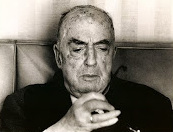
![Wikimedia]](https://upload.wikimedia.org/wikipedia/commons/5/58/Joan_Maragall_1903.jpg)


![Wikimedia].](https://upload.wikimedia.org/wikipedia/commons/8/87/Brutus_%281924%29_%28page_1_crop%29.jpg)

Since the 1990s, studies on Catalan translation have multiplied exponentially and have yielded great results. However, there are still many issues and approaches to study and deepen.
Most studies have focused on specific cases: a translation, an author, a translator, a collection, etc. Any new contribution in this sense is pertinent and should contribute to more generic and globalized approaches, more complex and difficult to carry out individually, which have still been little exploited.
There is still work to be done regarding translations prior to the 19th century, both because of the difficulty of locating the texts and because of the little academic interest that historically the period between the 16th and 18th centuries had aroused.
With regard to translation from the 19th century on, there is a general map drawn up that marks the basic lines of translation studies in Catalan. In any case, the role of translation and the criteria for selection and translation in periodicals should be studied in depth. Likewise, fertile lines of research should be continued and deepened, such as translation in the different collections and publishing houses, the role played by censorship and the different models of literary language used by translators at different times, with special attention to the intervention of proof-readers, which during the 20th century especially determined certain aesthetic trends.
It should not be forgotten the importance of key phenomena for Catalan translation that have been little studied to date, such as indirect translation and self-translation. In the same way, more attention should also be paid to other types of translation beyond the strictly literary one, which has monopolized most studies until today, such as religious thematic or essays.
Finally, on current trends, there are very interesting lines of research, such as the catalogues of small independent publishing houses, the relationships between the different peninsular literatures, the translation of children’s and young people’s literature (both imported and exported) or the study of the dissemination of Catalan literature to other literatures.